

David Politis: People thought I was too crazy. Why are you going to compete with UPS and FedEx? Or that it's hard to raise money? Or that is not sexy or whatnot? Today's guest is Itamar Zur, the co-founder and CEO of Veho. A company that's become one of the most disruptive players in US logistics. They've raised over $300 million from top tier investors, including General Catalyst, SoftBank, and Tiger Global. And they're valued at over $1.5 billion. One of the reasons I started this business is I would walk back to my apartment building and there would be sticky notes on the front door of the building. 50 sticky notes of, sorry we missed you. Little did I know they would take me on this journey of competing directly with UPS and FedEx and rebuilding what logistics need to look like for the 21st century. Knowing everything that you know today and all the experiences you've had, all the ups and downs, all the job, what is the one piece of advice you would go back and give yourself before you started your first job ever? you Today's guest is Itamar Zur, the co-founder and CEO of Veho, a company that's become one of the most disruptive players in U.S. logistics. Veho is a technology-driven end-to-end delivery platform that has reimagined how e-commerce packages get from fulfillment centers to customers' doorsteps. Veho operates in 65 markets nationwide, serving over 120 million Americans while delivering the kind of speed, transparency, and control that legacy carriers have struggled to provide. Over the last nine years, has grown to almost 1,000 employees and tens of thousands of drivers. They've raised over $300 million from top tier investors, including General Catalyst, SoftBank, and Tiger Global. And they're valued at over $1.5 billion. Please welcome the co-founder and CEO, Veo Itamarzor. Thanks. Great to be here, David. Yeah. Thank you for doing this in person. I like to do it in person if possible, so thank you. right. First question. What is the one thing that you've done? at Veeho, big or small, that's had the biggest impact and you would do again if you're CEO of another company in the future? know, since I started the business, I always had the notion that the one thing that would make us great in this industry is that we have to be obsessed over our customers and about their experience. know, one of the reasons I started this business is, or the main reason is they could not get stuff delivered to my doorstep. That delivery experience was horrible. I'd walk back, I was in business school, I'd walk back from school to my apartment building and there would be sticky notes on the front door of the building everywhere like 50 sticky notes of sorry we missed you you know from the the common carriers that we all know about things will get stolen from my doorstep one one day i walk in and i noticed there's like a billboard in the lobby and people start writing if you saw my package for apartment 1106 please bring it back and then other people added more and more and more apartment numbers and i said this is real problem And this is the problem that I decided to go and fix by building Veo. Little did I know that it would take me on this journey of competing directly with UPS and FedEx and rebuilding what logistics need to look like for the 24th century. ⁓ But we really took that notion of customer obsession and we said, how do we bring it to life so that the brands that work with us, we don't just tell them about this in our marketing and in our sales process. they actually get to see it from day one when we bring our service to life. So we would go on ⁓ early days sales processes where I was basically the only salesperson before we hired salespeople. And I would tell them about, we're gonna do all these things for our customers. Customers can see where the package is, they can leave instructions in real time, they can give feedback, they can reroute a package. And you could see that the... the people who were selling into the brands, the early adopters, they would nod and they would get excited. But like, you could see that they were like kind of like doubting whether all this was actually true or not. And so I said to my team, we have to bring this notion to life from the very first day so that they really, really believe in what we're doing. And so, you know, let's say we launch with a client, I would get the team together and say, here's the day one plan. we're gonna obsess over every customer, every customer review, we're gonna fix everything in real time. At the end of the day, we will send a report to the buyer, the person who chose to work with us. And the report would say ⁓ number of packages delivered, packages delivered on time, average customer rating, screenshots of all the conversations we had with customers because... At Veo, we have live conversations with customers, telling them the package is on the way, we can answer their questions, we can take their feedback. It's a live person you're speaking with. I nowadays there's a lot more AI. So we would take all of those screenshots of people saying, ⁓ my God, this is the most amazing delivery experience I've ever had. And we would put them in a report. And then we would send the report at the end of the day, not only to the person who decided to engage with us in the brand that we work with. but anybody we could find their email from that company, CEO, CMO, CFO, copy everybody and just send out their report. And it ended up being amazing because in the next call that we had with those buyers, they would immediately start asking, wait, what else can you do for us? What other markets can you go to? Can you take more packages from me? Because they would get the voices, the pushes from their CEO, from their COO, whoever that was. Like, I love this company, what the hell are they doing? ⁓ my God, we need to do more of that. We need to shift as much volume as we can to them. So I would say focusing on the day one WOW experience has made a tremendous impact for our business. And I would do this with every company I start moving forward. And not that I'm planning to leave Yale, but that has been a game changer. I think that when we speak specifically about venture-backed companies, I think there is such a pressure to acquire customers. from the investors, from yourself, you I need to grow, need to show the revenue, I need to, that what I find is most first time founders do not put the energy into that first customer experience that, because actually it's, that first impression lasts a very long time. If that first impression is amazing, you can mess stuff up down the road and they'll give you some leeway because of that first experience that they had and how they remember. that if you don't give them that experience and they have an issue, the chance that they turn, the chance that they complain, you know, I feel like that is such an important thing. My question, I guess to you is like, how do you embed that in the DNA? Like, is that because you were doing that? Is that because you just told everyone that's what we do? that like, tell me how you get that into it because your company now is big. I mean, now it's a big company. So I doubt that you still do. I mean, you don't probably do that for GoLives. I'm not personally involved in that. it's impossible. But how do you do that? I love this question. Part of our DNA and part of the founding story as well is a story around ⁓ what I call the moment of truth. So in my prior life, before starting Veal, I was working in Procter & Gamble. I was a brand manager. And at Procter & Gamble, had this, ⁓ it came all the way from the CEO, we had this ⁓ term called the moment of truth. So think about it, you walk into a supermarket, a physical world supermarket, and where the head and shoulders shampoo is on the shelf, and the numbers, cues, and the colors, and all the variants, and whether it's organized vertically or horizontally, the price, the messaging, ⁓ where it sits in the store, all that is actually science. Procter & Gamble, we were optimizing this, we had, ⁓ we called it Moneyball, based on that famous book and the film Moneyball, the optimization. It was A-B testing in real life to make the customer decide to choose your product, put it in the cart, and buy it. And we call it the moment of truth. And then the second moment of truth was you take the product home, you put the shampoo in your hair, does it live up to the brand promise? And if it does, then you are most likely going to be hooked. A high lifetime value customer, and I can give you many examples with myself for the 20 years that I was shaving. You can see I'm not shaving that much anymore. ⁓ You know, I always used Gillette never used anything else because it worked the first time it did what he promised to do and I just never never left it and so The concept of moment of truth is so foundational to what we do as a business and I brought this to view early on As part of the founding story the moment of truth when you receive a box or when you buy online You know, of course you got to check out on the checkout page, but when you receive that box that is a moment of truth there was Absent, completely absent before I started Veo. FedEx and UPS never focused on creating a wow moment when you receive the box at your doorstep. But when you think about how do you create brand loyalty and deep feeling toward the brand, it is about all these little moments that in the moment, those moments that matter to you. And when a brand gets them right, you get emotionally hooked with that brand. By the way, there's a great book, it's called The Power of Moments, and it talks about how you can have like a strategy around that in how you teach kids and how you send them to college and their success or employee life cycle and of course customer life cycle in your company. So we realized at Veo that day one launch with the brand, that is a big moment of truth. It's a make or break moment. If you get that right, you're gonna get a lot more leeway. to go and experiment and grow with that brand. again, they will be more forgiving if you screw up in the now and then and nobody's perfect. But if you get that wrong, you're like, okay, you promised me on all those things you're gonna sell me on, but your service is not that great. That's why it's so important to do this in day one. Now, from a DNA standpoint, not just the founding story, also translating it into the company values. And I know you and will talk about values later on, but our values today incorporate that concept under the value. obsess over experience. Not just the customer experience, also the driver partner experience, the brand experience, but nail all these moments that matter, those moments of truth, and get them right in order to create a holistic end-to-end great experience. And that's how it's embedded in our values. Let's talk about the values. know, one of the things that we when we first met and you were telling me about the values you were saying, you kind of defined a set of values early on that maybe are not the values today. Can you just talk about that that journey? Because a lot of people have talked about writing their values down from day one. Actually, I think of all the episodes, at least 20 people have said that is like, I'm not sure any of them have said changing the values. So I'm curious, you know, if you could talk about that. Yeah. You know, there was There was an experience that taught me a lot that I'll you know, the backstory here is Before I knew what the company was going to do I wanted to build a company and they had this idea of about what the culture it needs to be at that company so, you know having worked at you know, large corporations I felt that that wasn't a place where I could bring myself and truly be who I am and thrive in those locations, you know The type of experience that I've had was political war culture was highly competitive, not a bad thing necessarily, but not a place where I felt it was collaborative, it was fun, it was making friends, it was growing, et cetera. And so before I started Veo, I sat down and said, I'm going to create a company that is going to embody the following values. the first, the number one value was zero politics. Don't want any politics. In this place, you're not speaking behind people's back. speaking at their face, right? And you're being honest with them. Second value, people above everything. Which is, here we value the human being, the human, not just the business results, but also the people. We have a value called, you know, everybody has a voice, we wanna hear from everybody, everybody gets to participate in decision making. You can see how idealistic, right? This was, now my co-founder, Fred, joined, we sort of like synthesized this into four values. ⁓ And one of those values was human. How many founders have you heard say, I have the human value and part of my four core values in the company? Very few, right? If any. We are human-centric in everything we do. Very idealistic. I told that story to every person who joined the company. It used to be one person at a time. Then we started to grow really fast, 10, 20, 30 people at time. And you could see people get really inspired to say, this is really refreshing. It really was part of our culture. And by the way, went a long way with the customer obsession about we want to solve problems for human beings and we're great for human. So we grew really fast in 2021 during the pandemic, we raised a lot of money, as you mentioned before, $300 million. And then early 2022, the world changes. The Fed starts raising the rates, the interest rate, the market tanks specifically for growth companies. And our investors start to get kind of like worried. And they said, you guys are burning too much money and you need to get this thing to profitability. And they were not wrong. They were right. We're growing very fast. We were growing, I would say, irresponsibly just investing. The world had changed. We had to change accordingly. So we had to start working with very clear metrics and hold people accountable and performance reviews. And because the values of the human were so embedded, we never really explained what that means. It was all idealistic. people kind of revolted. They're like, this company is changing its values. You're not living up to our values. You care only about numbers. You care about business results. What about me? I'm a person. And then a lot of people just didn't like it. And in all hands meetings, we would hold once a quarter, instead of me being asked about the business, most of the questions were about the values. What's happening with the values? What are we doing? What is this thing, performance management? Why can't they just work two hours and then? You go get my kids from school and then have dinner and then a little bit afterwards. No problem, by the way. I believe in going and getting your kids back from school, whatever that is. But you need to work to make the business work, right? ⁓ And then we had to do a couple of layoffs and was really bad morale in the company. And felt like the company had ⁓ lost its direction, its core values and principles. And I sat down and I was fortunate to have a mentor who told me what you know, run successful companies before he told me, take a look at your values and let's restart. What do we want to build here? Let's the right values that would actually help you win. And so I had to ask myself, well, okay, what do we need? What is the kind of culture? What are the kind of people that we need in this business? We want to grow, we want to build a very large business. We're innovating and we're risk takers. This is a cross-functional business. You can't just, you know, help us win on your own. You have to collaborate. Right, like the way sales work is we have to deliver logistics and product has to build technology for logistics to work. And logistics has to provide capacity projections so sales can go in sales. It's all cross functional, so it can't just be around me, it has to be around us. And so going through that first principles approach about what is it that we're trying to build in a very competitive industry where cost matters, where growth matters, we came up with six values. And we called it, we sort of packaged them under a concept. And the concept is championship team mentality. And that changed everything. And I stood up in front of the company and we did the whole session, this is in 2023. And this is after two or three rounds of layoffs, so morale is kind of low. And I said, guys, we are here to win, win championships. And we're gonna do great for our customers and give great for our brands. And we do. We're gonna do great for ourselves if we're able to grow and keep pace with the company. But we're here to win. And if you don't like winning, if you don't like competing, that's totally fine. This is not your place. And so the whole values, know, drive impact, take ownership, obsess over experience, make today count. You all those values are around how championship team up, championship teams come together to win. And we changed the whole concept around how we communicate around the organization. Every meeting starts with our values. We reinforce our values, we remind our values, we give people, we send people ⁓ player of the month basketball, anywhere in the country. And they sign it and then we have trophies everywhere. I personally grew up playing basketball, I love that. ⁓ But I felt that it completely changed the culture in the company and got the wrong people off the bus and got the right people on the bus. And since then we've been winning so much more. Wow, I love that story. ⁓ When you even say those values, like, I think for the right person who wants to win, it fires those people up a lot more to hear those values than the softer idealistic ones, right? ⁓ How did people react to that? Because you had built a company already of size with the old values, like, and you said the people who didn't want that. you said this isn't the right place for you. ⁓ Did a lot of people opt out? Was that over a period of time? Was that, I'm very curious how that actually manifested itself in the business and how long did it take for those to actually be the values? The day when we announced the new values, we brought the whole company together, we did this call. ⁓ We had one of our executives interview myself and my co-founder Fred and we really, really worked at explaining how this was not a big deviation from the previous values. It's not that the company is not going to be human or care about people. We are obsessing over experience. We just have to obsess about the customer experience, not our own. Do I feel great at work every day? Do I feel like, know, sales space is important, it's a means to an end. And the end is winning with the end customer and with the brands that are paying, you know, are paying for us to deliver. And with driver partners, by the way, anybody who is interacting with us, we need to win with them because they're bringing the service to ⁓ life. So we really worked hard at explaining this is not a big deviation. It is an evolution of our values. But I think at the time, coming out of the pandemic, lot of tech companies hired a lot of people, and we certainly hired too fast, and weren't always making sure we're bringing in the right talent for a type of company with the right culture. ⁓ There was a lot of skepticism. ⁓ yeah, they're trying to paint it in a positive light. So these are more the vocal people who are, you know, or we don't really believe it, the company is changing, it's not really buying into this. Then you still have the very high performers. And what I learned is that the high performers in many cases, they don't necessarily speak up. You know, they just keep for themselves. But you know they're there because you see them every day. They never complain. They never bring up silly questions like that in all hands meetings. They just deliver results every single day. And you can see them rolling their eyes and being annoyed. with the questions that are being asked. I know exactly what you're talking about. So what happened then is we just kept talking about the values all the time. Every Monday morning meeting, we may talk about what a Monday morning meeting means, if we're still doing this today, even at this scale, every week, we talk about our values. Every month, every Friday, we had a Friday meeting where we were catching up at the end of the week. We changed it. We called it Friday wins. We talk about winning. And so over time, those people were not aligned with it, just got off the bus. If they wanted to work for a more cushy company with a very nice salary, nine to five job, or when the manager is not pushing them to really be the best they can be and deliver, those people just left. There are other jobs out there. And those who are the high performers, all of a sudden start seeing, start to see the bar raising around them. The people who are not really pushing, not really, you know, giving what the company needed, pulling their weight. leaving or being let go because we're becoming really serious about performance management and also elevating the high performers, giving them more equity, more salary, promoting them, et cetera. And then we hired better and better people for our type of culture. And so the culture changed because you have, you you have just more and more and more of the right people. And those, people are now aligned, see that this is not their place and they start leaving. It was overtime. You know, the, I've been really thinking about this a lot recently about kind of the best people, the top performers, you said, heads down, they execute, they make the people around them better, but they don't talk about it, they don't ask the ridiculous questions, they don't, and I have reached a point where I think if I think back about my time and all the different companies I've been a part of, even though I treated those people great, even though I gave them raises, even though I probably could have paid them more, given them more equity, and the ROI still would have been. Astro like losing those people. This has been like a recent thing for me of like thinking about those best people, the best, best people probably do the work of 10 people. And we think like, well, we have to level, you know, my head of people have to level this and then we have to do this and you everyone has to be like, well, that person is doing the job of 10 people. If that person left, it's not only losing them and having to replace them with a bunch of people and all their productivity and all the goodness that they bring to. Anyway, so when you say that, like those top performers, they're the people that they like this because they're like, yeah, that person wasn't good. They know who wasn't good themselves. They don't want to work in that environments. One of the ways to take care of the good people is by getting rid of the bad people. That's one of the ways. But I think over time, the good people know that they're really good. And so we as founders and CEOs, we can't just expect that the good people are going to stick with us forever. They get paid all the time on LinkedIn. and they see what other companies are doing. And so one of the things I learned is not only getting the right, the wrong people off the bus and the right people on the bus, but then you have to also identify who are the people who are gonna go all the way with you up and they're really going to carry the weight with the organization. The 10 extras, as you said, right? The one person who's doing 10 people's job. And then how do you tailor a program for them that they feel? that this is the place where they can grow their career. So when a recruiter pings them on LinkedIn, they're like, no thanks, I am so bought in to what Veo is doing and Veo recognizes me as a high performer and the CEO recognizes me that I'm gonna go very far in this business. So I'll give you a couple examples. One is, ⁓ several times we did this, we started a leadership development program, which you don't really. do that often in earlier stage companies. But it was so important for me to identify the high performers and make them feel that this is a place where they can grow their career. And we called it force multipliers. So people applied, and I started spending with a group of eight to 10 people once a month. And we do an offsite, and we bring speakers. We brought the former president of Instacart, or we brought one of our investors who is One of the founders of a company called Viva, it's a $50 billion software company, we brought them to speak. Where do you get this type of experience unless you go into like business school or something like that, like a top business school? Investing, I would share insights about ⁓ learnings that I've had for the business and mistakes and failures and open up and everybody would share about theirs, we'd read a book together, a book review. And then later on, it evolved as... you know, the all-stars identifying like executives in the company propose people who are all-stars and we go one by one and say what does this person need in order to be here not only in 12 months but in 24, 36, 48? Should we think about their compensation? Should we give them more equity? Should we think about getting them a mentor? Should we think about maybe putting them under another manager who can grow them a little more? Give them more. High performers not only want to perform but they also want to grow and learn. How do you always give them more stuff? One of the things that Amazon, I learned from Amazon is, you know, there's very few companies nowadays where, you can see I'm passionate about this, so I can go on and on. I love this. But very few companies nowadays get to keep employees for more than two, three, four years, right? You used to build a whole career with a company, and nowadays every two, three, four years, people move to something else. But that doesn't really happen at Amazon that much. People spend much longer tenures at Amazon. And so I I started asking why. Well, one reason is you're growing very fast. Your equity is worth a lot. You want to keep on investing, et cetera. But it has to be more than that. And so it turns out that at Amazon, if you're a high performer, you're going to be sometimes pulled from your job and be given a whole different project and something that you've never done before. Go figure this out. Or if you have an idea for a new business line, you can pitch the idea and then you can get budget for it and go and work on this new thing that you haven't worked on before because you have this idea. And that keeps people really intrigued and growing, right? And stimulated and engaged. And so I how can we bring this back to VO, focus on those all-stars? Anybody can be an all-star if they are high performer and they're giving the work that they need and they're learning really fast and they're committed to the organization and build a program around that. Every board meeting we have, right before the board meeting, I look at the equity of everybody in the company and I would send like random notes. Hey, congratulations. You're crushing it, you're getting more equity, and I would approve it, I approve it with the board afterwards. Like, long story short, you're not only getting the wrong people off the bus, but also identify the 10 X-ers and really make them feel that you know that there are 10 X-ers and you're gonna invest in them because you want them to be successful. I think what you said there that I wanna double down on because this, inherently I think founders know, okay, this is my 10 X-er and everything. The couple things you said, one is telling the person. you are a 10 act, telling them, we acknowledge that you're a high performer. They feel seen. That's a, that's a huge thing. Then backing that up with not only do I see you, here's equity cash, whatever. And it's not even when you expected it. It's just randomly, you're getting this for doing an amazing job. And then thirdly is the ongoing investment and taking them on that journey that you said, I liked the leadership. The leadership thing is a cool idea of like, small group and I can imagine for them to have the Viva guy, have that, like you said, you couldn't get, I mean you have to spend hundreds of thousands on an MBA to get that access for those people, right? mean that... Yeah. And the last thing about this is you can't let yourself be surprised. If you're not actively working on engaging your high performers, your 10xers, somebody else may come and offer them something better and... these people, what I learned, care so much more about personal growth and potentially the recognition than they care about the salary, the equity, right? And you have to make sure that they feel that. They feel that this is a place they can grow. When Fred and I started the company together, you we said we want V.O. to be the place where people come in and do the work of their lifetime. And again, it's not for everybody. Not everybody is going to get this opportunity. But if you're right person for us, I will personally make sure that you're getting the opportunities to grow so you can do the work of your life. You've mentioned Fred a number of times. Can you talk about how you and Fred connected, how you decided to work together, how long did it take to understand that that was the person you wanted to start the business with? So a little bit of background before I met Fred, I actually had two other co-founders in business school. You know, one of them was a classmate of mine. The other one was the partner of another classmate of mine. We started the business together. We did really well. We, you know, we prototyped, we proved some early demand. We won some competitions. We won the Harvard Business School Entrepreneurship Competition, raised money from, you know, small checks, from former executives at UPS and FedEx and stuff like that. And when we graduated, you know, My co-founders came to me and they said, we don't really believe in the trajectory of this business. We don't think this is business worth pursuing. We had a fundamental disagreement about what we wanted to build. ⁓ One of them advocated that we go and build a SaaS business. you're going to get higher margins, sticky revenue, recurring revenue, ⁓ better clients, easier to raise money, and lower risk. And I said, I agree with that conceptually. But that's not what I want to build. I want to go into an old school industry and turn it upside down, transform it, build the future. And let's go into an industry where there's not a lot of competition. We can become very big. The TEM is very big. We can become very big. There are big modes that we can build fundamental disagreement. And so we argued for ⁓ several months. It was one of the most painful experiences in this journey being a founder. And ultimately we broke up and they left. And the day ⁓ they... lift and actually the second one lift, ⁓ I went back to main desk and I was still working from the business school, was gracious to give me a desk after I had graduated. And I said to myself, ⁓ I have to get another co-founder. There was the idea of you can do this on your own, but here's the reality. I had graduated from business school and I'm an immigrant. I had one year on my work visa to make it work and figure out a way to stay in the country. Otherwise I had to come. to go back to my home country, Israel. I had debt $200,000 in my bank account, or minus $200,000 in my bank account, because I didn't go to business school with savings, and I had this huge debt. ⁓ And ⁓ more than anything, I was just extremely motivated to build something great, to really, really change the world in my own way. And I wasn't willing to give up this idea. And I said, I need somebody who's able to build the technology, because I'm not a technologist, I'm not an engineer. And only one person came to mind. And that person is Fred. Fred and I ⁓ had connected a year before when I was at a conference, just starting up Vio, pitched the idea to some investor. And the investor said, there's somebody I want you to speak with. And he introduced me to Fred who was running a different logistics business. And I pitched the idea to Fred. It was actually a different idea. Pitched the idea to Fred, and nothing came out of it. And I thought I would never speak to this person again in life. And then when I parted ways with my co-founders, he is the only person that came to mind that I actually knew who was interested in logistics. I mean, you go to business school and everybody's talking about, you know, software and at the time was blockchain was the next sexy thing. And nobody was thinking about logistics. So I sent him, I looked him up on LinkedIn and I found that he was not working for his company anymore. And I said, well, that's interesting. Did he sell it? Did it not work out? What was going on? He was a consultant. said, entrepreneurs are not going to be consultants long term. They want to build stuff. So I called email them. in my email, and I remembered it vividly, I wrote that the subject line was, on, help me build the next billion dollar company in transportation. And I explained what I was doing. I sent them a link to a video of a, there was a local news channel in Boston who did an article about us when we want some competition, send them that video. And ⁓ within 15 minutes he replies, we get on the phone. He says, how about you come over to Colorado, where he lived, still does. And so I go to Colorado, which I had never gone before. And ⁓ he picks me up from the airport, we go to his place. He let me stay there with him and his girlfriend, now his wife. And we start working together. And it took us several months to build the relationship that made us feel comfortable with one another. We didn't just commit to it overnight. But that's how it all started. So, ⁓ So once you did that, you went there, you went to Colorado, you spent the time there, and you had those two months. Can you talk about what those two months, like, how, how, what did you do during those two months? What, what was that moment where you knew, okay, that we are going to actually get married, you know, and do this? So Fred's going to kill me for saying, for telling this story. ⁓ because I never really told him the story. ⁓ well, he knows, of course, how we worked for two months together. Let's start there. But I'll tell you why I made the decision, ultimately. ⁓ Fred was a graduate of Techstars, the Techstars program. And he had relationships with Techstars that was based in Boulder, Colorado. And that's where he lived. And so he was able to get us into the Techstars core working space, where they would usually host ⁓ the accelerator, except that the accelerator was not. ongoing at that time. And so we were just able to work from that co-working space. So we'd go there every day and we would start talking. I was a first-time entrepreneur. Fred ⁓ was a third or fourth time entrepreneur when I approached him. And he had a methodology. He's like, okay, let's go and find the first customer. Let's redo the website. We need to get our technology back on track because it's been several months since I had argued with my other co-founders and we kind of like shut down the business we had at the time. So the technology, the software we built was sort of like, you know, not working. And so we had to, you know, refresh the whole thing. We started doing this every day. And then we said, okay, how do we actually lend a first customer to prove the demand, right? And so we came up with this plan. We print flyers with screenshots of our customer experience. can see the driver on the road, whatever, and you know, like a five-star review. This is the most amazing experience ever. Go and find any e-commerce company that ships out of Colorado, Denver or Boulder. And what we didn't know is that there were not that many of them, actually. We thought Denver is a great place to start this business. Actually, was one of the worst places to start this business because in logistics, you ship from a location where you can easily get to other cities. So there are big logistics hubs. New Jersey, Philadelphia, Atlanta, Dallas is a big hub, Chicago, LA, et cetera. Denver is not close to anything. It's the middle of the mountains. So why would you ship from Denver? We didn't know that. So we would start driving around Boulder and Denver and like literally walking into offices of e-commerce companies and I would go and usually there's a reception and I'd say, ⁓ I'm here for the CEO Mike or Janet, whoever that was. And they're not here. ⁓ can I just leave this thing on their desk? No, leave it here with me. No, I'd really like to leave it on their desk. And so we would like to try to in any way shape and form possible, try to get a conversation with CEOs or founders of companies. It was really, really hard to do so. And by the end of the summer, we didn't even have one. And at the time, this was already, I'm there for two months, and Fred tells me, do you wanna do this or not? And so I said, how much longer can I do this with? And can I do this for, without making a decision? And the reality was during that time, and this is the story that Fred doesn't know and is gonna kill me for telling that story, but during that time, I had also interviewed three or four other people. I was like, I don't know if Fred is the right person for me and we're just working together. He seems to be a cool dude, and very smart, but am I gonna get along with him very well for much longer? I don't know. And so I interviewed some other folks and just nobody else. saw any value in the idea. People thought I was too crazy, why are you gonna compete with UPS and FedEx, really, or that it's gonna be hard to raise money, or that it's not sexy, logistics is not sexy, or whatnot. Fred was the only one who actually cared about it. So I asked him point blank, I was like, Fred, why do you wanna do this business with me? Why do you care so much? And he said, Ita, you know, I started several companies, didn't pan out, and I can tell you. There are very, very, very few instances where it is so clear how you can build a building in our business. And this is one of them. And when he said that, I was like, okay, here's my guy, I'm gonna give it a chance. What I didn't know is that over the years, he and I would grow so much that our relationship today is fundamentally different than anything I've ever had. They say that... founding a company together is like marriage and I've never been married. ⁓ But it certainly feels like one. He and I, can complete each other's sentences. When I see him on the court, better in person, I can immediately see something bothers him. can almost read his thoughts. I can give him the space to be him. He defers to me when he knows that I care about something and I'm gonna make that decision. We debate and argue, but we never argue about the decision at the end of the day. When we decide we agree or disagree and commit, and we've had just the most incredible partnership. And if there's, you you asked me earlier, like what is the one thing, and that was the first question, what is the one thing that I would do in any company and start? ⁓ And I would say that the most important decision I've ever made in my professional career has been to partner up with Fred. Without him, Veo would not have been where it is right now. It's, you know, the power. of having the co-founder who really is as in it as you, you know, I've talked to founders and they're like, but why can't this employee executive like care as much as I care? I've had that kind it's amazing how many times founders will say to me, but that person, don't care as much as I do. like, they will never care as much as you do. Only your co-founder will care as much as you do. And when you find that person and it really clicks and it really works and they have the same work ethic, the same belief, the same, that feels like in the interviews I've done, that feels like a common theme of what gets through the worst times, the most challenging times when you have that co-founder or co-founding team that is truly, truly like together and in lockstep and all of that. I agree with that 100%. Yeah. So the company's grown a lot, a lot, a lot. ⁓ And revenue, people. customers, everything. You've obviously grown with the business this whole time. What do you think is the biggest, the attributes or the parts about you that have changed the most? Like, how have you evolved as a leader? Because it's very different to be, you you hustling going door to door in Denver and Boulder or whatever, to what you're running now, you know, this very large organization with thousands and thousands of people relying on you and millions and hundreds of millions of customers. What is the thing you've had to grow or evolve at the most? So I actually have two things I'm thinking about different stages of the company. ⁓ The first was very, very early on. I mentioned earlier today I had two co-founders in business school and when they left or when they said we want to pivot and they left, was a surprise to me at the time. I went to a mentor that I had in business school and he asked me, the first thing he asked me was like, what did you learn from this experience? And my answer to him was that I need to partner up with people who share my motivation and my risk profile. And he said, is that really what you learned from it? You should go back to the drawing board and really think hard about what you learned from it. And I reflected on that. One of my co-founders had a newborn baby at home. And he was the what do you call The breadwinner? And when he found himself in between me and the other co-founder arguing about this thing, he was like, am I going to be able to actually feed my family with this thing? They're just arguing. It's not going anywhere. And I did not have empathy toward that. I wasn't thinking about that at the time. So when he left, it was a surprise to me, but I wasn't necessarily paying attention. to people around me and their motivation and their needs and be able to ask them questions and create a safe space where we can just talk openly about our feelings. So we're never surprised about those things. then made me realize that in my entire adult life up until that point, I was just never thinking about how people around me are feeling. And actually came up with it ⁓ very early on. now with Fred and a new team, we did like a leadership 360 survey and I had a CEO coach and I got, you it's like a one to, you get a one to five score, you know, comparing me against versus other CEOs that, or leaders that these folks in my team worked with before. And my average score was like 1.2 across everything, except for one thing, motivation, that was like 4.7 or 4.8, like really, really high up there. And so, you it made me realize once again that I just need to calm down, listen, give people the space, right? And not just tell people what to do because I was so driven to get the thing done. So we created this system where we start meetings. And the first thing we talk about is there's a color system, green, yellow, red. And hey, everybody, morning. Quick check-ins. Adam, how are you doing? I'm yellow today. Tell us a little more. Yeah, I worked really late last night. was trying to ship that feature. I couldn't ship it on time. I'm really tired today. ⁓ Johnny, how are you today? I'm green. super pumped. Just came back from vacation. Allison, how are you? I'm red. I'm under a lot of pressure right now. And this thing is not working at home. And you create that place and you can talk and be vulnerable. So that was one area where I feel like I had to grow a lot as a leader. to really allow other people to be themselves around me, right? ⁓ That was one thing. Later on, and I'll tell you a story. We talked earlier about the cultural shift that we had to do at VO. So in 2022, ⁓ we decided that we're going to do a layoff. Now, up until that point, I'm the most popular person on the planet, right? Like we're growing, our teammates are telling me. You're crushing it, we're crushing it. You go to a glass door, it's all like five-star reviews. Our investors are telling me it is so rare. Then in logistics industry, people love the CEO and the CEO engagement score is so high or trust score is so high and they felt like, oh my God, this is going great. And then the tide turns and you realize you have to make ends meet and you gotta make the business profitable at some point and we have to start cutting. And so we did this layoff that was the first one and it went really poorly. I was not experienced, I did not have the right team around me, other than Fred, I did not have the right team to advise me on how to do this the right way. And things went wrong, it was a huge cultural shock to the company, we didn't communicate well. And I had another CEO coach at the time. They tend to emerge during times of crisis, apparently. I don't have one right now, which means times are good. But, you know, I had a call with him and he said, Ita, how are you feeling? And I'm sitting here in New York and I start sobbing. I don't know where it came from, but I start sobbing. And I said, I feel like I'm failing everybody around me right now. And I just don't know what to do. And he said something that's stuck with me ever since and I give this advice to everybody who comes to me and they feel this way. Because now I have the... I would say the gift of being able to give others some of my own experience. And he said, imagine yourself when you were, pick yourself when you were a kid, what age was that? And I said, five. Where are you? I'm like, I had just built a little tent in my bedroom and I'm going to sleep there for the night. And he said, okay, what advice do you have for that little child? And I said, Give yourself time to learn. can't learn everything overnight. You have to give yourself time. ⁓ And don't put too much pressure on you if you're failing. You're not failing everybody around you. You need the time. Right? ⁓ A child doesn't come out of the box or the womb and then all of a sudden they know everything. It's a process. So why isn't the same process true for CEOs, founder CEOs? And that calmed me down and that changed my perspective about my own growth trajectory ⁓ at VO or in general. I approach new problems and they tell me that I may make a mistake. I'm going to be very humble about it. I'm going to ask for a lot of people's input on this. And if I make a mistake, I'm going to take accountability for that. But I'm going to make mistakes and it's going to be fine. And everybody around me is going to make mistakes. I'm not going to give him a hard time for making a mistake. I'm only going to give him a hard time if you're not trying hard enough. That was another area I had to go in. Wow. Both of those are big ones. think the The first one when you when you start having teams that are much bigger that, you know, ⁓ and you have to scale and you have to hire people with more experience and understanding those different people and where they're coming from is such an important part of the job and having some, you know, not every CEO does that. You know, there's some that have zero empathy or zero understanding, but that that's a that's a big one. Let me ask you, you know, now, so Vio continues to grow. Where are you three years from today? It's 2029. We're talking, you know, what does the business look like? A little bit of context, when you think about delivery businesses, logistics businesses, these are physical world businesses. And when we started Veo, ⁓ we set the mission to power the future of commerce by making shopping and shipping work seamlessly for everybody. So up until now, we've mostly been focusing on the shipping side of this mission statement, if you will. Better delivery experience. you know, faster, more reliable, great brand experience, more cost effective. Literally today, right before I came here, we announced a new product release that ⁓ is intended to power free shipping for e-commerce companies who are struggling because every year they have to pay more to UPS and FedEx who are increasing their rates and taking advantage of their market position. So that's the bread and butter. That's the core of the business. But where Veo is going is far beyond that. Our mission is not just to power the future of shipping. It is to power the future of commerce by making shopping and shipping work seamlessly for everybody. And when you think about what's broken in e-commerce in particular, website experience is good, it's seamless, the product experience usually is good. mean, you can get a lot more high quality products to your doorstep than ever before. From the minute you buy through the entire journey of the package, you're at the mercy of the delivery company. The communication is not great. You don't really know where your package is. The e-commerce brand doesn't always know where the package is. It's really hard to do analytics on that. The customer can't really talk to customer support and change. even so, the problem that I started Veo with, which is the sticky notes on the door. In most companies, unlike Vito, you can't really talk to customer support and change instructions and tell the driver, come today, I'm not gonna be home today, et cetera. So how do we evolve from just doing the delivery to holistically solving that part in the customer journey all the way from the checkout page until the customer said, I had an amazing experience, I wanna reward this brand, I wanna buy more from them and become a repeat purchase customer, right? It starts with thinking differently about what e-commerce companies need. Today, if you're an e-commerce company, you work with any of the national carriers, you know, they have three, four boxes, so to speak. You can either do fast shipping overnight, it's going to cost you X. You can do three to five day shipping, it's going to cost you Y. You have three, four options. What if you could shape your own options for your own product and your own customers? So imagine this. Imagine that a first-time customer goes on your website and you have data that in order to convert first-time customers, free and fast shipping is a must, right? But if it's a third-time customer and if they buy a low-margin product, five to seven days, which actually is pretty long, is good enough for free shipping or they would also pay for two to five days as long as you can tell them, most likely you will get it on the second day, they're going to be forgiven. You can start saying, I'm going to build my own options and I'm going to customize my own checkout page and personalize it to maximize conversion. So today we're making a big announcement. We're launching the first product out of many that would allow brands to ultimately decide exactly what kind of delivery they want, speed, cost, reliability, how they want to communicate with the customer. And by doing that, take control over their checkout page and customize it to their own need, not being at the mercy of the national carriers that want to put the brand in their own boxes. Just create your own boxes. And then how do we become a platform that powers all experiences from the minute the customer bought online until they come back? The analytics, the tracking, the marketing, the customer experience itself. Can we become an ad platform? All those things that... you know, I think we'll really take commerce to the next level and not only change shipping, but change shopping as well. And that's what we're after. Very cool. We'll have to do this again in three years. We'd love to. So ⁓ next, next question. I want to just talk very quickly about your, your background. ⁓ Did you always know that you wanted to be an entrepreneur one day? that, I mean, you'd worked at big companies like you mentioned, and you went to business school, and were you doing it all kind of in service of one day you said, I'm gonna be an entrepreneur? No, and actually when you look at my career history, the things that I was doing were in the complete opposite direction from becoming an entrepreneur, okay? So, went to law school, became a lawyer. Worked for judge, was an amazing experience by the way. Worked for a corporate, the largest corporate law firm in the country in Israel at the time. That was not taking me on the entrepreneurship path. I went to P &G. Very large corporation, brand management. That wasn't necessarily taking me on the entrepreneurship front. I went to business school, Harvard Business School. look, nowadays there's more and more entrepreneurs and companies starting out of business school and HBS has been. incredible for me in giving me the resources, the space, the mentors to start a business. ⁓ But ⁓ that was not a thing you go to business school for. You usually go to business school to get a job with McKinsey or Google or whatnot afterwards. So all these years, up until before business school, I never thought I would be an entrepreneur. And I actually looked around me and I said, the people who starting companies, and in particular in Israel, which is very tech focused, those people came from an engineering background. and they have different types of personality than me, they care about different things, I don't code, I never cared about coding, that's not me. What changed was that during my time at the law firm, when I realized I'm not really pursuing what I wanna do, but I didn't know what I wanted to do. I met a friend who is now one of my best buddies, and he had the same concept, like, this life is not for me. And ⁓ he said, I'm going to start a podcast. Now this is 2012. That's early days. Early days, 2012, 2013. ⁓ Nowadays everybody listens to podcasts, but back then it was a new thing. And I said, what's a podcast? And he said, it is an interview where you bring in people and you just talk, I'm just gonna ask them questions. What are you gonna bring? I'm gonna bring founders of companies and I'm gonna ask them about their success stories. And maybe one of them will offer me a job. So he started this on his own on the fifth interview he interviewed. ⁓ the one of the founders and the CEO of a company called Monday.com. At the time it was a five people company. And today, one of the greatest success stories coming out of Israel, know, $10 billion market cap or something like that. And after that interview, was offered a job at that company. And so over time, I got really excited about this and I joined him and I had the front seat. I wasn't doing the interviews myself, but I had the front seat at listening to the questions or the answers. writing down the questions, preparing for the interview, doing research about the person so I can give a brief to my friend, Idan, who was doing the interviews, et cetera. And we started interviewing people like, know, founders of unicorns and VC investors. Now, again, today you have all these podcasts, but at the time, that was like super innovative. We called it Startup Camel because Israel is associated with camels. Nevermind that it's so far away from that, right? But ⁓ that started to inspire me. that I don't have to be a quote unquote technologist, engineer. I can actually build my own vision and I can bring the people I wanna work with to share my vision, to share the culture I wanna build and now I have to work in corporate, in a corporate world where I didn't feel that I belonged. And so when I started business school, that's when I realized I actually wanna start a company and that's how I started Vio. You've mentioned the coaches and the... advisors and all these people along the way. Is there one person that sticks out that really had the biggest impact on your career, some kind of mentor or role model, someone like that? ⁓ wow. So many ⁓ along the way, by the way, not just just as VO. I I was thinking before this before this conversation today, I was thinking about how we're going to give credit to some of our investors and mentors who deserve a lot of credit. This is not a two people show, it takes a village, it really does to get to where we are right now and we're only getting started. But now that I'm thinking about this, I'm thinking about my ninth grade ⁓ basketball coach, I grew up playing basketball. that was the first time in my life with that coach that I learned what professionalism means, taking your job seriously. And there's a notion that stuck with me, later on in my life, the way you do anything is the way you do everything. You've heard that before. ⁓ So ninth grade kids, you would imagine we do a practice two, three times a week. We do like, play the scramble in or we play and we just have fun. No, this person was adamant that we do the things right, that we work on our techniques and it would be serious. And if you're not working hard enough, He would make a sprint and run and be breathless. And then he had like, just like you go to, if you have kids, you go and meet the teacher at school twice or three times a year or whatever, and we talk about the kid is doing. He was doing this with our parents. He would give me a scorecard and would write down all the things I'm doing well and all the things I need to improve on. He would get brutally honest about those things. And that was one of the greatest leadership. ⁓ examples I've had in my life. It really shaped the way I think about leadership myself. When I was in business school, they made us do this exercise and write down what is our leadership philosophy. And I took it home and I sort of like hung it on my wall, my refrigerator. And I said, I see leadership as if I'm a coach. My job is to make everybody around me better and be their mentor and be honest with them, but also create a space that can be who they really are. And that truly affected how we think about anything. There's a lot of other people along the way. I'll mention just a few. The first person who wrote us a check, he was a founder of another company, similar model, didn't pan out 20 years earlier. And I called, emailed him, and I said, I really want to learn about your failure. so he engaged. And this is, I bet he's a very private person, but I'm. also pretty sure very successful and wealthy person and ⁓ he was gracious enough to give us his time and ⁓ one day I get a $10,000 check in my mail from him and so I email him like what is this and he said I just want you to keep going and that stuck with me ever since just keep going things get hard things get easy you're gonna make it stay the course right there was another mentor and investor of ours and stopped me after because I can go on and on but all these people changed the company I'll tell you one more story ⁓ Now I'm thinking about two stories. I'll tell you both and then you can cut in afterwards. So a gentleman, I'm going to now mention his name, John Brown. had a very successful career at UPS, but he was retired. And I found him on the alumni page of my business school. And this is early days of VO. I called email him. You can see I have this tendency to call him. And I say, I want to start this company. I have an idea. I want to pitch it to you. We get on a video call, the guy, the gentleman, he's in his 70s now, he lives in London. And he got so excited that he said, I'm going to come to Boston and meet you. And I'm like, I'm a business school student thinking about a business idea. We have nothing. And he flies that weekend to Boston and he spends time with me and my co-founder at the time and we brainstorm ideas. And he actually helped us came to the idea that what Veal is today, because that wasn't the original idea of what we were working on. And he pushed us to ⁓ create a model that helps us realize how much more valuable this model is from a unit economic standpoint. And then he wrote us ⁓ a $100,000 check. And he still calls me, hey, when are you coming to London? Let's have lunch. So people like that. When we have our campus, maybe we're fortunate enough one day to have a campus. the buildings are gonna be called after those people. One more. Last person. ⁓ Won't mention his name now ⁓ out of respect to his privacy, but when I graduated from business school, I was invited to give a speech ⁓ in front of the donors of the business school. Now story was, I volunteered to give a speech. I didn't know I was gonna be selected. But the reason I wanted to speak is that earlier that week, there was the finals of the new venture competition at Harvard Business School. And there was a $75,000 prize. And I really needed the money to be able to support myself and the company after school. And so said, I'm going to volunteer to tell the story after the competition. And maybe the story will resonate with some people. And I'm going to build the speech as if we had won the competition. And I'm not going to write a plan B if we don't win the competition. So we win the competition. And the speech became the reality. And I go and I get on the stage and I tell the story of how HBS changed my life. And it gave me the opportunity to start a company and build my know, ⁓ build my vision for something and make an impact. And when I get off the stage, it was very emotional for me. I was talking about my grandfather, my late grandfather who escaped the Nazis. and how he started from scratch in Israel and educated so many, he was an educator, educated so many people around him, ⁓ and how I wanna give it, I wanna pass it forward through business. And ⁓ I got off the stage and this gentleman walks to me and he says, here's my business card, ⁓ send me an email, I'm going to invest in your company. He did not know what the company was doing. So sure enough, I look him up online and he's the founder of one of the most successful IPOs up until that time in the US, in US history. And he wired me $100,000, not me, the company, ⁓ without a deck, without knowing anything. ⁓ Then I parted ways with my co-founders two months later and I called him and I said, I don't know where this is going, but I'm gonna make it successful. And he said, okay, I trust you. Go get a new co-founder and let's make it happen. And this is a person who did not need the money. He's- billionaire, does not need the money. And he was there all along getting on calls, coming to speak at companies events, you know, bringing his friends to do a seed round where nobody wanted to invest for a long time. Ultimately, we did get investors who were also amazing, but we're not going to get into those stories because you're never going to leave. ⁓ But these are just some of the individuals who have been foundationals for Without them, there would not have been a Veal. The couple things you said there, the thing about it takes a village, you know, as you're going through the journey, don't actually know who, which of the people are going to be those people that change the journey of the company. But you know, as you have all these conversations, you get this angel investor, you get these people change, change the trajectory, change the makeup, change. So I think that's really, and I love the coach. I love the coach thing. I actually had a similar reflection recently where a friend of mine is like, you you kind of act sometimes like our football coach in high school, you know. I said, really? They're like, yeah, the way you present and the way you kind of rile people, get people amped up. I was like, you know? see that. Yeah. And I was like, actually, you're right. And I thought about it the other day. was like, same thing. Like, he took his job so seriously. He was so prepared for every pregame speech. He had his thing ready. He kept us. It was like running it like an NFL team for a. small little high school, you know, and it's something about that that really did impact me. You don't really, you know, again, you don't realize that in ninth grade, 10th grade, but then you look back and you say, wow, like that really influenced, you know, how, how, so I love that story. ⁓ my last question for you, knowing everything that you know today and all the experiences you've had, all the ups and downs, all the jobs, the lawyer, the P and G, what is the one piece of advice you would go back and give yourself before you started your first job ever? Give yourself time to learn. I was putting tremendous pressure on myself my entire career. I had this notion that, you know, I wanted to change the world. I wanted to do something great. I wanted to make an impact and I have to get there today, today, today, yesterday. ⁓ And I just put tremendous pressure on myself all these years. ⁓ Every time I wasn't moving in the right direction, I was beating myself up for it. I was stressed, ⁓ you know. I was extremely competitive. I still am very competitive. But going back to that story about the layoffs, first layoff we did at Veo and the conversation with my coach at the time, ⁓ I've since looked back and I said, all these years, I just put so much pressure on myself. And if you just understand that it will take time, but as long as you stay the course, you'll get there. Life would have been so much easier. ⁓ and better and I would still have made it ⁓ if you're to put in the work but you don't have to take the mental stress and I'll say one more thing about this ⁓ about mental stress in general one of the things I didn't realize and this is more about not early in my career but as a founder everybody around me was saying you you have to take care of your body you have to take care of your mental health but I was like yeah I'm fine I'm young I can work 20 hours a day I can do whatever until it didn't work anymore. And when shit hits the fan, right, and this is again, 2022, the entire pandemic was glued to my computer screen, was working 19, 18, 19 hours a day. I started growing gray hair. I gained 40 pounds, you know, and everything was working really well. And then I was just, there was the adrenaline of winning. And then when shit hits the fan, And you start looking around and you're like, ⁓ my god, this is not working really well. I gotta cut here, I gotta cut there, I gotta... Then all of sudden, mentally, I was not stable anymore. I was shaken. And my body wasn't able to keep up with the stress. And then I realized that, yes, you're winning and every now and then there's a sprint. You know, like I go to Barry's boot camp and they make you run for two, three minutes and then they give you 30 second sprint. But then you slow down. and you walk and you catch your breath. And if you want to win long term and really make that impact, it's a marathon, not a sprint. And to win a marathon, you got to pace yourself. You got to take vacation. You got to work on your body. You got to sleep seven, eight hours a night. A thing I start to do and I do every morning and I'm adamant about it is you meditate, know, see a therapist if you need to see a therapist. I completely underestimate it. the advice I would give myself on the day I start VO is take really, really, really good care of your body and your mental health. Make it the number one priority. Everything stands for that. If you don't have that, you are not gonna make it. It's like a professional athlete who spends millions of dollars on the coach, the therapist, the trainer, the nutritionist, because... that's what's going to get them. Yeah, but you don't need a million dollars to spend you don't need that. Thank you for doing this. I really enjoyed this. I'm happy Alex Estevez put us in touch originally. Also a great mentor and Also, for me, everything. He's really modeled. I try to model myself after him. But this was, thank you for being so transparent. think there's, I don't know, 10, 12 lessons in here that people can take and really impact how they run their business. Thank you for doing this full circle moment for you from your podcast. You know, now you're on the podcast, so thank you. Thanks for having me here. This was, you know, really fun and, hopefully people can take away one or two things here. It's just, it's just my experience, but thank you for the opportunity. Thank you. Thank you for those listening. I hope you enjoyed. If you did, please share this out with your networks and we'll see you for the next episode of Not Another CEO Podcast.
ABOUT THIS EPISODE
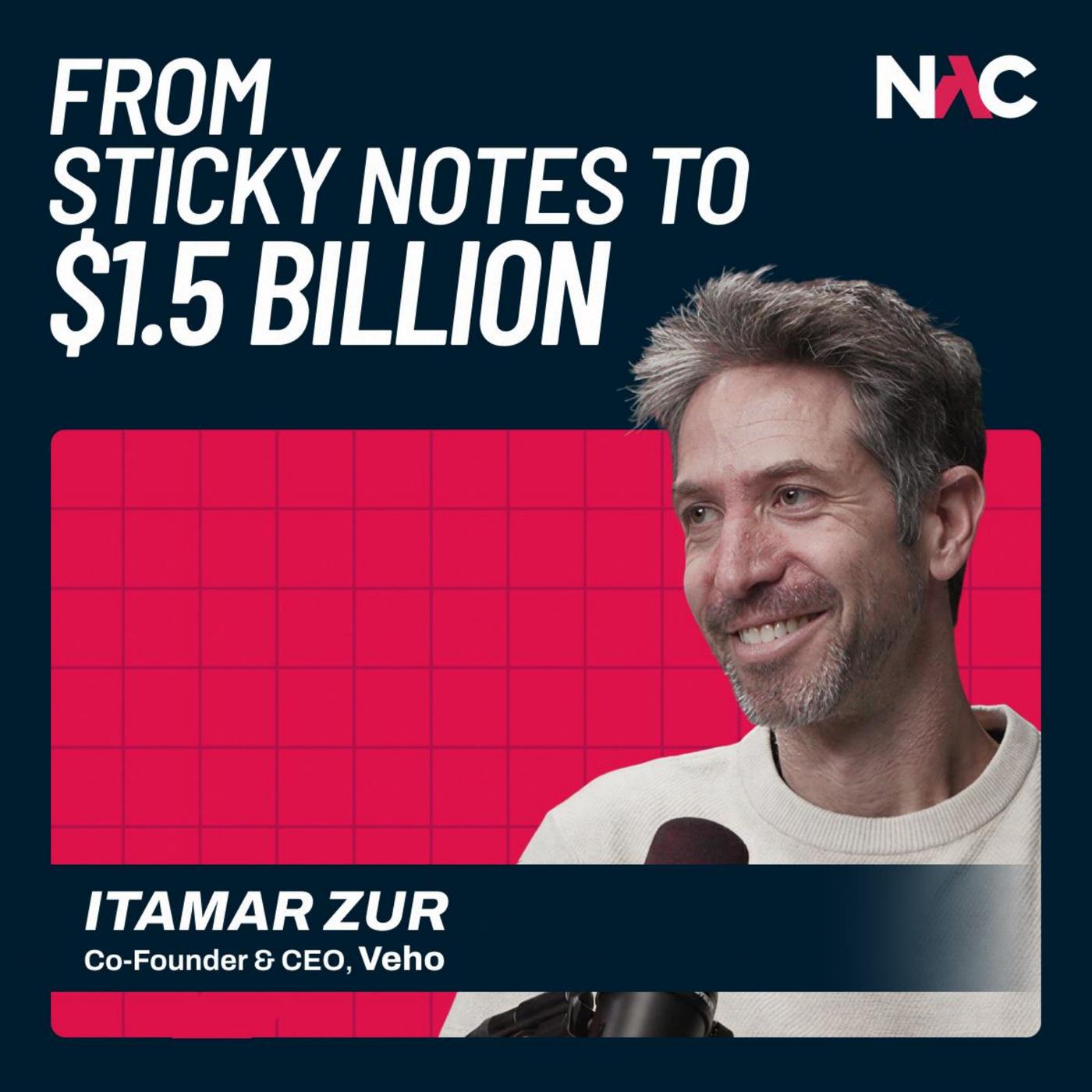
He walked back to his apartment and found 50 sticky notes on the door. "Sorry we missed your package."
That problem became a $1.5 billion company competing directly with UPS and FedEx.
Itamar Zur, Co-Founder and CEO of Veho, shares the full story of building one of the most disruptive logistics companies in America from a business school dorm room to 65 markets, nearly 1,000 employees, tens of thousands of drivers, and over $300 million raised from General Catalyst, SoftBank, and Tiger Global.
In this conversation, Itamar opens up about what it really took: obsessing over the Day One customer experience in a way most founders never do, rebuilding the company's values from scratch after 2022 nearly broke everything, and creating a deliberate program to identify and invest in top performers before someone else does.
If you're building a company and want to understand what championship-level execution actually looks like from the inside, this episode is worth your time.
Takeaways:
- Obsess Over the Day One Experience: Itamar would send detailed end-of-day reports not just to his buyer but to the CEO, CMO, and CFO of every new customer anyone whose email he could find. By the next call, those buyers weren't asking how things were going. They were asking what other markets Veho could go to. First impressions compound.
- Values Must Evolve as the Company Evolves: Veho launched with human-first, idealistic values. When the market turned in 2022 and performance management became non-negotiable, those values created internal friction. Itamar rebuilt them from scratch around a championship team mentality. The wrong people left. The right people finally had language for what they had been doing all along.
- Your 10X People Know They Are 10X Invest in Them Before Someone Else Does: High performers don't complain, don't ask silly questions at all-hands, and quietly deliver results every single day.
- The Co-Founder Decision Is the Most Important One You Will Make: Two original co-founders left over a fundamental strategic disagreement. Itamar refused to compromise on the vision, finding Fred one person he had met once at a conference changed the entire trajectory of the company.
- This Is a Marathon Protect the Runner: When the market shifted, the mental and physical toll hit all at once. He now meditates, exercises, sleeps 7–8 hours, and treats it the same way a professional athlete treats training. Everything else depends on it.
Quote of the Show: "The way you do anything is the way you do everything." - Itamar Zur, Co-Founder & CEO, Veho
Links:
LinkedIn: https://www.linkedin.com/in/itamarzur/
Veho Website: https://www.shipveho.com/
Chapters:
00:00 – Intro: From a sticky note to a $1.5B logistics company
01:19 – The one thing: obsessing over the Day One customer experience
05:30 – Sending reports to the CEO, CMO, and CFO why it worked
09:45 – The moment of truth: lessons from Procter & Gamble
14:20 – Veho's original values and why they had to change 18:05 – Championship team mentality: rebuilding culture mid-flight
22:40 – How top performers act and why they never speak up
27:15 – The Force Multipliers program: investing in your all-stars
31:50 – Finding Fred: the co-founder story
38:30 – 2022: the year that almost broke everything
46:00 – The coach conversation that changed how he leads 52:00 – Taking care of your body and mind as a founder 58:10 – Advice to his younger self: give yourself time to learn
English
United States
TRANSCRIPT 🔗
SEARCH PAST EPISODES
Search past episodes of Not Another CEO Podcast.
Disclaimer: The podcast and artwork embedded on this page are from Not Another CEO, which is the property of its owner and not affiliated with or endorsed by Listen Notes, Inc.
EDIT
Thank you for helping to keep the podcast database up to date.
