

David Politis: Between meeting a founder for the first time and deciding you want to invest in them, how long does that take you? Five minutes. What is that thing you're looking for? Yeah, I think first principle is really around velocity. I really do believe it's better to be fast than to be right because if you're fast, if you just have more at bats, you will at least be able to course, correct? Today's guest is Jess Lynn, co-founder and general partner at Workbench. I met Jess over a decade ago in 2013 when her and her co-founder John started Workbench. Fast forward to today and they're investing out of their fourth and largest fund. Hundred and sixty million dollar fund. Over the years, they've invested in companies like Spring Health, SoCure, and Courier Health. In total, Jess has done over 20 investments herself. To me, it feels like an inevitable we're in a bubble, AI bubble. What do you think of that? Is that the case? Do you think that a hundred thousand percent? Today's guest is Jess Lynn, co-founder and general partner at Workbench. I met Jess over a decade ago in 2013 when her and her co-founder John started Workbench. They were trailblazers. It was the early days of enterprise tech in New York City. There was very little infrastructure. There definitely wasn't a community. They were the ones who created it. I built some of my most important relationships at their events and at their office. Fast forward to today, and they're investing out of their fourth and largest fund, a $160 million fund. Over the years, they've invested in companies like Spring Health, SoCure, and Courier Health. In total, Jess has done over twenty investments herself. What really stands out to me about Jess is how she operates and how hard she works for her founders. She's in the trenches with them, she's hustling, pushing them to be their best selves, and will do the unglamorous work that many investors avoid. Jess Lynn, welcome to Not Another CEO Podcast. I mean, dude, those intros all day. It's like I need to like play that to have you hype me up every morning. Just like the D P intro. I'm excited. Thanks so much. I was on your podcast. Now I'm now you're on mine. I know. I mean this is such a long time coming, right? I mean it's been incredible you've built with non other CEOs. Thank you. Thank you. Okay, first question. ⁓ between meeting a founder for the first time and deciding you want to invest in them, how long does that take you? Five minutes. Yeah. Usually five minutes. Right. and what ends up happening is what after the five minutes is you either dig in more or you find out more information that makes you lean out. But within the first five minutes you have, I would say a vibe. Right. ⁓ and at workbench we have this joke of like I mean it's like a it's almost like a relationship, like falling in love with someone. Right. And you're like the first time that you're like, I I love this person and like I said, you either get more information that makes you fall in love with even the more. ⁓ or you're like, ⁓ actually, like once you dig under the hood a little bit more, you realize this is not a good fit. But it's truly roller coaster, right? ⁓ Do you think that those first five minutes, do you ⁓ is it a subconscious thing or do you know exactly what you're looking for in those first five minutes? It's definitely subconscious. Like I think for me it's definitely I mean the word vibe is very overused these days, right? But for me it's pro it's definitely like a feeling of sorts, right? and for better for worse, I probably a much more of an like emotional driven founder versus a data driven one. And that seed, you know, at the end of the day, you only have so much data. Right. And so, yeah, I would say honestly within the first five minutes. Do you do you think founders understand that dynamic? I think so. Yeah, I think so. You don't think so? You think they like assume you have all this time to bake and cook on it? Interesting. I that's that is in all the meetings I've had So in the interviews I've had with investors so far, almost everyone has given me the same answer. Five minutes, ten minutes, fifteen, whatever. But then I turn around and I have conversations with founders and I say that same thing to them and like, what do you mean? Like, I yeah, I'm gonna do the pitch deck, I'm gonna do this, I'm gonna do that. And like they're gonna make their decision. Like, I don't think they fully appreciate how fast. And ⁓ my opinion, my opinion is the reason why is because you still continue the meeting. Every investor still continues the meeting. You finish the meeting. And then the inve and then they say, ⁓ well, are you guys interested in investing? And the answer not is yes or no. It is some follow up question or come back to me with more information or this or that. So they go away and they tell their co founders, I think that went pretty well. You know Totally, totally. Yeah. Well I'm gonna ask you, I mean, when do you the the flip question I ask for founders is when do you decide on an investor? Actually no one I I haven't thought about that. ⁓ that's a good question. Like when I mean That's a great question. Right. I mean you've worked with incredible investors at this point. Did you know within five minutes of meeting? I don't think so. Right. It's such a l different burn time, right? That's a really good it's taking me it actually in most cases, ⁓ pretty long. I'd say multiple meetings. I I I would say before well, I think also because the dynamic in that meeting is you're doing usually The founder is doing most of the talking. Yeah. So you don't even know kind of the other side. You know, and so I'm I'm curio let let's talk about so when you're looking for so you have this kind of subconscious thing happening. What are you looking for though? Specifically like that you're gonna take and go back to your team and say, Hey, I just met with this founder. And these three things, this one thing, like what is that thing you're looking for? Yeah. Well, can I tell you what I used to look for and what I look for now? I would love that. Right. so for the longest time, probably for ten ten solid years, I was a person on the team who said if a founder comes in with this massive, ambitious tenure vision, like that's me, that's me. I will lock them down. And a great example of that is actually April Co. of Spring Health, based here in New York City. I met her in 20, it must have been 2016 or 2017, they ⁓ at at the seed round. And we happened to sit next to each other at a conference. And then we ended up going to dinner. ⁓ and at dinner, she literally sat across from me and she goes, I'm going to change how mental health is done in this country. Like full stop. She said it way better than that. But like it was like how she said it was so powerful. And I remember being like, You're totally gonna do that. I don't know how, right? And there's gonna be a lot of like stuff in between, but like I genuinely believe that you believe this and you're going to do it and you're gonna do it with or without us. That is the key part, I believe, which is like, I'm gonna do this. Whether you want to get on this train or not, like that's your choice as an investor. But like I'm going to build this one way or another. And I just felt like she had such a clarity of vision and thought of saying, like, this is how I'm going to do that. And again, like this is early days of springs. Easy to say that now, right? Where they are, you know, valued over, you know, billions of dollars and so forth. But like At the time it was still so early and she knew she was like, This is the a a game plan and the attack plan of how we're going to do that. We're gonna start with employers, then we're gonna go into the different plans and so forth and so forth and so forth. And the reality is she's actually s done all of those things, right? When you look back over her initial seed plan to now, it's actually incredibly on point. Wow. Right. ⁓ and so the team jokes it's like, ⁓ Jess like loves a big tenure vision. Right? Because and I think that's really important. I think if you don't have a tenure vision, what ends up happening is you build for like, you know, these like foxholes, I like to say, you know what I mean? Instead of saying, Hey, look, this is like the big place where we're gonna go. These foxholes like how we're gonna get there, right? But you need to understand where we're going, just like a a map, right? and w we can talk more about it, but ⁓ we talk a lot right now about this concept of a car. a plane and a satellite. Right. And like how founders need to be able to switch between those modes. ⁓ so I say all that because again, historically I love a big tenure vision. I will say, like in the last three months, right, I've been really I think I have been forced to think about or recalibrate that question a little bit because who knows what's gonna happen in ten years, right? Like who even knows what's gonna happen in like three years? ⁓ I think we're all gonna be a little right, a little wrong. Right, in some way, shape, or form. But it's just it's really tough because then you start getting into like really like sci-fi stuff. You get into like these really like philosophical things, like, is there even gonna be B2B sales? Is it just gonna be agents? Right. And and I just find that like not to be that productive if I'm being honest. Like, you know, it just starts to like devolve into this like, ⁓ is anything even worth it? Cause like AI is gonna take over anything everything. So the more recent, I think, you know, first principle is really around velocity. Right. And I s I really do believe it's better to be fast than to be right. Right. Because if you're fast, if you just have more at bats, you'll at least be able to course correct than only, you know, shooting like, you know, one free throw and it being on on you know, being getting in. But like you just want as many at bats as possible, assuming that you will co course correct. How do you figure out if someone I I agree with you actually and I do think that that has changed in the last year or six months or whatever. How do you assess if someone has that velocity. Yeah. So I'll tell you what VCs are doing and then I'll tell you like how we're trying to there's investors who are now sending out emails on Friday nights and seeing how fast a founder will apply. Like by Saturday morning. Really? There are f there are investors who just even I would do very well at that text. I know you would I would you'd be up at two AM and be like, I got this. ⁓ yeah, there are investors who will score based on how fast a founder applies to them. Wow. Like as as part of like a AI scoring model, right? It's like plus two, minus two, how long it took for them. And it's funny, I was talking about this with some of our my founders. My founders were like, I am working with customers all day. I am prioritizing customer calls and meetings, right? I'm not prioritizing an investor email. But I was like, honestly, maybe you need to a little bit. Like I ⁓ which is unfortunate, but like that is the o these proxies, you know, because these are such a short lifespan of companies now at seed, you don't have again, these data points would be like, well, how fast did they move, right? You you have these like a very, very, you know, yeah, fast two week process, if even. Right. And so anyways, that's one example. I think other things are of course, you see, okay, ⁓ what have they shipped today? Who are their customers? I like to a the questions I ask the most in first meetings is actually what has changed in your initial hypothesis to now? And that might be even three months ago, right? But if they're like, ⁓ well like everything's gone according to plan, I like, I don't know, maybe you haven't like pushed it fast enough, right? Like I I would like to think that you've gone out, you've talked to customers, you've changed this, you've changed that, you've tweaked this, right? And so for me it's really about what are the experiments you've run today and what are your learnings. And I actually think like the really fun conversation founders, like, I've tried this, it didn't work, right? We then moved to this, and then it would turned out actually like this was the gold mine here. Right. ⁓ I get that. It's interesting because you you you know, actually a company that you ⁓ I think you may invest in or maybe invested in. ⁓ you know, when I met them Over a year ago, they were trying something, building it, shipping it, shutting it down, shipping the next thing because they were getting the real feedback. And I e for me, that was my that was actually my first experience of seeing someone do that in this new era where they like literally shipped a product, gave it to the people that were their quote unquote design partners. They didn't really react well to it. They shut it down. Exactly. They built another one like Two weeks like it was crazy. Like production grade, put it in people's hands, shut it down again. And then on the third one, it just took off. Total. And they're like, Okay, we we found it. And I was like, Wow, what a crazy like that pace is is unbelievable. It's so wild. You know, literally draw the the wireframe and be like, What do you think? They're like, ⁓ it's interesting. Let me get in my hands. That's gonna be like six months time. I know. Now you could do that in Weeks. Hours, you know, weeks. Like my kids this weekend, literally on ⁓ over the weekend, they went on they got on Lovable. I I pushed them to do it, but I l left them at Lovable and the two of them coded ⁓ an application. They were like, Well, let's think about let's have it tell us what we should do based on our mood. And they they they told Lovable that they want they found the Yelp API. They they signed up, got a Yelp API key, plugged it in so would give them real location real but I watched them do it. Yeah. And even they, one of them was like, No, but now there's too many things. We have to give people the choice on itineraries to put on multi days. So now the last page was multi day. Then the other one's like, Yeah, but if they're gonna make the reservation, we have to let them make it from So they're doing this in a matter of two hours. Yeah. And very simple, obviously, but even watching them, I'm like, Wow, this this is a different y you can think about things in such a different way. It totally is. And how people talk about like how AI native companies are being built. You know, I think everyone thinks like, ⁓ you're just gonna claw code everything, but it's it's like obviously the teams, how you think about go to market, right? And we can talk a little more. I mean there's the pros and cons, right? The cons is just like it's competitive as all hell now. Right. And we talk about this all the time. Right. and so if anything, I actually think building on my you know, okay, founder needs to have velocity. I think the other point really is a founder needs to Have a contrarian take in some way, shape, or form to the rest of the market. Right? ⁓ if there are a million customer success tools, why is your way like the way? Well like why do you even need another way? Right? Like, you know, and I think you need to have a contrarian take. because to play the same game as everyone else and think you're going to win is just is going to be very hard. When when you think about, so you've made a bunch of investments, a lot of different companies. I've met many of the the CEOs, the founders. When you think about now kind of post deal, ⁓ what are the attributes in the founders that you've seen kind of really thrive and get to the A and B and kind of, you know, 'cause it feel it feels like it's harder than ever to like to raise pre seed seed, there's you can do that. To get to A B like it's feeling to me harder. Yeah, that death value is very real, right? Yeah, that's and a lot of people getting stuck and a lot of What those people who are breaking through that, what what are the attributes that those people have? I mean, I think honestly the thing that people I don't find people talk about enough and founders, everyone's like they grind, they hustle, they're super smart. I just think you have to be really creative, right? I think you have to be super creative and going back to my point about the competitive landscape, be like, okay, if everyone is like, you know, zigging, like how do I zag? Right? And I think the really, really elite founders are like, Of course you want to work hard. Like everyone works hard. Everyone's working truly like, you know, whatever, nine nine six, what right? But it's it's actually how do you do it in a smart way. And that's where I see the really, really smart founders being like, Okay, like if we go to market like this And we do direct sales, of course, right? Like that is the the the main motion, but we can also partner with so and so here, right? That can be like a backdoor into this relationship, right? This is how we can shortcut this, or even when they think about, okay, well, ⁓ you know, we have these dinners, but then actually I can connect this person with that person to help them with their next hire, and then that will place us really well for the next deal, right? Like you can just hear the wheels, you can literally spit see the w wheels spinning, right? And I think that creativity, AI is enabling a lot of it now and you can actually do really creative stuff. You know, I've talked about some of the really creative shit people are doing. But I think that's the that's I I see a slight difference in our founder and like gr great founders and then like exceptional founders who can kind of look at it like again at the satellite level and look down and say, Okay, like where do the chess pieces need to go? Yeah. What what ⁓ if you think about the top issues that company w like let's talk about this gap, this this Series A gap, this this Death Valley. What ⁓ why? Why is that happening? A few things. One is just everyone's growing really fast, right? And so you have to grow really fast. That's just almost like the baseline. Like people are growing zero to two million in a matter of months. Right. And whether or not that's durable or not, we can talk about that separately. But like people are signing customers and getting them live really, really quickly. So that's just like the base case, which is like you almost just you just have to grow. I think the the reality is investors also can appreciate or under understand, hey, is this a customer that truly like depends on your product? Right. ⁓ and they are doing that type of diligence now when they are calling up their customers and saying, Okay, if this cut if this product shut down tomorrow, like what would happen? I think a lot of people would like, nothing. ⁓ we'd probably just sign up with another product, right? Like how can you truly be mission critical, whatever the term is, right? Whatever the phrase is, but ⁓ I think it's not just, Hey, I I grew really quickly, but you have to be indispensable to your customers, right? and I think that's that's still like at the heart of what you know, all of us are trying to do when we find product market fit, right? Is to be indispensable. and so and so actually think that's that's actually not very easy to do that also in a very short amount of time. It seems to me that the that second part, maybe I'm wrong, but it does feel like more back channeling is happening. Yeah to do those customer references maybe than than I've than I've seen at least I I'll talk to a founder and they're like, ⁓ yeah, this person showed up for series A with all this information about my customers and I didn't even talk to them yet. Yeah. Yeah. And that didn't maybe later stage that was happening, but I don't think that was happening. Yeah, it's true. I mean, I think you're seeing series A investors show up with ⁓ like these full on decks, right? And memos and they've done a lot of the research already. And part of it I think is just like there's just more customers now to get to, right? In theory, like by the time you get to Series A, you have a lot more customers. Whereas maybe before at Series A you had like Ten customers. You know what I mean? Like twenty, twenty five. Now you're like people have hundreds of customers already by the time they get to Series A. So i I think in theory that work of doing the customer reference is is a little bit easier. Maybe now it's all easier now with the Tegas and so forth. Right. but yeah, I mean series A investors I think are, you know, coming to the table like, you know, ready to jump. Yeah. ⁓ with really great customer feedback. What what as a firm, you know, where do you Like I said in the intro, I mean, you you definitely hustle for your f companies more than I've seen most investors, especially at an early stage, ⁓ which is amazing. H how do you talk about that like with founders? You know, do you do you do you how do they buy into that? How do you convince them that that's something they need? Like Yeah. Well, that's something I know you've been very passionate about helping us on, right? And I think If I'm being honest, right, we've been in business for twelve years. Like that continues to evolve, or it continu we have to continue to tighten and refresh the story. what has always been true, we believe, is that go-to-market is at the heart of building a you know, world-class enterprise company, the the hardest part, right? And if anything nowadays, it's easier in theory than ever to ship products, right? But the go-to-market and the distribution engine. you know, quite frankly, you know, is your only moat in in some ways, right? It's like your only differentiator. ⁓ and so we spend a lot of time on that. How that comes to be you know, brought out, I think, in companies, you know, some of it might be sure we make s some direct intros to potential customers, but a lot of it is a lot more strategic, right? It could be like we help you land that first grade hire, we help you think through. these customer dinners you're doing, right? A lot of this tactical stuff. What I will be very real with you about, and we talked about this, right? Is we say all this stuff and hopefully it lands really well. And I we believe it does land with a certain type of founder. And with some founders it doesn't, and that's okay too, right? the hardest part of the job is when you have founders come back after they for whatever reason have not taken our term sheet and say, I wish we'd worked with you guys. Cause like that that that to me is so hard as the seed fund, you you don't get another shot at working with them, at least in this current company, maybe if they come back in the future. and so yeah, in that way I actually think in that's like I said, like the hardest part is it's like, you know, what are you gonna do that you're like, okay, well, we try to convince you, right? and I think a lot of come a lot of founders have come back and said, Yeah, like I went with a firm because they gave me a higher term sh evaluation and I totally regret that. Yeah. You know, and you know, we can only say these things so much. ⁓ and so look you'll win some, you'll lose some, but like I I reflect on that a lot, right? ⁓ and look, maybe yeah, maybe cer if f founders are optimizing for really high valuations, like they probably are not gonna be a great fit for us, right? And vice versa. So there's a lot to like unpack there. But it is interesting to reflect back and say, okay, if we have not won deals, like what's the reason why? Right. I think your question you asked me how long between meeting a investor and knowing that you want them to be your investor. I actually think as a first time founder. The answer would be quite short and it would probably be whatever the highest valuation, you know. Yeah. And if you get to a second time founder, which I've seen on my podcast as I interview people, the second time founder is always like, Well, what I'm looking for an investor, and then they can list like twenty things because they've been through it. Totally. And they know, you know, but if you're a first time founder, you don't really know exactly what you're about to walk into. Yeah. And you're like, well My self worth is tied to the valuation of my company. I know. And you know I've talked about this so much, right? How to break that down and I don't know. You told me it's possible. I don't Well here's my question to you. Is there an investor that you look back on there like, ⁓ I should have worked with them? I don't you know, that's a great question. I don't think off the top of my head, I can't think of one. ⁓ That I wished that I wish I had worked with. I can probably think back to my earlier part of my career and think about people I wish I hadn't forgotten. Exactly. Knowing knowing what I know today. But I do think by the time I got to BetterCloud, I had a lot more insights into, you know, who to work with. Yeah. and probably my experience at BetterCloud, and I've talked a lot about this, is I think there was not my investor pool, but I was learning more about my the concept of an advisor. pool there and I I think I learned about people there. I probably had advisors that I wish I had worked with and advisors that I wish I hadn't worked with and that I wish I had done better diligence. Yeah, yeah. You know yeah that's interesting. Yeah. In in terms of so again we're early stage, you know, we're talking about pre seed seed seed rounds ⁓ seed stage companies. How do you think about engaging with the founder post investment? Is that Is it the board meetings that you really kind of look to? Is it do you have some regular check-ins? Like is it ad hoc? Like how do you do that? ⁓ you know, you have to figure out at any given point as an investor who you know, the role you are. Sometimes you're the cheerleader, sometimes you're the coach, sometimes you're maybe the last one's like critic or something like that, right? Like you have to figure out who you are. And in different times in the journey, you're different things, right? Like there could be times when things are going really well, you should just honestly be like that hype person and be like, Let's go, let's keep it up. How can I help you hire? How can I help you do XYZ? There's times when shit is really hard and you have to give them real talk and it sucks, right? And you have to like sit them down, be like, You're burning way too much cash. Like you have to figure out a way to like cut back runway. Right. and yeah, and then there's other times, you know, you you you're, you know, connecting them so forth. So yeah, I think that's the part that ⁓ knowing Who you are at what points in the journey. And you know, I've talked about this, right? Like how you communicate with a founder truly, I mean, in some ways, every founder is truly a snowflake, right? And like how you communicate with them, how they take in your feedback, right? ⁓ is very different, right? And so like I could be on an eleven a.m. call with a founder and share feedback one way and at two PM I have to like completely like, you know, turn on a new face, right? And be like, okay, this is how this founder is gonna take this feedback. I will say, you know, immediately we can to slack every day. I mean we're we're effectively slacking with our founders every day, every other day, in some way, shape or form. Right. So I do think that's important to have that trust that builds up over like over a daily period versus just, hey, we I see you once a quarter in this like big, fancy, you know, ⁓ conference room, right? And so we have the daily slacks, we have the monthly catch ups, all of that. ⁓ But I actually think the the Slack interface is is really critical because then you can jump on things qu much quicker. I mean, once a quarter is not enough time, right? I always say the board meeting's like the least important part of what we do. And I'm sure you you you probably agree in some way or shape or ⁓ I couldn't agree. I that's why I don't do board seats because I yeah, I I don't know what value that they I I mean that sincerely, I really don't know what value most board meetings, at least early stage, deliver. Yeah, yeah. I think the one thing they do do is it forces the founder to sit down. amiss like the chaos, right? And the daily battles and be like, okay, like what have we actually done this quarter? What what do we say we were gonna do? What do we not do? Right. And what do we want to do in the next quarter in the year? And like 'cause ge ⁓ genuinely I think if we don't have that touch point founders would just keep going like through a wall. Right. But it's very and like to some really pull out and say, okay, like, are we actually doing things we said we are, right? isn't is not easy. in terms of what ⁓ what is a a very valuable board meeting. I I genuinely think the ones where there's an independent board member is like you can tell there's a a night and day difference interesting between that and an only VC board. Because an only VC board is like a VC echo chamber and we you know obviously right an independent board member ideally has come, has built a company or, you know, has some sort of domain expertise. Truly that conversation is like night and day difference. ⁓ so I can't say enough about getting an independent board member In that series A, who's actually gonna do the work. Yeah, yeah. What what do you think is ⁓ something that founders don't understand or maybe misunderstand about your job? Hmm. Well, I should have you answer this too, right? Because you've come in and you're like, yo, this is not what I thought. I think ⁓ well, I will speak to being in a an emerging manager or someone who has started their own fund. Right. I think there's a there's a whole there's, you know, investors who ⁓ work at a fund ⁓ that is a longstanding fund and there are investors who start their own funds right and we're of course of the latter and I used to joke that like being starting your own funds almost like almost the worst of these two worlds where like if you're at like a blue chip tier one fund everyone respects you. If you're a founder, to be honest, like people really respect founders, right? There's like a decent amount of founder glory. But if you're the founder of your own firm you're like the worst. Like no one really wants to like talk to you, right? ⁓ And a huge part of that I think is like, you know, the fundraising is really hard. Building a firm brand is really hard. It's more competitive than ever now on the venture front. So I think, ⁓ and I think founders actually appreciate that. I think founders understand, like, hey, if you're starting your own fund from scratch, like you are much closer, I believe, to a founder than maybe like an Andre Andreessen or Sequoia, right? Like, and if anything, like recently they've they published the success rates or the death rates, right? It's actually like your chances of being a s more suc ⁓ a founder and being successful is way higher than being an emerging manager. Really? It's very hard right now to be emerging manager. Yeah. To raise fund one to fund two and then even after that is like I mean the rates are just Wow. Yeah. So ⁓ you know, hats off to any and all emerging managers, you know, we give them obviously a lot of credit, but it's really hard, right? You're actually literally more likely to have success as a founder. Yeah, it's it's ⁓ I I again I'm not sure founders actually do appreciate Yeah. All of that. I don't I did not understand the fundraising process for funds until way f like I did not appreciate that motion. I actually didn't appreciate the how competitive this market really is. I mean when you when you think about how many I how many venture funds are there in the US? Three thousand or something? It's some number, right? Two thousand. It's like a big, big number. And it's a crazy like when you when you think about how you have to differentiate, you know, you you just you don't think about venture funds as companies a lot. You know, they they totally totally but especially at the stage you're at. Like you said, it is a comp I mean it's a company like anything else. The branding, the marketing, the operations, like it's all the talent that's you're you're building your own company, you know. Yeah. Yeah. The question is the product, right? And this is like what a lot of of course investors talk about like what is your product? And you and I have talked about this. Like what workbench's product. Right. and we continue honestly to evolve on that, right? I think it's always been go to market, but like I said, certain founders value parts of our product more than others. Right. ⁓ there's parts of our product that, you know, is more useful to certain founders, you know, at a certain stage than later. So it's an evolving, constantly evolving, as it should be, right? You should constantly be evolving and iterating and refreshing. ⁓ the product, the brand, right? And that's that's a huge part of the work. It's twelve years in, we you know, it's actually, I think in some ways very similar to I'm sure other later stage companies where you've built these habits over time that were really good habits at one point, right? And you to unwind those habits when the times change, market change, you know, like the best companies have to evolve and adapt, right? And unwinding habits is ironically, I think, actually quite hard. Right. When you've gotten to somewhere and you've built a certain muscle and then to say, actually no, you need to unwind that and build this muscle is not easy. ⁓ let let's talk about actually that change because I think when you started I know, when you started Workbench, there really literally was nothing for enterprise tech, I mean there really wasn't. I know. Well we start to go explain to people what enterprise software was. People used to like, Well, so what's enterprise? And I had to be like, ⁓ it's B to B and you're selling to a certain type of company. Yeah, truly so but it's not it hasn't been that long. I mean it's been long, but it hasn't been that long and it's completely d I mean yeah people love B2B Everyone's on the B to B chain, which I love. So like can you talk about how you how you've seen that evolution, you know, maybe just paint the picture for everyone of what it was l you know, if you're f first time founder right now building B to B software in New York, you don't know what it was yeah, you know, thirteen, twelve, thirteen years ago. I mean we literally could get every B to B founder in one room. Right. ⁓ quite literally, we we would host these events. It would be like, that would be like, that's it. That's every B2B founder that's here. And even then, like some of the B2B, you know, like you're like, is this really B2B? You're like, okay, close enough. So you could get everyone in one room. I think again, like the reason why I love New York is I you know, obviously it's a lot bigger now. There's competition, but I still think of it as generally like a much more approachable place, right? and people are like Genuinely trying to help others. Like that's what I've been so moved by our community over years. Like there's just people and founders like you who truly are like, I am happy to share my learnings, right? And and give back to the community. And we can't say that enough. yeah, I think I think the big thing now actually is just thinking about you know, there's just more and more obviously companies, the talent pool, right? I I hope is expanding, but it's it's very competitive to grow talent here. ⁓ and expensive. And expensive, right? and so the founders who are here I I really believe understand that they are close to their customers in one way, shape, or form. Right. And that is in again, like so indispensable and so critical. and that was always the thesis actually twelve years ago, right? It was that customers, Fortune 500's in our backyard. Right, they will be the magnet and the honey to attract founders. And that has largely played out. And you see actually incredible healthcare companies here in New York City. You see, obviously, companies selling to financial services, insur insurance, media, ⁓ a lot of CPG brands and so forth. So I I think all of that continues to hold true. and again, like as we talk about this like AI revolution, how it's ⁓ change go to market engines, people now are realizing, okay, Cold calling, cold emails, like you're just going to a sea of spam, just like everyone else. The only thing that actually seems to cut through the noise is in person. It's back to the in person dinners, it's back to conferences, right? Like it's truly like a pendulum swing and obviously in our in our career, right? Just like back and forth back. And so I think now again, it's more powerful and more critical than ever that you are getting FaceTime with your customers. ⁓ because you're not getting through on their emails. Someone said something to me ⁓ actually in in an episode that I just did with they said the success like people are being successful with things that are unmistakenly human. And I thought that that very simple description is perfect because that's exactly what I am seeing. Yeah. It cuts it does cut through the noise and when you're here you are around. Yeah. those customers, you can do the unmistakenly human things that otherwise would require you to get on a plane and go somewhere and you know. ⁓ but I I I yeah, I couldn't agree more on that. ⁓ I in terms of the way like when you talked about the go to market stuff, I wanna I think one of the things you've been very good at is helping these custom helping these portfolio companies get those customers. Like And do these unmistakenly human kind of things. Can you just talk a little bit about that? Because I I do think, and we've talked a lot about this, you know, in private, is that I do think it does separate Workbench from kind of the many other seed investors. Can you talk about like specifically the tactics that you're sure? Yeah, I'll talk about two specific companies of ours, Courier Health, which is building patient CRM for life sciences companies here in New York City. Another company of ours called GovWell, which is building ⁓ operating system for ⁓ municipalities and local governments, right? And what both of them did is they took their end user and customer and just swarmed them with love. Like ⁓ you know, they truly elevated these customers and said, Hey, the work that you're doing is so important and it's underappreciated and under recognized. And we're going to again like just like completely. cover you with like ⁓ appreciation and respect and elevate you, right? And time and again, and we can talk about obviously what you saw at BetterCloud, right? Like I mean, this was your playbook obviously from day one too, which is like these end users are the ones who actually are doing truly incredible work, but not being recognized. And then and so we saw this with Courier Health. They've done incredible work, especially with their patient engagement teams who are working with patients with really rare diseases. I mean truly like incre work that like make you cry, you hear these stories. And they've done it in a way where they they highlight them, they spotlight them, they talk about them in a way that has has never been done before, right? And I think when you do that from a place of true, genuine appreciation and love, like the end customer user, you know, fees off of that and like obviously like, you know, appreciates that. And so it's this like cycle of like, you know, elevating you and helping you be better at your job with our software. But like at the end of the day, like we're making you better at what you do, which is helping patients with rare diseases, right? And it's the same with GovL. I think they've done an amazing job where every month now they they spotlight like a government employee on LinkedIn. They're like they're like, look at this, like, you know, you know, Tom from Louisiana, right, who works in City Hall, right? Who's worked here for many years and who, I don't know, has have they ever been really recognized in this way, right? and it's truly from a place where people are genuinely like so excited and happy, right? and I just think that's the part that, again, to the part about being human. Right. Like the more human you can be and you can attach names and faces and stories. Like I just think it also, I mean, from like a team perspective, who you hire, right? It's it's a hu very different type of person, I think, who ends up like joining a kind of a mission kind of driven company like that. But I also just think like customers see can see and tell the difference in some of these, like yeah, I think not marketing materials. I mean it's still marketing materials, right? But if you're gonna do it, do it from a place of like really authentic, like love. Yeah, yeah. I I do I that is the thing, you know, I've been talking to some of the companies I work with, I interview people for them, you know, executives, salespeople, whatever. And I keep telling them the same thing, which is the people who are really successful, I think, at early stage companies, growth stage even, are people who have the work ethic, who want and have the ability to learn. And the third one is who understand the customer and can put themselves in the shoes of that customer. And champion that customer, have empathy for that customer. Because I think that really is, you know, you're calling some as a CEO, as a salesperson, as a market, you're calling that person and you're just like, hey, buy my product. It's it but that's what most people do. Yeah. Versus, no, I see you. Yeah. I see you. I understand what's happening in your in your life. I understand what's happening your career. I understand that actually because most people, most, not all, you're selling to the CRO, that's different. But most people are not seen in their job. Yeah. Most people are s you know, they're doing this work and it's kind of thankless for the most part. And and so anyway, I I love those two examples because I do think and it's more fundamental to just the DNA of those companies than it is some tactic. It's kind of like this is this is how we're gonna treat this yeah customer. Yeah. And this isn't even the case of Springhold, right? Like every town hall, every T meeting you had, they always kicked off with ⁓ some testimonial or story. Right. And when you can ground the team in that, right, and then they obviously share it publicly, but I think I think it really is a big differentiator. I mean, you did amazing work like this too with BetterCloud, right? Like and you like really champion like the IT leader, not even the leader, but the end user, right? Which I actually thought was like, you know, there's a CIO, but then there's like the people who are actually exact doing the work. Exactly. ⁓ In terms of let's talk about kind of so now you work with these companies, you've been doing it long enough, you've had people kind of go through the stages of the business. How does your involvement change in a company over time? Yeah. I mean the early days as a seed company, you are talking to them truly like every day, every other day in some way, shape, or form. Yeah. And then our companies like get older and they graduate, which is great. ⁓ they have other investors who are also kind of putting time on their calendars, right? And I think the key thing is understanding again, like Where can we add value versus like we're standing meaning on your calendar just because we wanna be a standing mean on your calendar? Right. ⁓ I do think the part that a lot of founders maybe don't really recognize is your seed stage investor in some ways, hopefully, is a person you like you're closest with, right? Just because you've known them longest. They took a bet on you when you had very little, right? and hopefully they're the person you can go to with like truly what I call like dumb questions, right? Like you should come to me and ask all these things that you just like are not sure that you might not ask your series C investor, right? and I d I genuinely think like those relationships like again evolve over time, right? Once you get to be a later stage company, the things you're thinking about, the questions you're asking are different than what they were at seed. And that's part of the part of the the the journey. ⁓ but I think ⁓ yeah, we probably are not talking every other day, right? But I do think the conversations you have in some ways are are deeper, right? 'Cause they're less tactical, right? They generally are less tactical and they're much more, hey, like these are the things I'm thinking about, ⁓ like at this at this massive scale now, versus hey, like this is a white paper we're putting out. What do you think of like you know, this like super interesting. I think it's almost like ⁓ when you gave the when you said that, it's like it's almost there your friends from ⁓ you know, middle school or high school or something where they know you in a different way. I really I really think that that's a good way of thinking about it is you know, that investor saw you when you had nothing and you had no customers and no revenue and you didn't take any secondary and you know, were living in the like studio apart. Literally it's like kinda that's that's that's where that relationship started. Yeah. Yeah. Versus, you know, further down the line, you're also much more aligned economically. Yes. Because you're both in from that very beginning ⁓ stage. Yeah. Yeah. And I'd like to think that like we can hopefully share feedback in a way that might come differently than like a later stage investor, right? ⁓ I mean I just think, yeah, the nature of the relationship evolves and it's a really fun thing actually. What what deal I've asked some of the investors I've had on the show, but I I'm gonna ask you, what what did you miss? Like what is that deal that you look back and say, man, that was I missed that one. Yeah. So I'll give you two examples. Because there's two there's When you say ⁓ miss, right, like miss can be can mean a few things, right? There can be a company, so there's a company in the video AI space that sorry, video API space, I should say. that I I met. It was at a time when I was looking at a bunch of other companies. They were not here in New York City, so I didn't get to meet them in person. And so we did a few calls, but they're you know, these calls are just so superficial, right? Like I really believe like I should have gone on a plane there, right, and met them in person if I truly want to like get to know them as people. and ⁓ I just like didn't I just quite frankly like did not dig deep enough. Like like and and that's obviously like the miss there, which is like I should have just like put more work into it. It was one of those like in the first five minutes, I didn't like get the feeling. Right. And again, but that's again where like the spidey sense is can be wrong, right? So you just gotta make sure like the spidey sense, you know, comes through. Again, it's really hard on Zoom, I will say. So like that is my preference of why I think for us doing York City based companies is very important, right? Then there's a company in which ⁓ here in New York City in the accounting AI space that has now done phenomenally well. We were at the finish line, we were really we were like there, we were wanting to do investment, and ⁓ we couldn't come to terms on the price. And we ended up walking. And it's one of those things I look back now and I say to my team, like, should we have walked away because of the price, right? Like we actually really wanted to do the investment, but then you know, we just didn't think that the higher valuation was something we could get behind. And it's one of those things, well, if this company's now worth like X, you know, hundreds of millions of dollars, right? Like, should that matter? Right? ⁓ and it's a very I think it's just like a very important question that we o as a firm need to constantly be asking ourselves, right? ⁓ now there's also the flip side of that for lots of deals that we've done where like it didn't have that outcome, right? It wasn't like, you know, we end up even if you give them the valuation they want, they don't end up becoming super successful. So I don't think it's necessarily like you know, conditional in some ways, but it does make us think like, okay, these first principles by which we operate the firm, how how t tied should we be to them? Now the the flip side of that is it's a very slippery slope and you make exceptions for every other deal too, right? ⁓ but I think about those two a lot, right? I think about the work that I should have done and then I think about, okay, how how closely tied do we have to be on these like principles we have around pricing? So let's talk about that because Right now the valuations To me it feels like an inevit we're in a bubble AI bubble for sure, which we've been through this but you know, I I have I'm I'm of the opinion right now that this is like the SaaS bubble of twenty twenty and twenty one where basically all demand for these products is being brought in like by ten years. Yeah. And so, you Zoom. I think it's worse than that, right? Maybe worse, you know. I think it's worse than that. But your Zoom of twenty twenty and you kinda get all customers in the world in two days and now you're trying to keep up with that. kind of growth and that which is impossible. You know, you're Peloton and you get all customers in the world in six months. And then and so it feels like AI is the same, except for the difference feels to me is that instead of buying one vendor, people are buying six vendors to do that thing. And so there's six people with a dollar of revenue that will become two dollars for one person down the line. Yeah. ⁓ so the question is what happens to the like it feels more bubbly than I've than I've seen. And I wasn't around in the first dot com boom, but it feels kind of in that bubble kind of way. How do you deal with that? What do you th first of all, what you think of that? Is that the case? Do you think that's a hundred thousand percent we're in a bubble. But you know, me running around all day saying we're in a bubble is apparently a downer. So I don't do that. But I I a hundred percent agree. I think it's even worse than twenty twenty. and there's a lot of investors who, again, are not that Price sensitive because they're like, well, this is gonna be bigger than what anything we've ever seen. I would like to hope that. That said, I think it's becoming very clear that, you know, we're not gonna have a hundred winners. We're gonna actually have fewer companies who are gonna be great. So that I think instead of again, like S P five hundred, you're gonna have like ten, you know, of the most generational companies that we or can already name. Right, right. I don't think that pie is then, you know, like I said, like a hundred even two hundred companies, right? ⁓ and again, lots of smart investors have already written about this, right? Which is like, as much as we'd like to think everyone wins, I I just don't believe that, right? And so this is where I actually do think pricing still matters, right? And it's very hard to bel to think that, like when you're in this frenzy and everything's like la la la at seed. But I mean we all saw what happened in 2021. Literally we all saw 'cause it was only four years ago, right? ⁓ And it's just I I think it's very it's very risky to say, well, it's all different because of AI, right? I mean that said, right, the flip side is, yeah, I mean, does software even matter, right? And it's becoming very clear people aren't even building software anymore. Right. You have these like multi tenant, you know, agents effectively, right? so you know, I think a lot of this, like I said, we are thinking about real time, it's forcing us to even like rewrite some of our own internal kind of rubrics, if you will, and say, okay, like, well, how do you assess a founder at seed? Right? ⁓ when you can't really take into account their tenure vision because Yeah, right. Who knows, right? I mean, I'd be so curious from you, like you asked me what I've seen in New York, obviously, and obviously founders now. Is the advice you're giving founders now different than even a year ago? ⁓ I think that the advice is not, to be honest, really actually not that different. I think it is I I I really believe that execution, which goes to speed and the ability to kind of continue to evolve and change direction and do I I actually think that is what I'm seeing separating the best from the worst. I think that the people who are going to fail are the ones that they're moving fast but without purpose or deliberate motion. Yeah. And they're just like, well, let's vibe code this thing, then let's do this, then let's throw this out there. And it's like I told the founder the other day, it's like chickens with your head cut off just kind of running around trying to find something that sticks. Yeah. Yeah. Versus we're gonna try this. Now we're gonna align the team. We're gonna take a step towards this together. We're gonna see if this works. If it does, great, we'll double down. If it doesn't, we'll move to the next thing. But in an organized fashion where the company, right? Because what I'm hearing from employee forget founders, like employees on the front lines, people are getting whip sawed lash is unreal. It's crazy. I talked to someone the other day and he said literally we released a product. The next day we shut down the product. We released we then started working on another product because our competitor was doing this, but no one told us why. It was just being you know th so I actually think that there's so much thrashing that I actually think the execution and The creative the creative pieces of it, the execution, the quick changes, but I I I don't think that that's different from before and and and I think that ⁓ I don't know. I I am very of course AI is changing everything, but I s sometimes I look at these applications that are getting delivered and I'm like, they're they're good, but they're basically SAS just a little bit more automated and predictive and you know, they're not really like, you know. People are like, well, I have seventy three agents and no employees. I'm like, that's not so far I haven't I've tried. I've myself tried and I'm like, I can't actually make that work. So either you're lying or you're a technical genius, which is great, but you're probably gonna suck at the go to market part of it. Yeah. Totally, totally. So that's that's what I feel. Like I I we did this open claw workshop the other day ⁓ for this com for like a New York community of founders. I think it was ten founders in the room and after two and a half hours of an open claw workshop with an expert, only three got open claw working. Yeah. And when I said to the the instructor, I said, was that sucks, you know, like we had all these he said, ⁓ no, that's what I was expecting. Yeah. Like it's hard. Yeah, it's really hard. It's really hard. And to hear then you're just like you read on LinkedIn like as if open claw is like running everyone's Personal lives, work lives. It's like doing everything for them and they're growing five trillion percent. But then you get in the weeds and you're like, I don't, I'm not seeing those I am seeing pockets of cool use cases. Yeah. But that's not what I'm seeing. I mean, we are in such a bubble too. I LinkedIn, if you just lived in a LinkedIn world and you walk outside, you're like, Well, these are you know what I mean? And so I think that is what's interesting now is we're seeing a lot of companies again tackling this like non-tech world, right? They're going and they're building vertical AI for pest control, landscaping, fleet, man like there's the whole kind of other, ⁓ I would c call the 99%, right? Because that's like let's call us if we're this is the one percent of like most pilled, you know, claw pilled people, there's like the whole world which is not. and I think the question, and you and I have talked about this, is when all of them, these are very sharp founders, they all have some revenue, some real revenue already, a live product, they all seem to be executing at extremely fast velocity. It's like how do you pick? Like truly, this was our question yesterday and I see yesterday. We like we're like it's it's just I think even harder than before, right? Where the you saw some spread, ⁓ and now you're just like, ⁓ you're all honestly doing great. And so then the question goes to and then this is where again you have the longevity and longitudinal view, which is okay, you back a lot of companies, they all like, you know, are doing their thing and then like you know, only a few break out. And why do only a few break out? Right. Like that's why I'd be curious again, ⁓ with all these episodes of not another CEO, like if you it's one thing to execute really well at seed, but like what makes a company truly like a generational lasting one? You know, and I would say when people ask me, I'm like, if I'm being very real, ⁓ I actually think it's a l a decent amount of luck in there. Well fifty percent. Fifty percent. I don't know. A lot. A lot. Fifty percent, exactly. Yeah. I actually am like it's ⁓ probably more luck. I do think tailwinds is a huge part of it and spring health, you know. And the COVID tailwinds truly elevated, I believe to be this again, truly world class company. But, you know, I think they could have gone there just like the slope would have been obviously much slower, right? And we see this quite frankly with like a lot of our other companies too. So like, you know, the question of tailwinds is an interesting one. But I'm curious what you what you're ⁓ I think I think luck ⁓ many of the people I've talked to, the exited ones, yeah, the ones who have time to reflect and who are being really honest, yeah, they'll say luck. They say, look, did I create some of my own luck? Yes. And I agree with in the beginning I was like, I don't know. But I I believe that. I they put themselves in the right place at the right time. They were ready to jump on the wave when it was there. You know, I mean, we use Spring Health at Betterclaw Jerangovin. It was a lifesaver, but they were ready to handle the volume that came with it. If they weren't, they probably would have gone out of business because they would have crushed under their own success. So like there's some element you know, there's luck, but there's also you know, and I I feel like the CEOs I've interviewed who've really like gone To massive scale. All of them have continued to reinvent themselves in all of those stages. And and I think that is definitely one of the biggest indicators of success. Themselves out as a CEO or the company. Okay, themselves as the interesting. And I you can see, especially some that I actually know personally from ten years ago. And then I talk to them today and you're like, wow, you're l you really are a different leader, you know, you you approach things differently, you've learned from this thing, you've learned that and so I think those people, like some of the people I've interviewed who were t twenty when they started their companies and now they're thirty and they've been very successful, they are definitely a different person than they were at twenty. Yeah. But to do that, they they study I mean one person was telling me like I will literally consume books and podcasts and I I'm just consuming that content trying to push myself to be better. And the reality is that If you think about exec teams, most times, hopefully, the CEO sees that this person stopped growing, this person stopped, and they fire them and they replace them because that makes sense and that's what we all have to go through. But that doesn't usually happen with the CEO because usually venture firms you for good reason don't want to replace the founder. Yeah. And so you end up with the person who could hit a ceiling with no real, let's say, ramifications to like the you know, versus the leadership team who is being more like is up leveled, which makes sense. Yeah. Yeah. But that doesn't happen. So the best, in my view, the best the people really scale, they find the way to push themselves kind of to those next level. So believe people can fundamentally change. ⁓ yeah. Yeah. I I don't think they fundamentally change who they are as a person. I think they can change who they are as a CEO. That that's w what I believe. Now they have to have a high C you know, we we've all worked with those great people where you're just like, wow, they just keep rising to the next They just keep going, yeah. Yeah. They get but but they kind of keep finding that way. You know, I I I I've I've there's a number of the CEOs that I work with that that that we know that just in the p matter of two years, they're the same person fundamentally. But as CEOs, they're I mean they're like different pe you it's like seeing two different people. And especially if you saw them two years ago and today without anything in between, you'd be like, what This is like a completely different person. Yeah. So I I believe I actually think luck is a big part. I think that is a is a big part. I mean the tailwinds. And then I think that the the CEO kind of growth because that comes with replacing your team because you realize that they can't do it. That comes with aligning your team around execution at scale versus when you're ten people. That comes with all the hard stuff that you have to go through. You know? Yeah. Yeah. Well, I think about all these companies that really popped off in the heyday of twenty twenty one. And it's like what becomes of many of them, right? You and I've talked about this. I mean, right? And I think a lot of them have evolved. Yeah. Yes, yes. You know. ⁓ Yeah, they've they've they've evolved. I I think some. You know, I think a lot of them raise out of prices that are just gonna be very hard to get out from under at this point. ⁓ so yeah, I don't know. Like it's a very it's like there's you know, like the very practical example, just like a whole Some some one investor I had, I'm trying to remember who it was on the show. They said, you know, when the sun is shining, that's when you wanna make hay, that's when you wanna actually start to to take advantage. So his his point was, which I remember was, but his point was basically these AI companies that are raising at crazy money, crazy valuations, instead of being like some of the twenty twenty one companies who thought this is never gonna end. I'm gonna keep ra the hoppins of the world, you know, like good platform actually, good product. But they burned through all that money versus saying, you know what, we may not win like this for the next 10 years. Let's take the time, the money, the the freedom we have to start preparing for our second act now. And when he said that to me, I was like, that is a really, really good point. Like if today you can raise money and you're raising it five billion and seven billion, you're probably not worth even close to those numbers today. But you have enough capital where you you can probably navigate to. But if you're burning five hundred million a year, which some of these people are, you're gonna hit a wall before you have a chance to kind of do that. Yeah. Yeah. Which is an interesting thing. That is interesting. Yeah. I mean again, the two the the only two things that matter is a founder, right? Hire great people and don't run out of cash. Exactly. Yeah, yeah. Right. ⁓ I think teams are more lean than ever. And so I mean, your compute costs are gonna be obviously what like it burn kills your runway, but like teams are more lean than ever. So that part is cool. ⁓ We've got to figure out all this, like, you know, the the model costs. ⁓ 'cause that is a big limiting factor. But ⁓ yeah, I think it's just gonna be very interesting to see if we had this conversation again in five years. Yeah, yeah. If you sit here in five years and it's not just bots, right? like which of these companies have managed to hundred percent break out from the frame. Hundred percent. ⁓ okay, last question for you. ⁓ Why did you start your own venture fund? What drove you to become an investor? Yeah, I don't know if we've ever talked about No, we haven't. We haven't. so there's two ways to answer this. One is ⁓ I don't know if people really know, but I am in some ways an accidental VC. I did not come into this role thinking, I'm gonna raise a fun, I'm gonna be a GP, I'm gonna raise four funds. I was introduced to John, my co-founder, by an old mentor of mine who said, Hey, there's this guy in New York City, they're starting this thing called Workbench. gonna be a VC fund in a community, like go down and talk to them. And I remember that I was living in Boston at the time, this is twenty fourteen. I actually had wanted to move to SF because everyone went all my friends were in SF at the time. And I came down, I met John, and I mean like I look back at some of the things we're talking, I'm like, wow, that was some of it actually was directionally very correct, but some of it was just like so early. And I remember being like, I don't know about this and I didn't even want to live in New York City at the time. So I was like, I was like, okay, listen, worst comes to worst. I had been at Cisco for a number of years. I knew I wanted to start something. I knew I wanted to build something from the ground up, right? And and so I wanted to do something earlier stage. I didn't think it was a VC fund, right? ⁓ but I was like, look, I'll do this for two years. And if it doesn't work out, I can always move to SF though. And that was literally 12 years ago, you know? And so it's just one of those things, like, it's so interesting. You know, I meet so many young people these days that come to me for career advice and they're so structured. They like are like, this is the game plan, this is what I'm gonna do, this is what I'm gonna do. And I really commend them 'cause I was like, ⁓ you're way, you know, more put together than I was. But I think it doesn't account for some of the serendipity and like chance and opportunity that like might come up that again, you just like would never have guessed that it would happen, right? And so I joined Workbench. I actually led the community piece of the house for Probably three years, and I started leading my own investments in 2017. But it was very those first three years were like an apprenticeship to me. And I was learning alongside John and the early venture team. And you know, even to this day, like I still admit, like we make lots of mistakes. Like I'm still learning on the job, right? I think that's ⁓ the part that ⁓ I feel like it's a whole nother show, which is just about like, why did you become a VC and why have you stayed a VC? Yeah, yeah. Right? Cause there are so many times. you know, especially in the early years and even now still where you're just like, This isn't cra like it is a crazy job. Like am I even good at this? Like why am I doing this, right? And this is, you know, why a lot of inve investors talk about imposter syndrome. Right, right. Right. Your the returns on your work, I mean it takes ten plus more than ten years. Right. To even somewhat know if you're good at this job. Right. And so crazy. And you're just like, I think I'm doing the right thing, but you just you don't honestly, for the first five years, you don't know. Right? I mean, especially at C stage, right? Because your company's just like, it just takes a while for them to kind of pop off, right? So I mean, every day for like honestly, probably first eight years even, I was just like, honestly, I I don't even know if I should be doing this, right? and so ⁓ it's gone to a point now where I genuinely feel like it's an intellectual pursuit, right? You need to have enough data points to be like, ⁓ like I think this. works and I think that works. And then you have to at times like don't even listen too much to pattern recognition because pattern recognition also is very dangerous, right? For a bunch of reasons. Right. But it's like gone to a point now where I I think it's fun. But for the first like eight, ten years, like it was not fun. Right. And you're just like constantly just like riddled with self-doubt, honestly. Right. And you have to push through that like every single day. And ⁓ and that's like the part that, you know, I think is like a whole thing to talk about, which I don't think most investors are are quite as open about. The other part of it is again, my my before workbench, I actually was in the education space. I still care really deeply about education. I teach the adult GED and all that. And in some ways I actually think like the best investors, I don't wanna say they're teachers per se, 'cause I'm not necessarily teaching my founders, but what I I'm obsessed with doing is being a sponge and just like learning from everyone, like you said, like podcasts and CEOs and everyone and just sponging everything up and then to the right founders like being like, Have you considered this? Have you considered that? And especially now in this age, it's like it's so important where things are changing so quickly, where I'm constantly just like, You should meet this person, you should talk to that. This is something you might not consider because I actually think like the creativity and experimentation and just more at bats. And if as an investor, you can be another crank of the wheel for them. Like that's the part that's so fun. Right. ⁓ so anyway, so those the accidental VC. Yeah, the accidental V C. Jess, thank you for doing this with me. I really enjoyed Yeah, this is so fun. Can't wait to get this in the into the world. So thank you. Yeah, we'll see you in five years. Yeah. See how this goes. All goes down. Awesome. Thank you everyone. Hope you enjoyed. If you did, please share this out with your networks and we'll see you for next episode, not another CO podcast. Okay. That was great. Hopefully that was an hour. That was perfect. Is there anything you guys want to punch in or take a second stab at? Nope. ⁓ yeah, I did have to go back and look at that and simple. Yeah. Thank you. Yeah. I will be back and then you can ⁓ just voice it out. Yeah. It's chance. Chelsea coach. I like that though, the three seat that's a good ⁓ It's really good. And I want to give him a c give him credit 'cause he's the one who really told me about it and I think about that a lot. So Thank you very much. Thank you so much. Of course. ⁓
ABOUT THIS EPISODE
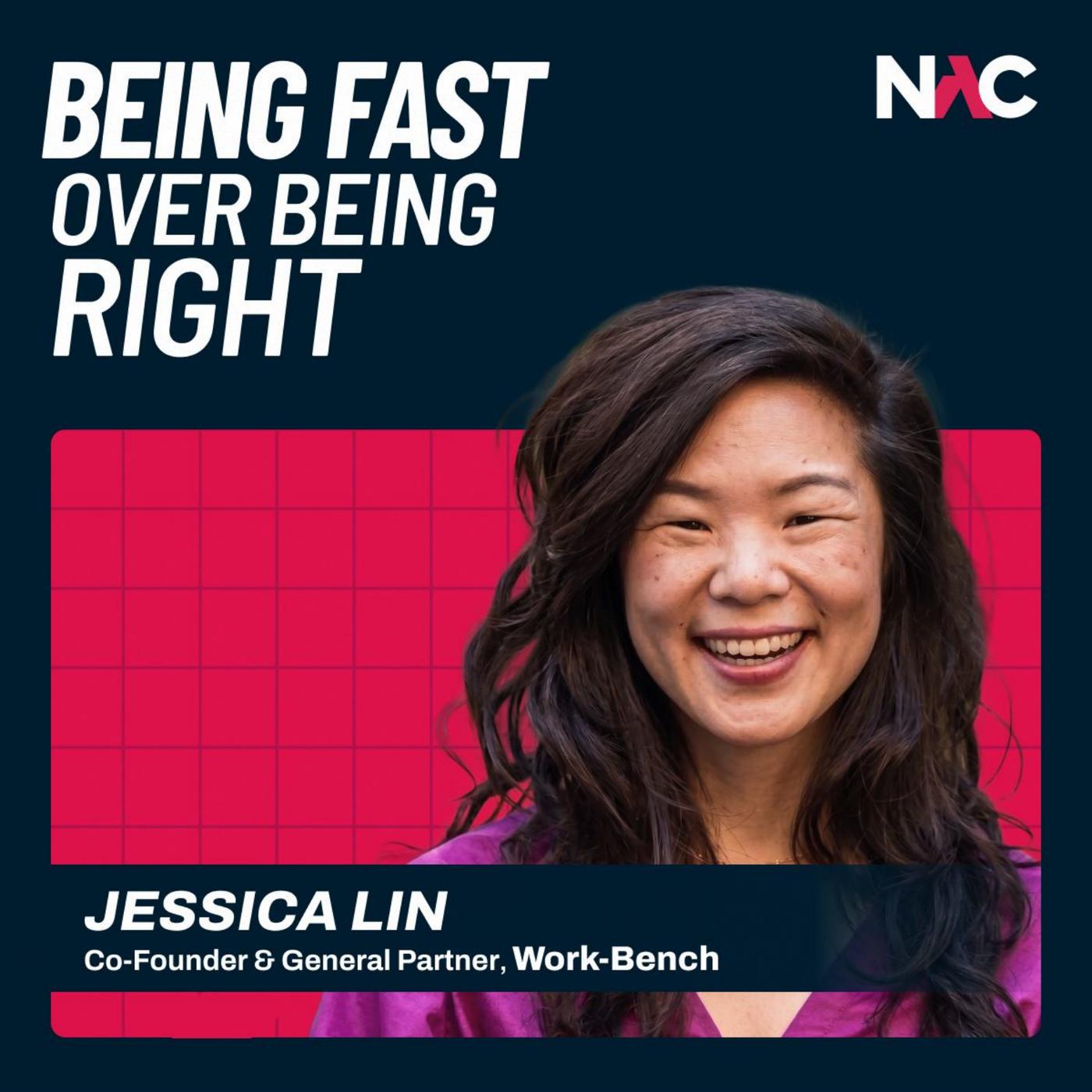
Most founders think investors decide after the pitch but this investor says the decision is usually made in the first five minutes.
In this episode of Not Another CEO, I sat down with Jess Lin, Co-Founder & General Partner at Work-Bench, for a deep conversation on what actually separates great founders from everyone else.
Jess breaks down how investors build conviction in founders within minutes, why product-market fit has become harder than ever, and what most startups misunderstand about growth, fundraising, and becoming truly mission critical. The conversation also explores the emotional side of venture capital, imposter syndrome, building a venture firm, and the realities founders face between Seed and Series A.
From founder obsession and investor psychology to career risk and company building, this episode is a candid look into how elite investors think and what founders need to understand to build enduring companies.
- Investors Often Decide Faster Than Founders Realise: Jess explains that initial conviction about a founder is usually formed within minutes. The rest of the process is often about validating or disproving that instinct.
- Growth Alone Is No Longer Enough: Fast revenue growth has become table stakes. The real question investors ask now is: Would customers genuinely care if this product disappeared tomorrow?
- Founder Obsession Matters: The best founders are deeply obsessed with the problem they’re solving. They see something others don’t and cannot stop thinking about it.
- Venture Capital Is Emotionally Uncertain: Jess shares how difficult it is to know whether you’re actually “good” at investing because feedback loops in venture can take 10+ years.
- Building a VC Firm Is Like Building a Startup: From branding and hiring to differentiation and operations, venture firms face many of the same challenges founders do when building companies.
It's better to be fast than to be right. Because if you're fast, if you just have more at bats, you will least be able to course correct. - Jessica Lin, Co-Founder & General Partner at Work-Bench.
Links:
LinkedIn: https://www.linkedin.com/in/jessicalin8
Work-Bench: https://www.work-bench.com/
00:00: Trailer
04:12: How investors evaluate founders in the first five minutes
09:35: The founder traits that create investor conviction
15:08: Why Series A has become much harder
20:44: What “mission critical” really means in startups
27:10: Product-market fit vs fast growth
33:26: Imposter syndrome in venture capital
39:41: Career advice, risk & serendipity
46:03: Why building a VC firm feels like building a startup
53:18: Final lessons for founders and investors
English
United States
TRANSCRIPT 🔗
SEARCH PAST EPISODES
Search past episodes of Not Another CEO Podcast.
Disclaimer: The podcast and artwork embedded on this page are from Not Another CEO, which is the property of its owner and not affiliated with or endorsed by Listen Notes, Inc.
EDIT
Thank you for helping to keep the podcast database up to date.
