

David Politis: Either you're gonna greatly raise my salary, or you know, you're gonna give me a lot more equity, or I'm just gonna give up. Today's guest is a legend, a serial entrepreneur who has built, scaled, invested in, incubated, and sold multiple companies over the last thirty-five years. In nineteen ninety-two, he co-founded the Synapse Group, which became the largest seller and servicer of magazine subscriptions in the world. It was ultimately sold to Time Warner for eight hundred million dollars. Today he runs Loeb Enterprises, a startup lab and venture collective. They've invested in Helped found and scale more than 50 companies, including five unicorns. About three years in, right, he had a conversation with me and he said, you know, Michael, I used to make $650,000 a year. And then I started this company with you, by the way, and I'm now making $150,000. And when anybody uses those words, I'm just gonna give up. If that is an option, because what you look for in an entrepreneur is that surrender is not an option. And the next day, I started entertaining bids for the company. Now, what I did say to him is, you son of a bitch. The first thing you should know about yourself is that you can go the distance, right? That's what an entrepreneur has to know about themselves. And you raise money not just from me, but from other people who can't afford to lose it. How dare you have this experiment with somebody else's capital? Mm-hmm. Today's guest is a legend, a serial entrepreneur who has built, scaled, invested in, incubated, and sold multiple companies over the last 35 years. In 1992, he co-founded the Synapse Group, which became the largest seller and servicer of magazine subscriptions in the world. It was ultimately sold to Time Warner for $800 million. Inside Synapse, they incubated Priceline.com, which went on to become one of the most iconic companies of the dot com era. Today he runs Loeb Enterprises, a startup lab and venture collective. They've invested in, helped found and scale more than 50 companies, including five unicorns. I already know this is going to be one of the most interesting and honest conversations about building businesses I'll have on this podcast probably ever. So ⁓ welcome, Michael Loeb. Thank you very much. And I think you say that to all the boys. ⁓ thank you for doing this, thank you for doing this in person. First question I always ask every guest is what is the one thing that you've done, big or small at any of your companies that's had the biggest impact? We're gonna do it a little bit differently after a hundred episodes or so. ⁓ we're gonna do it opposite question. So you've seen so many companies, you've worked th with so many founders, so many CEOs. What are the things that the bad CEOs do? The ones that fail, the mistakes that they make. So let's let's take kind of the opposite here. So David, I'm ⁓ I'm half Jewish, half Catholic. Right. So the good news is I'm Jewish from the temples up, which means business models, you know, computational math skills, shit like that. I'm I can say shit. Yeah, for sure. Good. Okay. Can I say other shit too? Okay, fine. So really good at, right? But so Jewish from Temples Up. But below that, you know, I can bench press, I can do like, you know, like you know, Guayacia thing shit, you know. So anyway. So I was ⁓ thinking about that as a question and about ⁓ 'cause this is you know, called, right? This is not what is it called. Not another CEO. Not another CEO. So we want it to be not another CEO. So ⁓ instead of ⁓ celebrating and exalting COs, because a lot of them are unbelievable, but a lot are not so unbelievable. And in startups, it's kind of interesting. It's ⁓ you know, you're just you're just in battle. And you see the best and the worst of people at kind of the same time. And what I thought about is, okay, being half Catholic, half Jewish, do I compare some of the not so good experiences with the ten plagues that the Israelit Israelites had on Egypt, right? Or do I go seven da deadly sins, right? You know, co so I do I go Catholic or do I go Jewish? And I had a refresh on both and ⁓ you know, the Jewish ones, I mean, blood you know, frogs. Frogs shouldn't count, right? You know, Kermit is cute, right? Why I mean frogs shouldn't count. Lice, flies, to me they should combine those things, right? It's still like insects. ⁓ then we had insects, then we had, you know, hail, we had boils, locust, darkness, and then death of the firstborn, which is really kinda severe. And ⁓ so anyway, I rejected that, but then I thought seven dead deadly sins And can we can we ha apply those, you know, to founders and ⁓ kind of you know, character issues related to those founders. And the seven deadly sins are pride, greed, lust. We're not gonna talk about lust, envy, gluttony. I think greed and gluttony is about the same thing. But anyway, and then wrath and sloth. And actually, a lot of those things ⁓ are copathetic with founder deficiencies, right? Founder deficiencies. And ⁓ one of the one of the most profound ones, there's a guy, and he was, right? Pride is the very first deadly sin. This guy was trip tripped up by pride, right? He had a business. It was a $100 million business. The problem is he priced his product entirely wrong. And by the way, fundamental to that was a math error. He was not Jewish, right? But there was a math error that was fundamental to the business. They just misunderstood, like everybody, we had Harvard MBAs, they just misunderstood the business. And as a result, they mispriced their product, right? And the right thing to do was either go back to all the clients because they had much too good a deal, right? And even with a less good deal, they were still greatly underpriced. They still had a good deal, right? Even the guy raised his price. and if you couldn't do that with enough clients, frankly, you bring it through a bankruptcy so that you shed all the contracts and you start a prepackaged bankruptcy and you do it all over again. Guy refused to do it. Guy refused to do it. He refused to reprice his product. He refused to go back to the people that he sold and he made many of those sales individually. And again, it was a hundred million dollar business. So how it got to that lofty height, you know, with this error was really very, very interesting and a different story. But because he refused to do that, he is now bankrupt. And he's now bankrupt and it's not an eleven reorganization, which is what he would have had, right? Just pick up the pieces and go back. And all the clients and I talked to one or two of them and they said, Yeah, you know what, we're just gonna party like it's nineteen ninety nine. I mean, we we know that we're getting too good a deal, but you know, as long as we're getting too good a deal, we're not gonna complain about it. But if had he only gone back and did that He would have not only saved his company, it would have been a thriving company right now. But pride prevented him from doing that. ⁓ we'll go to the bottom of the list, which is sloth. I had one personally. I ⁓ as in I met this guy early in the curve, I thought he was all that. silver tongued, very persuasive, had a business concept. I was the first money in to this business concept. And what he had done is misunderstand the lot of the entrepreneur. Right? So a lot of times kids in particular coming right out of school think, okay, I'm gonna have an idea on Monday. On Tuesday, I'm raising capital. On Wednesday, it's in the marketplace. On Thursday, it's a success. On Friday, I'm entertaining bids. And on Saturday, I'm on a beach in Saint Tropez. Right. And I try to tell ⁓ no, no, that's not how it works. First of all, failure rate of of Companies that are backed by VCs are about 75%. And when I mean failure, it's extinction rates, right? They're out, right? 75% venture-backed companies go out. A B, you know, it takes 10 years. It takes a long time. And it is bloody, and there are pivots. And, you know, the fact of the matter is, most people really don't understand that. And here is a guy who gave every indication that he did, right? And he actually had a pretty good idea. he wasn't Jewish, so he couldn't really do math, and that was kind of a problem. But ⁓ the real problem was sloth. And it was sloth because about three years in, right, he had a conversation with me and he said, you know, Michael, I used to make six hundred and fifty thousand dollars a year. And then I started this company with you, by the way. And I'm now making a hundred and fifty thousand dollars a year. And we need to raise more money. And again, he had greatly misinterpreted what capital it would take. And by the time we have that raise, I'm gonna be diluted down to like much too little for me. So I just, you know can't do this anymore. Either you're gonna greatly raise my salary or, you know, you're gonna give me a lot more equity, or I'm just gonna give up. And when anybody uses those words, I'm just gonna give up. If that is an option, because what you look for in an entrepreneur is that surrender is not an option, quitting is not an option. So as soon as that goes on the table, you have no choice. Right? And the next day I started entertaining bids for the company. Right. Now what I did say to him is, You son of a bitch, you son of a bitch, the first thing you should know about yourself is that you can go the distance. Right, that you can go the distance, that it's not too hard. Any burden, not too hard, right? That's what an entrepreneur has to know about themselves. And you raise money not just from me, but from other people who can't afford to lose it. How dare you, right? How dare you? How dare you have this experiment with somebody else's capital? You should know that about you, right? That you are 24-7, always on, never gonna give up, never gonna surrender, right? You're never gonna come back to me. And this guy, by the way, was a huge Irish guy, right? And never gonna come back to me red-eyed and like practically crying that it's too hard. I mean, hell with you, right? Think of the pockets that you emptied, because you didn't know that about you. Right, despite all appearances. So I did have to sell the company because again, once somebody says I'm gonna, you know, if you don't do this for me, one, you know, extortions are intolerable. And two, when somebody lays down that quitting is an option, they're done. Right? So I sold the company, I got a fraction of what I put in, and so did everybody else. But, you know, this was not the horse to bet on. He would have lost it all. So at least I salvaged something. Do you think that th th that example for me, I feel maybe more as the years go on, ⁓ There are more people in the world who see founding a company the way you just described it, because all we see and all we read is this company went from zero to a hundred million in a week and the founders are billionaires, the youngest billionaires that and then this one went from zero to a hundred million in two days. And right, you know, and I think that there is this thing where you go to college campuses and you talk to people. I read some articles said people don't want to go to consulting, they don't want to go into venture, they don't they want to all be founders. Yeah. There's no way that all those people actually know. understand. And so ⁓ and yes, I tell young people the message that I just gave you all the time. Right. And ⁓ it is harder than you can ever imagine. It is longer than you ever think. Right. I mean, you're 20, okay? You gotta you gotta add 50 percent of life, right? The pre-money value is twenty, the post is thirty, right? So you have just to add 10 on a twenty is what it takes minimally, right, to be successful. And in the middle, many, many pivots, a lot of blood on the floor, and ⁓ a lot of sacrifices. And one of the one of the tragedies of being an entrepreneur, when I hear This is all the time, which is Michael. My company last raised a year ago 100 million dollars, and I own 20% of the company. But my Volvo is 288,000 miles on it, my tires are bald, and I got a baby in the back, right? But the problem is illiquidity. You can't get it out, right? You can't get your money out, right? So It really has to be a total commitment and it's gotta be a labor of love. By the way, one one illustration of that, the second most prevalent form of funding is that founders raid their own four or one Ks. Right? So they are mortgaging their future. They have that much conviction, that much conviction that they do that. Right. So it is you lay it all on the field. And if you're not prepared to do that, right, then you shouldn't be in this business. How do you you've you've ha you've built all these companies, you've founded companies with CEOs, you've done all this, you know How do you see if someone actually is ready for that? Because I think I could tell you that I'm ready for that, but until I'm actually in it. I don't even know if I can actually appreciate what that you know, you know, it's like I can go run a marathon, I could tell you that. I I can't, you know, like but I probably won't do that. Actually I could have I could have told you that. Okay. So anyway, the ⁓ you know, I I wished I was that smart. I wished I had the decoder ring. I think that one of the reasons why I'm still in the game ⁓ is that I feel that I'm still sharpening that saw, I'm still getting better, I'm still my, you know, spidey sense is getting more and more acute, right? But ⁓ in the end, it's hard to tell. And if somebody is determined to fool you, it's hard to tell. One of the one of the questions I do ask, people think I'm kidding, I say, Okay, David, tell me about the lemonade stand you had when you were eight. And if you said, I didn't have a lemonade stand, I said, All right, tell me about you know, the paper route when we used to have papers. The paper route you had when you were twelve. And if you go, I I didn't have that either. And I said, okay, well tell me about the lawn care business that you had when you were fifteen. And by the way, I had all three. And if they say I didn't have that either, then the answer is you're not an entrepreneur. Because it presents itself early, right? Early. And it It is not a learned skill. It is innate, right? It is that kid, they love money. And what they love about money and what they say about that, it's true. It's not the money per se, it's what the money represents. ⁓ but they love that. And they love the idea of figuring out ways for people to work for them. So now they're making money in their sleep. They love that. And I when I asked that question. I get wonderful answers, right? And one, I just coming off the top of my head, ⁓ this this kid, kid, he was out of college. And I asked him that question. I really did ask him that question. Tell me about this. And he had none of that. And he said, But let me tell you about the business I did have. And the business he did have is that ⁓ with video games. And back in the day there were cartridges and video games. And his dad would give him a video game if he got an A, right? On his report card. And so if he got three A's, three video games, right? That was a great incentive. But then he figured out That he had this big collection of video games and he was only going to be using one at a time, he could rent the others. So he would rent them for like, you know, fifty cents like a day, right, to the kids in the neighborhood. And then he figured out that with enough money he could buy his own video games. And that was a whole lot easier than getting an A, right? And then he figured out That he could get friends on bicycles to deliver and pick up for him, right? So he blanketed the neighborhood, right? And he was making crazy money by, you know, having like Netflix, but earlier. Right? I mean, what a genius thing. And ⁓ the founders that I talked to, the the best ones, you know, have built huge businesses while still in college. And I'll by the way, I'll give you one I'll give you one example. ⁓ one of my best entrepreneurs and what we do at Loeb Enterprises, when we find people ask me, where do you get your entrepreneurs? I've been doing this so long, we by the way, stockpile them and we you know, have many, many ideas. We say which is the one you like and they take it and they run with it. And I put them on they're on payroll, right? And some of my entrepreneurs are on tour of duty number three. Right. So they come off a project and then they get to pick, you know, they get the pick of the litter. And the litter is, you know, right now there's twenty-seven ideas sitting in a freezer that they get to take a look at and they, and there's usually two or three in a pod, you know, get to pick one and it's theirs. Right. But my one of my best, and I can say this out loud, Bobby Branagan, one of my best. ⁓ he started his first business in college, right? And how that happened is he was going to the bookstore and he sees the you know, clerk behind the bookstore, behind the register, tearing off covers of two hundred dollar biology books. Right? And it's like, Well, why are you tearing the covers off these brand new books? And the answer was, well, it it didn't sell. And he goes, Well, okay, but it could sell. And he No, no, no, no. They're being sunsetted because edition number fifteen is being replaced by edition number sixteen. So you gotta imagine ninety-seven percent of all the content hasn't changed, right? But ⁓ and the publisher didn't want the whole book back 'cause it cost too much, right? So they just took the cover. as an at proof that it didn't sell so the bookstore can get a refund right on those books. And Bobby took one look at that and said, I wonder if, you know, because I'm going to school in Massachusetts, I wonder if in Alabama they're up to edition 16. Turn out they weren't. They were delighted with edition 15. Okay. So he did this ARP and he created a hundred million dollar business. No kidding around in college. Just doing that. And that's how entrepreneurs think. They look at something and they say, This is dumb. Right. Why are we doing it this way? And then they do the research. And, you know, the best of them do something like that in college. And ⁓ then you know then you know what you got. Then you know what's in the DNA. I love that. All right, let's go to the next one. The next one. So we talked about ⁓ yeah, we like Brothers Brook. So we talked about pride and we talked about sloth. and there is envy, which is ⁓ a real problem. ⁓ and envy is usually not from the bona fide founder. It's usually from the CEO that the board brought in, right? ⁓ because the the founder appreciates that they eat last, right? They eat last. Everybody else, the right the real founder. When you bring in a rent a CEO in an early stage company What they really, really are doing is they're out for themselves. And they really want too much equity, too much pay. And ⁓ you know, the notion of that there's a budget and there's only so much money does not resonate at all. And yes, I've I've seen examples of that as well. another which is not a deadly sin, is that I have had cases, and this is, by the way, something that entrepreneurs are susceptible to, they have to be optimists, right? You wouldn't do this if you're an optimist. You wouldn't, you know, you wouldn't say, I mean If you were fighting a ground war and if you had a rifle on your shoulder and the sergeant said, Okay, the casualty rate is gonna be seventy-five percent. But we're all gonna have a smile on our face and we're all gonna be singing, right? As we jump into the foxhole, you would say, Screw that. I mean that's can we can we go somewhere else instead? But entrepreneurs, they do that. So they gotta be optimists. They gotta be optimists. They gotta think this is gonna work. But there is a a s a place, a line that crosses over into being delusional. Right? And that's a very that's a very that's a very soft line. That's a very hard thing to address because if you're an investor you want that optimism, but then when it crosses over into you're delusional. Right? This is never gonna work. This is never this is never gonna you're never gonna make that sale. This system is not gonna work. You're not gonna get it done by April, right? And you know, when you find that somebody is betting the ranch on all those things, then you've got to You gotta pull the cord, but you gotta do it in such a way that you don't beat the optimism out of it. So delusional is a problem. ⁓ there is a Well that one that one I think the interesting challenge is as I've actually been interviewing more investors. It's you know, investors are looking venture investors specifically are looking for deals that are gonna you know, fifty X, whatever, twenty X they're fine, whatever. So you you to your point about that that optimism kind of thin line to being delusional, you almost need to pitch them something semi delusional for for it to be big enough to be a twenty X, a thirty X, a forty X, and where it's where you end up with the Adam Newmans and you know the like That's a good example. That that's I was at I was there, I met him with this group of founders, it was like ten founders and him, and he was go each person was going around the table telling what their company did and I'm not exaggerating. Eight of the ten he said, Why would you do that? We work is just gonna do that. Like and it was completely irrelevant like completely nonsensical. And he was with a straight face saying, Why why would you do that? We're just gonna do that. He said we're gonna remove all banks. There won't be banks. Everyone will just bank in a WeWork and WeWork will be the bank. you know, the the the line between operator with optimism versus, you know, well, you know, it's funny because what I was going to go into next is sociopaths. Right? Now, Newman, I think, I I never met the man, but from what I read, I I you might just put him in that box. Right. And ⁓ That's that's val yeah. The thing about they say that sociopaths are four percent of the population, right? But there is a concentration of them in entrepreneurship in startups, right? Because you need a couple of qualities. And Newman had one of them, which is you need charm, like magnetic charm, right? You have to, I mean, how many times have you seen like 10 companies and only one gets funding, but they all have like very similar business models? Yeah, all day. What was it? What was a Junissequa? Well, that person just knew how to be incredibly charming, how to paint this picture, this portrait, this fiction, and make it seem incredibly real. Right? And they they the sociopaths do that. Now the flip side of that is they're only they're just out for themselves, right? And I think you saw that quality in Newman also, right? It was just about him. Just about him. And everything, all this big, you know, this portrait of me and being this generous giant and all this stuff was nonsense because underneath it all, he was just looking out for himself. He wanna make sure that he had bank and investors be damned and employees, you know, also didn't benefit very much. So that is another thing. that you gotta watch out for is the sociopath. ⁓ because they one, they they if you read about ⁓ as a group, they tend to be very, very smart. They're very charming, and they're very good when confronted with facts to layer in more kind of fantasy and fib. And when woven all together with the charm actually looks plausible. That's right, right. Looks plausible. So that's Something else that you gotta watch out for. So what have we talked about? We've talked about pride sloth, ⁓ we talked about sociopaths, ⁓ being delusional greed. ⁓ there is a something else that you gotta watch out for, which is which is the founder or the CEO that just doesn't listen. just doesn't listen. And it's a combination of two factors. One, having to be the smartest in the room, right? So if somebody raises a question, the answer is invariably, we thought about that. We thought about that. Well, you know what? No, you haven't. You know, you can't be that dismissive. I mean when a smart person asks you a question, right? An insightful, penetrating question, We thought about that as just not the right answer. I mean you've got to first of all what they're thinking and what they're articulating are like could have some nuance between. You gotta hear ⁓ out. But I have seen, you know, the I thought about it. We already thought about this. We already thought about this. Those pad answers and what that really does, David, is paper over it insecurity. I was just gonna say that it's usually insecurity. It's usually an insecurity. And so that That is another another thing that will trip you up, right? I had I had an investor who said to me, he said, Dave, I don't care if you do everything that I say or if you take every one of my pieces of feedback. What I care is that you hear every piece of feedback and that you listen. Yes. And I think that that was a really interesting because he was a very successful person, his a CEO, whatever, and he said, I'm I'm not telling you what to do, but I but I want the company to be successful. So if I'm sharing something, I just want to see that you're hearing me, you're processing it, and you can decide to do it or not to do it. And that was a really the way he said that has has stuck with me and I see that with some of these founders where you'll say something and say, immedi it instant it literally is instantaneous. No, no, I we already did that. We already thought about that. We already and and it's it's more of I think it's the insecurity of is it possible that I don't know all the answers? I can't show up that way because my investors are gonna think I'm stupid or they're gonna think that I'm not you know, and and I see I I I think that is that is such a good that I don't think I've talked about that with anyone on the podcast before. That is like such a nuanced thing, but a good indication of someone who won't be successful. Right. And and you make a very interesting point. The phrase you have to listen, right, is really nuanced. Right? It's you gotta listen anyway. You gotta hear. You've got to listen. And when a very bright person is asking you a question, you should be refactoring. You should be rethinking that question, right? Intensively. You should be picking it apart, right? Because they're asking that question for a reason. And you might have, and and this is by the way. Something that almost enrages me when I ask a question. when you know the CEO founder will say, Michael, we reviewed that in the last board meeting. Okay, but I'm asking it again. Right? So, you know, we've already we've already asked and answered, we've already settled that one. ⁓ okay. All right. So I'm the stupid one for asking the question, okay? I also happen to be the one with the money. Okay. So like, you know. So ⁓ no, I mean i i it's it's interesting, but They say life is live. Being an entrepreneur is live. I mean it constantly changes. There's always new facts. There's always a competitor coming into the market. There's always a new regulation. There's a something new all the time. And now fast I would say now with AI faster. Really faster than ever before. You you start something, two weeks later you have a competitor that just cop like literally copied your website, vibe coded the competed product, all that stuff. Does it for half the price. I would say ⁓ that a quality that is a non negotiable quality ⁓ of an entrepreneur, you have to be numeric. Right? If you're afraid of numbers, if you can't do math in your head, if you can't and the type of math I'm talking about is if somebody gives you a proposition, right away you've got to say, okay, could this possibly work? Mathematically, right? Possibly work. This suggestion is the type of suggestion that, you know, I'm gonna have a cost of goods of a thousand and I'm only gonna be able to sell it for a hundred. I mean you've gotta be able to put that together. Yes, that is that that is likewise a requirement. ⁓ Why did you choose to build lobe enterprises the way that you did versus becoming a just a traditional venture firm? You know, like you you c I'm sure you could have with your own money and everyone else's money that backed you in the past, you could have had a billion dollar fund, you know, investing in companies like a traditional venture firm. But you're talking about having this freezer full of ideas and this group of entrepreneurs that's there, you know, in the office, that's on staff, that's doing Why why did you choose that model? Right. ⁓ well, you know, it's kind of interesting. I don't think I made a choice at all. I just kind of built, right? And the inspiration, because you asked for that, was in the very first two companies, we had Synapse. And Synapse was a shot out of a cannon generating cash right away. And my then partner, Jay Walker, Brilliant, brilliant guy, had one of those brains that, you know, kept on churning out ideas, and about two and a half, three years in came up with the idea for Priceline.com, right? And ⁓ how that was launched is instead of doubling the team and doubling the space, we just told everybody the good news, you've got two jobs. Right. And as long as it was the same pew in a different church, it actually worked, right? So that was a model. That model was more than one company, but one layer of infrastructure, right? And it worked out actually quite well. And I thought that when I had the opportunity, I was gonna build that. I was gonna frame something on that theory. Right. And today Lobe Enterprises, I call it a Tootsie Pop, and the Chocolatey Center is all the companies and the hard candy shell is shared services. Mm. And shared services is meant to be that X men and women that will help you build and they have uni a unique set of skills. Right? Like world class skills. So, ⁓ they're better at research, they're better at tech, they're better at marketing, they're better, you know, because and one of the great things is you can hire real high quality talent and they they will stick with it because the scenery always changes. Right? I mean you're working you're working on five companies all at once. I mean we have more than that in the portfolio, but you can only work at like five at once. And they that sharpens their sh saw, right? And they get smarter all the time and they get to work with a lot of really bright, hard charging people. And they never feel, you know, they feel like a rolling stone. They never feel stuck. Right. And so that ⁓ that is our model now. Now, folks try to put it into a venture collective box, an incubator box, and I say of an incubator, it's somebody else's ideas, somebody else's teams, somebody else's capital, and you're in and out in ninety days. With us, take the somebody else's out and put in ⁓ put in by the way nine years, right? And it's all us. Right. So our ideas, our capital, our teams, and not ninety days, nine years. So that's kind of our model. And how much capital do you deploy into these companies? that's an interesting question because you're gonna have a follow-up question, that question. the least amount I ever put in was about three million and the most amount over thirty. Right. when you get to that level, it's because you got real conviction on the company and you'd kinda say, you know, I don't want the dilution, so I'm gonna continue to invest. So now people say, Why as little as three? Well there was ⁓ Paul Masan, the wine company had a adage which was no wine before their time. Some companies are ready after three million. They've checked enough boxes that they can get outside capital. Right. So if I may I'd like to turn the subject over into something else. Sure. Sure. Something related. Okay. So I started five years ago building a network of entrepreneurs that we call uncharted. And we started with a dinner. my house on seventy-second street in Madison. I got a antique ⁓ townhouse and We have amakasi, which is wonderful in part because the conversation never stops, right? Those little tiny dishes with little tiny pieces of bait kind of just appear in front of you and nobody with string beans banging you in the back of the head, right? Just you know, that's the thing. So you have a wonderful conversation. And ⁓ we built that into a you know, a tribe of maybe three thousand, I'm told. ⁓ Dinner Series, New York, San Francisco, LA, you know, other cities around the country. We have a number of events. ⁓ this summer we have three big ones. ⁓ the OG is founders funders, and we'll have about seven hundred people there at my at my house for an all-day thing, a lot of programming, a lot of meetups, and Not a week or two goes by without somebody, you know, kind of writing me and saying, you know, at one of your events I met my founder and he just wrote a two and a half million dollar check. Thank you very much. So ⁓ that is very gratifying. But ⁓ I always thought, David, that I would turn this into the ability of the entrepreneur class to exercise some self determination when it comes to funding, right? And One of the things about VCs, and I don't want to cast aspersions about VCs, but in the end. Everybody acts in their interest, and the interest of the VC is the money. And the money that they're talking about is the Ohio State Teachers Fund because they are serial fundraisers. They're like a shark. They got to keep on going. And the teachers fund would put money into fund two, three, four, and ten. That's the customer. The company they only see once. And they do triage very quickly and they make a decision, sometimes they're wrong, that you're not gonna be a fifty X, right? Because that's what they're looking for. They're looking for the twenty five X, the fifty X, the Hundred X. They're looking for that one investment in the fund to pay back the entire fund, right? And that's why the failure rate is they talk about two in ten working. Their definition of working is not necessarily extinction, right? But Two and ten working, in part because they abandon a lot of their babies. Right? Early in the curve, they just make a decision, make a call that you ain't gonna get there, right? You're not gonna be, not that you're gonna fail, but you're not gonna be one of the 50 Xers. And as a result of that, you're gonna die in the desert because when it comes for you to raise again, the guys who put money into your seed round are not gonna hold your hand into the A, and if that doesn't happen, you're done, right? So the irony to all this is that the entrepreneur class is big enough, smart enough, rich enough, that we can fund ourselves, right? We are in the flow because we're building these businesses. We know before anybody else if they're gonna work, right? So this three this group of three thousand, I'm drawing from that group and I'm saying, okay, show me what you're working on. Show me what I'm working on and then what we are doing is signing up a bunch of these entrepreneurs that will commit a minimum of ten thousand dollars in capital into a minimum of one company over the course of the year. And my pledge is to show ⁓ two hundred companies. Right. And if again you got three thousand entrepreneurs in your network, you'll be able to surface that many companies that we vet, by the way. We don't diligence, we vet for ten thousand dollars. We don't have to diligence. And we're hoping that it's more than one company and more than ten thousand dollars, but that is a minimum and if I get a thousand members, if you will, that's ten million in the room that can be deployed like that. Right? Very different than the V C model. The V C model is I have I'm raising five million and I got four checks, right? And one's for two and I got three followers, right? So it's narrow but deep. This is wide and shallow. And you're drawing from hundreds of entrepreneurs that will like this the company that they see. And I'd say it's like art. If you like it, you know what? Just put your money in. Right. And what is liking it? liking it is, you know what, the business model makes sense. I like the founding team. The founder, right, is inspirational, right? I wanna back that guy. And the other thing is that they will back things that they understand. I built an adjacency to this. The guys that I'm looking for to write the checks, they've had an exit. Maybe they were the founder, maybe they were the CTO, but they had an exit. So they got some money, right? Maybe not all the money in the world, sometimes it is, but you know, they've had ⁓ something and they can write a ten thousand dollar check to support their own. To support their own. The other thing we ask is That the deals are unbelievable deals because this is your community, right? This is your community, and you have to give to the community when the community is given to you, right? So that is what we call uncharted pitches. Everything is under the uncharted brand, but uncharted pitches. And ⁓ we've gotten it rolling. We have a pitch coming up on Thursday. ⁓ but ⁓ we have so far in just three pitches raised over ten million dollars for the pitching companies. By the way, it's eight at a time and it's not a pitch at all. I have an interview by a world class journalist because I just think that sometimes founders they could be brilliant, brilliant ideas, great leadership, but you put ⁓ in front of the room and you find that they can't effectively can communicate what their idea is, right? And so a great journalist will get the best out of, you know, that founder. And ⁓ So just to completely c so you have three thousand people, those three thousand people have all had some kind of an exit. Maybe they were part of the executive team, they were the founder, whatever it may be. They have money where they say, I'm I want to invest at least ten thousand dollars every year into at least one company, hopefully more into more companies. And they come to these pitches physically in person. Yep and they watch eight people get interviewed by this journalist. Very quickly. Very quickly. Yep. And then they come out of there and they say, like you said. Like art. Do I like that? Do I think that that's interesting? And they pledge and they invest that ten thousand dollars. So one or two other steps related to that, but they're important. At the end of the pitch starts at four o'clock in the afternoon. We're done by seven, right? Through eight companies. Then we go to my house on the upper west side on seventy-first street, and we have a cocktail party. Right? All the interest investors, all the companies, right? And the companies say this is not a cocktail party, this is like a shooting gallery, because the f scrum forms around me and all they're doing is asking questions. That's exactly the point. Because, you know, VCs, they'll look at the tech. And you'll get questions like, you know, David, in year four, you're making an assumption that your acquisition cost actually goes down by seven percent. How did you come up with that? And it's like, are you kidding? How about how about year four minutes from now, right? In year four minutes, I don't know what the hell's gonna happen. It's a fiction, right? But entrepreneurs, they don't look at the horse, they look at the jockey. Can you pivot? Do you have grit and resilience? Are you gonna walk through glass and fire? Are you gonna do everything that it's gonna take? That's what they're looking for, the eye of the tiger. And when they form that circle and they're peppering these people with questions, that's what they're looking for. So what we ask is You know, if you see it, you like it, make a call, but meet the founders, spend time with the founders, and we set up Zoom calls with the founders, we give them the bat phone numbers so they can call them at any time, and we unlock a data room for them, right? And we say, look, for ten thousand, just go with your gut. If you want to put in a hundred, okay, and we've been known to get like quarter million dollar checks, right? If you want to put in a hundred We vet, we don't diligence. We'll give you all the tools that you can diligence, but you know, at that point you're on you you really gotta do You know, you really gotta do your inspection your way. But yes, that's what we're intending to do. Where it's a little bit of defiance, it's a little bit of think of the absurdity. Why are we dependent? Why is this entrepreneurial class? Think of all the incredible founders with incredible exits, right? Why this dependency on third party capital? When we can be dependent on ourselves, right? Not totally, at least in the early going, right? We can get each other started, pick each other up, and that's exactly what we should be be doing. We should this tribe should take care of itself. And the the next question I have is that group of three thousand, just to make sure I fully understand, they are sourcing those eight companies out of that group they'll recommend to you or to the team and they'll say, hey, I met a founder. They're amazing. Can I get them into uncharted pitches? Correct. And then you'll vet them. You want due diligence then, but you'll say it seems like a n normal person who's a vetting team. We have a vetting team. It goes into the hopper and the vetting team got it. Listens to it. But I mean how refreshing to have like any idea right now, VCs There'll be we only do fintech, you know, seed, or we'll only do health tech A, right? Little tiny boxes. And they can't have drift because they'll get sued. Because if they invest in something outside of that box and it doesn't work, then the LPs will say, What the what the hell? That's not what I but this is the best ideas. The things with the greatest potential, right? The most interesting, fascinating ideas. Right. A lot of times they have AI at the end of it, but a lot of times they don't. I'm I'm gonna tell you about one. Do I have time for one? Okay. So there was a company and you know, you might say, How do you meet all this stuff? And it's a little bit serendipitously, I you know, I've got some favorite friends. What I look for is guys that you know, are are are have incredibly generous spirits and I'm gonna use a name and that's Neil Bloom. He's out of San Diego. Neil in his thirties had a very robust exhibit, right? And he decided to devote the rest of his life in helping young entrepreneurs. And he teaches at San Diego State, but he's got a cabal of maybe, I don't know, fifty a hundred, you know, people that just ask for his advice. And he just doesn't have his hand out. If they want to give him, you know, some warrants, they'll take it. Right. But he doesn't ask. And he's the most amazing guy ever. And I, in like spinning some of this stuff out, up, because we're not just in New York, we're in other cities. and I should explain that. But I said, Neil, let's reconnect. And ⁓ I flew out to San Diego, saw him, and then he said, Michael, I want to show you one of the companies I invested in. And that's where I met a company called Natalus. Natalus. And I met the two founders, young ex-Beeing engineers, brilliant, brilliant, brilliant, AI, devout and convinced. And the first thing they do is they show you a picture and they say, Michael, what's that? And I say, gee, I don't know. And they say, That is the first Boeing commercial jet. Now it looks a whole lot like today's commercial jet, right? And they say that jet was made with five hundred engineers with slide rolls. And it costs 1.1 billion in today's dollars to make. The next Boeing is gonna have 5,000 engineers. They're gonna have all this technology, and it's gonna cost 50 billion to make. And their point is, shit is just over-engineered, right? Over-engineered. Now their next question is, Michael, what's a cargo plane? I said beats the shit out of me. And they say, okay. It's a decommissioned seven thirty-seven or seven sixty-seven. And ⁓ costs four million. And for another six million, total of ten, they'll rip out the seats and make it into a cargo plane. And they say, Is it a good cargo plane? And I said, Well, I don't know. And they said, No, it sucks it's a cargo plane. You're stuffing a bunch of boxes into a cigarette, right? I mean, think of containerized freight. You know, these big containers go from a truck to a train, you know, to a boat, right? You know, a lot of shit goes through those stupid same doors, right? Shitty cargo plane. And, you know, they say, can it land in any airport that it wants? And there's ten thousand private. No, it's gotta go in a commercial airport. Can it go at two hundred miles an hour and save gas? No, it's gotta go at six hundred miles an hour. Okay, so let us show you our cargo plane cargo plane. It looks like a pizza, pizza wedge, right? Triangle. And where the crust goes, the whole back flips up, right? It's called a blended wing, where the wing is where the where the body of the aircraft and the wing are kind of merged, right? So just think of a big wedge. Back flips up, hold back, and the loaders just like sock in, right? All these pallets. Boom, boom, boom, boom. Load time a fraction of what a plane is. And then they say, does cargo have to go at six hundred miles an hour? No, it doesn't. Okay, it's prop. Right? Now, you want to build a plane, should it only go in commercial airports? Hell no. The factories are, you know, where the tiny airports are are, you know, the tiny airports are. Okay, so it can fly in and out of ten thousand different airports around the country, right? And then Michael, if it's only gonna do cargo and it's gonna go two hundred and sixty miles an hour. And it can fly into non commercial airports where there are no people. Does it need pilots? I said, fuck. No, it doesn't need pilots. And so they're building this giant drone just for cargo. Right? Now, that was one of the companies that pitched. They only got like checks from like lunatics, right, that, you know, wanted to do this. They hung an incredibly low valuation because this was bros. They were going to their bros. They were going to the, you know, other entrepreneurs, right? And we raised a couple of million dollars for this company. Right, because it was so now, will it work? I don't ⁓ one other thing. They have thirty six billion dollars of conditional orders. Right? They don't even have a full size model of the plane yet. But You know, all you know, the FedExes and the Amazons and the UPSs and everybody else are looking at this thing and saying, ⁓ my God, you know, the cost of shipping freight is now down by like seventy five percent with this, right? This is genius and would revolutionize our business. So that is what the entrepreneur does. Right, that incredible thinking, right? Who would spend their time thinking about a cargo plane for God? It's the least sexiest, right? Sexiest commercial plane, next sexiest private aviation. I'm thinking about a cargo plane. Who would think about a cargo plane? But these guys ⁓ actually properly dissected it and came to the unbelievable conclusion. And that's what pitches is all about. Finding these crazy it doesn't have AI at the end, although it's kind of created by AI, but it's solving a huge worldwide problem, right? In the most elegant of ways. And if they do it, this company is gonna be worth whatever zillions. But ⁓ my God, the courage. Right, of these guys, these two guys, to take their Boeing careers, put it in a hold, and do this, right? Do this. Blood, sweat, and tears, a fraction of what they were getting paid before, 120 hours a week, right? This, and by the way, I met them and I said, I gotta bring you the pitches, and believe it or not, they flew in to do that. It wasn't just, you know, they did it by Zoom, they came in in person. to share what they were putting together. 'Cause they're that proud of it. Love it. ⁓ I wanna pivot a little bit with the time we have left to your story specifically. ⁓ if you go back and look at the success you've had in your life, your career, what is the one attribute that you have If there's one. I mean you have many, I'm sure, but if the what what is that one attribute that you're you know, there's so hard. There's so many of them. No, I ⁓ let me let me in the spirit of what we were talking about, right, which is the negative space, right? This was not the great founders, but the negative space, right? Because this is not you know, your CO. So ⁓ I'm gonna go with what I did wrong. Okay. So I did not start my first company. I knew I was an entrepreneur. I was that kid, right? I followed my dad into Time Inc. My dad was one of the great journalists of all times, right? And he I follow him into Time Inc., not as a journalist, but on the business side, because that's all that I heard about as a kid. So dad, it's your fault. Anyway. So but I you know I it was It was a little bit too comfortable for me and I had too many good jobs. Like I ran Sports Illustrated. Like that was a lot of fun. ⁓ Do you remember the sneaker phone? Yeah, yeah. I made that. And the football phone. That was mine too. Right. So and bloopers videos and all that. I mean that was all premium. Sports Illustrated for kids only. Of course. So it was and then I launched Entertainment Weekly and that was the job that got me fired when I was thirty six, right? So I should have never gone into corporate America. I sucked as a cor I was just a takedown prisoner. Yeah, but successful because they had to make they had to let me be successful. In other words, ⁓ the stuff was so effective in creating profits and changing things that despite my errant personality, right? you know, they they had to give me big bonuses, they had to promote me, right? But they didn't like doing it, but you know, and as soon as as soon as the opportunity arose, which was Entertainment Weekly was a tough launch, that's when I got shit camped, right? Because I had enough I created enough enemies that, you know, they took the opportunity. They took the opportunity to do that. And so ⁓ so I should have been I I shouldn't have been an entrepreneur when I got to be thirty-six, right? I should have been when I was sixteen. So that was the mistake I made. Now by the way, I thought thirty six was really old, but then I read that Bloomberg didn't start until he was thirty eight. So I thought, okay, you know, that that's that's okay. I can take ⁓ some solace in that. But so I would yeah, I would I would say that that was my biggest error. ⁓ 'cause I lost twenty years, you know, I'm not gonna get those twenty years back. my advice to everybody apropos that I love quotes and one good one apropos to this is what Nike says, which is just do it, right? And that is, by the way, ⁓ another thing that, you know, you do see entrepreneurs make some mistake. And by the way, it's a bell shaped curve, right? But one side of the bell is Paralysis by analysis, right? It just freezes you from making the decision. The other side is it's all totally impulsive with no facts. You really gotta be in the middle of the bell, right? You gotta have an opinion, should be a strong one, could be very differentiated, even novel, but it's gotta be informed. Right? It's gotta be informed. And it's gotta be informed. It's interesting. I find I get more out of the people I talk to than the things I read because The people I talk to and what I look for, it's very interesting, David. There is always one. And it's just one. Right? And the one is the most brilliant guy in that space. That person who has insight like nobody else. And you'll talk to a lot of I wouldn't call them dilettants, but you talk to a lot of people, and they could have been in the industry for ten years, but they don't really understand it. But there's somebody who really, really gets it, really understands it. Right? Like I don't understand gravity. You understand gravity? I don't understand gravity. I I don't understand how it works. There's like eight people in the world who know and you want to talk to that eight, that one of that eight. And w seven out of the eight are gonna be too esoteric, you're not gonna understand the thing that they say, but one of ⁓ right, can turn it into baby food and you can understand what it is. That's what you seek. You you are at this point in your career You've made a lot of money, you've built a lot of things, you've done but you still seem to have a lot of energy. what is it that drives you? Yeah. so one thing, David, that I have, and this is, you know, a drivable thing, is that I have the privilege. I used to say I have the privilege of working people with people half my age and twice as smart. Now I get to say a third of my age and three times as smart. being around that energy, being around that intellect, being around that new thinking in a world that is so dynamic is ⁓ really thrilling for me. Right? Really thrilling for me. The other motivation is I want to make a difference, right? I want to put a dent in the world. ⁓ there's a guy by the name of Kevin Ryan, and if you have him on haven't had him on here, he is you know, absurdly brilliant. he and I have similar models. He is as credentialed as they come. MongoDB is one of his biggest ones. But Alicorp right? Alicorp is exactly what he does. And if Kevin Ryan can look at something I did and say, I wished I I wished I came up with that idea, that is about the highest praise I can ever get. When someone whose brain you really regard and respect and sometimes a little afraid of, when they can say, That was that was the idea that got away and I wished I had it. That was a Kevin Ryan idea and that son of a bitch, Michael Loeb had it instead of me. That's ⁓ that's thrilling for me. The other thing that's thrilling is I've had the privilege of starting companies that have saved people a lot of money. ⁓ and also you know, a couple of them in the pharmacy space, I think, saved lives. Because I made medicines much more affordable. ⁓ like generics, rack rate of generics is say seventy or eighty bucks. I got it down to an average of twenty two, right, by going direct to the manufacturer. And there were tens of millions of people, right, putting through I don't know, a hundred million prescriptions a year and some of those were for, you know, kind of life saving, life altering medicines. And that was the difference between people buying them once every three months, because that's that what they could afford to being able to buy ⁓ every month. So that's ⁓ that's the things I I seek. Do you f when you built your first company? Was it the same thing that was driving you or was this? ⁓ no, I needed a job. So I was fired and it was a rather noisy firing. It and the Inc I was I was shown the door as and and the managing editor was also shown the door. And the question everybody was asking, Time Inc., this can't miss magazine publisher, did they just give birth to a failure? Right? And Basically, timing's position was, well, we've been telling you everything is going along swimmingly, and we didn't quite tell the truth, but okay, we were able to exorcise the tumors from the body and they've been cast out. And now everything is gonna be fine at Entertainment Weekly. So I wasn't gonna get a job in media anytime soon. So my options were, you know, like start a company or jump off a bridge. And you know, the jumping off a bridge that was, you know, a little dramatic and it's kind of permanent. So, you know, let's try this. Was it to prove them wrong? No. No, it wasn't to prove them wrong. It was no, it wasn't that. That's by the way, one of the seven deadly sins, right? Is ⁓ I'm gonna have to read it here, but one of the seven is ⁓ I guess wrath, right? Right. Right? It's no, you you know, revenge motive huge amount of energy. A lot of times it backsfires. And you know, whoever said that the best revenge is living well That's that's exactly right. ⁓ and ⁓ spend your energy on that. Spend your energy on like productive things instead of trying to get even. That takes you know, that takes a lot and takes a lot out of you and you're better than that. You are better than that, right? Invent the future, right? Was there someone early in your career that was a role model to you or a mentor or someone, you know, that that's Yeah, I mean my dad ⁓ was ⁓ very important in that. ⁓ he He was they said about Marshall Loeb that when you were in the presence of Marshall Loeb, you felt like you were in the presence of royalty. He just had incredible grace. ⁓ he was ⁓ he grew up in the poor side of Chicago. He was known as Jewey Loeb and he joined Time Inc. which was a very patrician place. ⁓ didn't go to Yale, which is where they all went ⁓ at Time Inc. at the time, and became one of the world's greatest journalists just by force of. Will. I mean, this man had ⁓ the ability to work ⁓ 120 hours a week and did it without complaint. And so ⁓ that was a great inspiration to me. It's you know, the folks that accomplish something and then have their handout, that's You know, that that is tough to deal with, right? We're all in the same boat, it's heavy seas, there's a lot of rowing to do and ⁓ you know, I just I don't want to hear about the blisters on your finger. We all have blisters on your finger, right? I mean, you know, it's it's and if if you thought that blisters were gonna be a problem, then damn it, you shouldn't have been on the boat, right? You shouldn't have grabbed an oar because you're just taking up space. So yeah, he was he was a great inspiration. so anyway. I saw a really good quote that was something like, you know Lazy people think that they're winning and the w winners think that they're being lazy. ⁓ yeah. Like something like that. And I I feel like that I showed to my kids the other day and I said that is the tr one of the truest statements. You know, all the time I think about all the best people I worked with, I would call them into my office and they would think that they're getting fired. And I'm What do you mean you're getting you're getting promoted? They'd I thought you were gonna fire me. I'm like, You're the best person and had to come and there's this constant like feeling of that, you know. ⁓ a corollary to that is that if you want something done, give it to a busy person. Because ⁓ you're right about that. I mean, that the most accomplished people just are saying, Well, you know, God, the pile's not you know, it's just keeps getting bigger. I'm not making a dent and I you know, I I could have done it better. I mean ⁓ there's an achievement orientation among entrepreneurs. Like we can always get better. one of the things we think about with uncharted generally is that Entrepreneurs, they have blinders on, right? They are, you know, they they self isolate, and they put themselves into a, you know, kind of soundproof container because they just have to focus to get things done. And I tell a story, true story, about last summer's uncharted founders funders, again about seven hundred people, and I was standing by my it's at my house in Southampton Which has where that happened. Yeah, yeah. Ham happens to be the billions house, by the way. But ⁓ Southampton and that's, you know, on the beach, blah blah blah, and we have a big tent and a lot of programming. It's really quite quite something and people get a lot out of it. But I was standing ⁓ around my pool and I look left and I see the founder of Republic, I look straight ahead and I see the founder of Deal, and I look right and I see the founder of Bolt, and we're talking like left is about four billion, straight ahead is thirteen billion, and to the right is eleven billion, I'm talking about valuations. And they're all within arm's reach or close. And I grab ⁓ put ⁓ in a scrum, and I said, Have any of you met any of you? And the answer was no. How could that be? They're gods. Right. I mean think of that. I got thirty billion dollar or close of valuation, right? Right there. And none of them at any of each other. And that's part of what we're trying to do. We're trying to get, you know, ⁓ this is one day where everybody can take off the body armor and just lose themselves in their community and make an effort to, you know, meet some other great people that we want you to keep you know, to keep those relationships for a very long time. And ⁓ in the end, we all can find somebody who can help us. And that's what we're trying to do. We're trying to create that community, create that opportunity, create that forum that you can meet that person that you can learn from, that you can gain from. And because we all can do it. And you need a humility about this, which is not a word we used before. So it's interesting about entrepreneurs. They need to have at once confidence, arrogance, but they also need a humility. Right. And they also have to appreciate that ⁓ to be the smartest guy in the room is not a success, that's a fail. Then you're just in the wrong room. You want to be in a room with a lot of people smarter than you because they're gonna make your business better. And you've gotta be the you gotta have the confidence and the ego to be able to handle all that. And you know, not everybody can. Yeah. And That's great. Michael, thank you for doing this with me. I I there's so much in here that I want to cut up and share and and ⁓ I think for people to to hear this. I I'm looking forward to coming to some of these uncharted pitches and maybe recording some episodes of some of the founders and ⁓ yeah, that's that's my one my ask of you is that ⁓ we are looking for folks that want to be part of Uncharted Pitches, who want to, you know, commit to like putting a small amount of money in a great company We do have it is face to face in New York. You can't make it at Zoom. You can't make that. It's sitting in a warehouse. ⁓ we are standing up cities around the country to do kind of the same thing. But what this is, is an appreciation of who entrepreneurs are. We're a unique class. We should have our head ex examined, frankly, but we are a unique class. And there's no reason why we can't be supportive of one another. ⁓ because many of us, not all of us, have made money, ⁓ certainly enough money to afford what we're talking about. And ⁓ the other thing we should appreciate is we should appreciate us because if you look at the United States, in nineteen sixty we were China. And what do I mean by that? We were the manufacturer of the world. Most of the manufactured goods of the world came from the United States. No longer the case, right? What has happened? Well, we want we went from brawn to brains because of the 20 most significant tech companies as measured by market clo market cap worldwide, of the 20 biggest, 16 are American. Right, we're four percent of the world's population, eighty percent of the most wildly successful tech companies worldwide. Right? Brawn brains. Where did that come from? Entrepreneurs, right? We're also responsible for most of the jobs. We're also responsible for, you know, most of the wealth creation and innovation. And yet, you know, seventy-five percent failure rates. you know, we don't pay ourselves much and we rate our own four ⁓ one K and so I just think that this country owes us all a big debt, but we also have an obligation to ourselves. Right? We gotta help. We gotta help our brethren and sisterin, right, in their efforts to build a business. And by the way, if they're trying to build something, you know, dumb That's our obligation too, which is, you know, Sam, Sally, gotta tell ya, this dog, this dog ain't not gonna hunt. Okay. You're brilliant, right? You're brilliant. Let's reshape this. All right. Let's come up with plan B. Let's do something else. Work on it together. But let's take that energy and let's not waste it. Right? Let's put it ⁓ something that can work, right? And enrich, you know, all of us. And One, you know, you ask what keeps me going, and part of it is, you know, I paid for hundreds of college of educations. I paid for hundreds of houses, right? I've paid for bar mitzvahs, birthdays, you know, ⁓ weddings, right? Because building businesses, employing people, enriching them with an exit, ⁓ you know their stakeholders too, as well as the people who write checks, that's what makes this country very differentiated compared to all the other countries. And we do things here. The ac the the notion that sixteen out of twenty are the biggest, most important that's not an accident, right? That's a preponderance. And it has something to do with our mentality, maybe that pioneer mentality, that we just have the courage to do that. ⁓ one of the things I talked with my European friends is that we're allowed to fail in the United States. And if you're not accepting that, then it's really tough to be an entrepreneur. Right. So whatever it is, whatever that Juno saqu is, we have it here. It is absolutely necessary. If we don't have it, we become France, right? Nice to look at, not much going on. Okay. So we need this. We need this. ⁓ we need this for the country. We need this for the economy. And ⁓ Entrepreneurs should be celebrated. That's what Uncharted is all about. And entrepreneurs should ⁓ help their own because we can and that's what Uncharted Pitches is all about. Awesome. Michael, thank you very much. Thank you so much. I really enjoyed this. Good. I ⁓ hope everyone enjoyed this. If you did, please share this out with your networks, and we'll see you for the next episode of Not Another CO podcast.
ABOUT THIS EPISODE
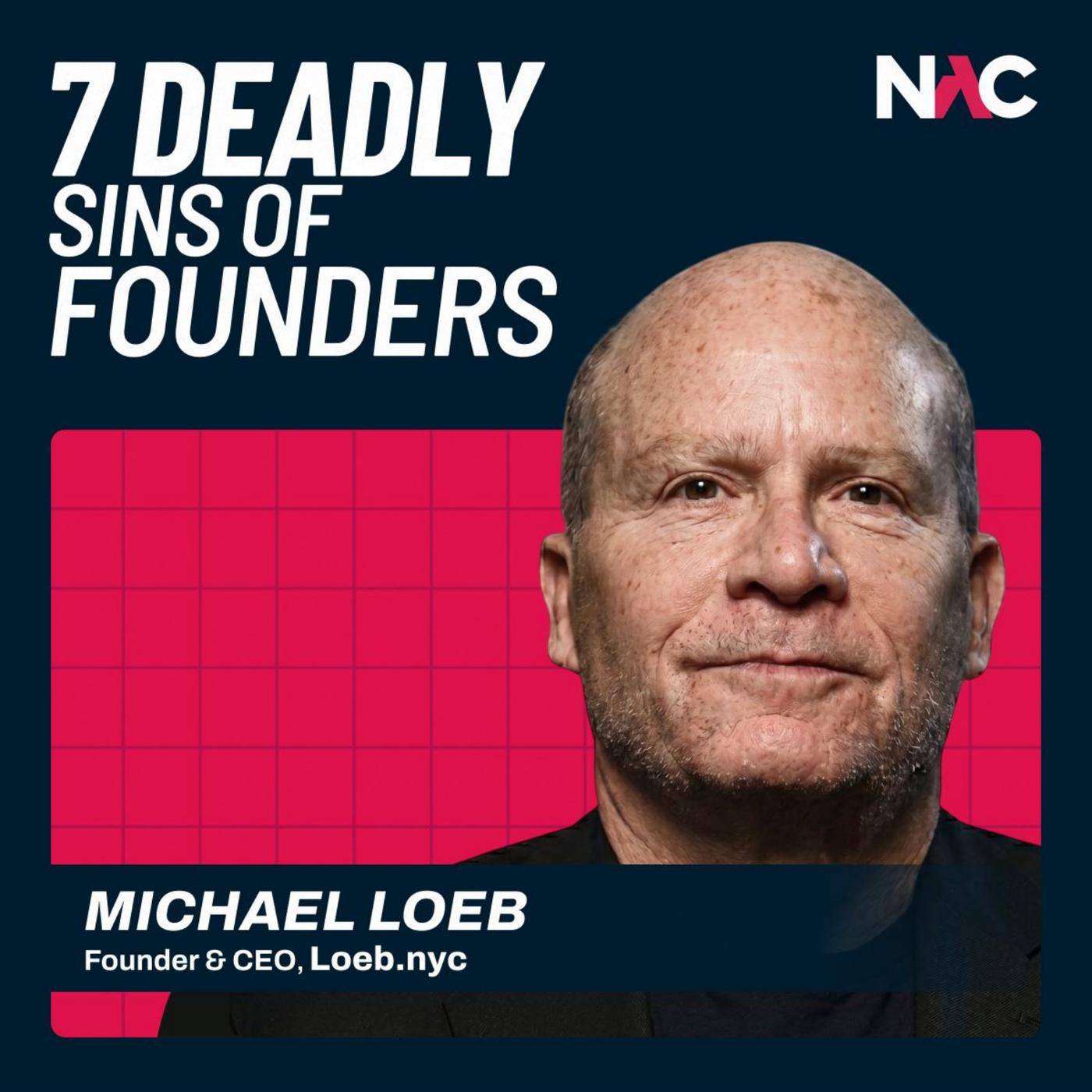
Most founders fail before the market ever gets the chance to beat them the enemy is inside the building.
In this episode of Not Another CEO Podcast, David sits down with Michael Loeb, Co-Founder of Synapse Group and founder of Loeb Enterprises, a startup studio and venture collective that has invested in, incubated, and scaled more than 50 companies including five unicorns.
Michael shares the hard-earned lessons from 35 years of building: the character flaws that destroy founders before the market ever gets the chance, what separates real entrepreneurial DNA from people who just like the idea of it, why sociopaths concentrate in startups, and why the entrepreneurial class should be funding itself instead of depending on traditional venture capital.
Takeaways:
1. The character flaws that kill founders are predictable: Michael maps pride, sloth, delusion, and the refusal to listen onto real founder failure stories.
2. Entrepreneurship is innate, not learned: Real founders show up early the lemonade stand, the paper route, the video game rental business in college.
3. Surrender being an option is a dealbreaker: The moment a founder puts quitting on the table, Michael says the relationship is over.
4. Charm is a feature and a warning sign: Sociopaths concentrate in startups because magnetic charm and the ability to make fiction feel real are exactly the qualities that attract early capital.
5. The entrepreneurial class is rich enough to fund itself: Michael's Uncharted model is built on a simple premise: founders who have had exits, understand the journey, and can write a $10,000 check should be backing each other not waiting on institutional capital that is fundamentally optimising for something different.
Quote of the Show:
"When anybody uses those words I'm just going to give up if that is an option, you have no choice. Surrender is not an option. Quitting is not an option. So as soon as that goes on the table, they're done." - Michael Loeb, Founder & CEO, Loeb Enterprises
Links:
LinkedIn: https://www.linkedin.com/in/michaelloeb1/
Website: https://loeb.nyc/
Ways to Tune In:
Substack: https://notanotherceo.substack.com/
Spotify: https://open.spotify.com/show/1NQ9oAB2XKlgWeL8iEQXg0
Apple Podcasts: https://podcasts.apple.com/us/podcast/not-another-ceo-podcast/id1751581707
YouTube: https://www.youtube.com/@NotAnotherCEOPodcast
Chapters:
00:00 - Trailer
03:45 - The seven deadly sins of founders and the pride that bankrupted a $100M business
06:36 - Sloth, the founder who quit, and why surrender can never be an option
13:35 - How Michael spots real entrepreneurial DNA before writing a check
15:43 - The video game rental kid and what genuine founder instinct looks like in college
20:00 - Envy and why rent-a-CEOs create a different kind of danger
22:00 - The thin line between necessary optimism and dangerous delusion
24:53 - Why charm is both a feature and a warning sign
26:16 - The founder who refuses to listen
31:19 - Why being numeric is a non-negotiable founder requirement
34:58 - Founders Backing Founders
English
United States
TRANSCRIPT 🔗
SEARCH PAST EPISODES
Search past episodes of Not Another CEO Podcast.
Disclaimer: The podcast and artwork embedded on this page are from Not Another CEO, which is the property of its owner and not affiliated with or endorsed by Listen Notes, Inc.
EDIT
Thank you for helping to keep the podcast database up to date.
