

David Politis: Being a CEO of a scaled business today, it's probably one of the hardest jobs. You constantly have to think like should we replatform ourselves? Should we rebuild from the start? So you're kind of like flying a plane and rebuilding the plane at the exact same time. Today's guest started his career at Google. He then went on to found TalkIQ, a real-time speech recognition company that he started a decade ago, way before AI was cool. TalkIQ was acquired by DialPad, and over the next six years he helped scale Dialpad past $200 million in revenue. 2024, he was recruited to take over as CEO Front, the modern customer operations platform used by over 9,000 companies around the world. What is the biggest challenge you've faced and how have you overcome that? The biggest challenge comes back to like the beliefs in like the past decision and like inertia in the business. I think the hardest thing coming in as a CEO, the non-founder of a business, is you gotta build like that trust and credibility. And I can't take six months to get everyone kind of comfortable with the changes. Taking over has been much harder than I thought. And it's usually from the behaviors and people side. Today's guest has a really unique career. He's been an executive at one of the biggest technology companies in the world. He's been a founder. He's been a key operator at a high growth company. And now he's a hired CEO. Not many people have done all four of those jobs. He started his career at Google. He then went on to found TalkIQ, a real-time speech recognition company that he started a decade ago, way before AI was cool. TalkIQ was acquired by DialPad, and over the next six years, he helped scale DialPad past $200 million. In revenue, first as chief revenue officer and then as chief AI and strategy officer. In 2024, he was recruited to take over as CEO Front, the modern customer operations platform for B2B businesses used by over 9,000 companies around the world. He's now leading Front's reinvention for the AI era. Dan O'Connell, welcome to Not Another CEO Podcast. Thanks for having me, David. It was such an illustrious intro when somebody else does it. So this is so time. ⁓ I'm very happy Craig Walker ⁓ from Dial Pet put us in touch. He was a former guest, so ⁓ and he speaks very highly of you. So I'm I'm excited for this. ⁓ first question right out of the gates. What's the one thing that you've done at front, big or small, that's had the biggest impact and you'll absolutely do again if you're a CEO of another company in the future? Yeah, I think coming into a business and even starting a business, I think, ⁓ really was focus. ⁓ which was when I joined from we had a lot of talent, we had a strong product, we'd great customers, but I think really too many priorities. So it was really about how do you get brutally clear on who do we serve, where do we win, and also what are we not going to do. And I think those are the pieces ⁓ that sometimes get missed with folks, which is actually specifically calling out this is not who we're gonna go and sell to or who we're gonna go build for. But really it was all around how do you go drive focus? And that focus is. intentional, that intentionality brings ⁓ as I said, ⁓ clear priorities and then that ultimately helped us reaccelerate our revenue. You know, one of the ⁓ one of the people I've had on the podcast, I remember it was a Mish Johnny from Firstmark, and he said to me, ⁓ he said, you know, companies don't die from ⁓ from starvation, they die from indigestion. And and I think for me, and I'm sure you have that founder kind of DNA, it can be very easy to to to want to do Everything. Everything looks like that shiny object. Everything looks like that opportunity. But but in reality, even big companies can't do everything well. Yeah. I think it's spot on. Like I get pushed. ⁓ you know, I am probably the ideas person, which is probably similar to you, which is like I will spit out, you know, here are the 16 things I wish we can go and do. Fortunately, I've got some great execs that will like rein me in on the pieces to say, look, like we really need to prioritize and ⁓ I think those are things that you naturally learn like through experience as well, which is really like you if you want to do something really well, you probably need to go and have no more than three priorities. And so those are things when we talk about focus, which is like being intentional around our OKRs. I set company pillars for the course of a year. We do quarterly reporting on those pillars, we set OKR goals at the functional level, but these are all things that again, One is you can go and force the focus to happen, but then there's the intentionality around the operational rigor to go and make sure the execution happens so that you don't get distracted constantly. What was the first place that you decided to get more focused? Go to go to market. You can see me almost like leave into it, lean into it immediately, like when you start asking that question. We had come on we were a business that had really fast growth to sixty, seventy million in ARR. ⁓ and then I think much like many businesses in the SaaS space, you know, I remember if years ago you run into a post-COVID slowdown, children contractions start to pick up. And at the end of the day, like, look, like growth is really all that matters. And even in today's market, look like we've gone through ⁓ you know, slight people caring about ⁓ maybe free cash flow and and ⁓ and some other things. But I'm like at the end of the day. We play in competitive markets. And so growth is the metric that matters. It matters for investors. It matters to demonstrate that you're capturing market share. It matters for our frontiers. They want to know that they're at a place that's winning. And so like the growth, it really solves your problems. And so again, when we talk about like intentionality of focus, it is, hey, let's go really be really clear about who we're selling to. ⁓ we purposely shifted the business away from SMBs and and and kind of PLG motion and say, let's go up market. ⁓ we think there was a ripe part of the market that was underserved by really the competition and we could solve their needs for and that was a way for us to go and again recelerate growth by focusing on larger customers. So really kind of ICP definition and narrowing that ICP, that was the first thing. Yeah, I think ICP gets missed a lot of times by businesses, even starting a, you know, starting a business at talk IQ, which was ⁓ I look back at that time and and say we probably could have been tighter on our ICP definition and being crystal clear on who is it that you're trying to sell to? What do they look like? And we've had some wonderful frontiers that ran our ran a project really redefining our ICP. And ⁓ it's been amazing to see that everybody in the company talks about. We call them Suzy ⁓ Suzy's support and Owen's operations or like the buyer personas that we that we sell to. And it's just funny to know that like we've done such a good job that every frontier refers to them as Suzy and Owen. And that's when you know that you have really tight prioritization and really tight focus on like who is it that you're going after? And then being specific on the size and and and ⁓ and the market of the the companies that you're going after. So we focus on mid-market. What does that mean? 250 to ⁓ 2000 ⁓ employees of a businesses that we like to go after. ⁓ we work with a bunch of different verticals, but we do predominantly really well with B2B businesses. ⁓ doesn't mean that we shy away from B2C, but again, providing that clarity and focus ⁓ is something that I think the team has really responded to and again allows us to have clarity as as to what market we're trying to win. So I I've seen a lot of companies, you know, that I that I talk to or I work with, or I get in there and I start. ⁓ spending time with them and they they may have the ICP, they may have some of these focus areas and the pillars and everything, but it doesn't actually work. You know, it's it's it's you know when you talk about kind of the operating rhythm or the OKRs or the weekly readouts. And can you talk maybe what is that machinery that you have in place? Because I think it's one thing to just say, hey, we're going to be focused on this. And then it's another thing to actually have the machinery to make sure that you stay focused on Yeah, I think like we, you know, people ask me, like, I think we've d there's always look, you can always be a better, have a tighter operating rigor, but I would say on go to market side. And and most of my my background has been in go to market through, you know, 25 plus years. And ⁓ a lot of it comes down to like being really tight on discovery questions. being really tight on closed one reasons. We celebrate why we win. We have cle we have Clear details that go out of every closed one of a report of why did we win? Who are we up against? The same goes for churn and contraction when those things happen. We've run a tight operating rigor and process. We meet monthly to go over who are the accounts that are at risk, what are the accounts that left us or contracted? And so again, I think like a lot of times people will talk about operating rigor and having the data, but not necessarily forcing the conversations to happen. We the force those conversations to happen across product. And our go-to-market teams where we sit down, we're really tight on what is the data that we're going to talk about. We're going to understand the reasons, or those product reasons that we had churn and contraction or or we want an ⁓ one an opportunity. ⁓ and then again, just forcing that accountability and those conversations to happen. The forecasting piece, like we meet weekly to talk both around forecast and pipeline. ⁓ It's crazy to me sometimes when I've been part of businesses where people will meet every other week to talk about pipeline and forecasting or or maybe less than that. ⁓ as a former CRO in a past life, like that stuff just drives me nuts and terrifies me because the whole business is around do we understand are we winning, are we losing? What are the plays we then need to go put in place and do those fairly quickly? And so I care a lot about the rigor around forecasting and understanding pipeline because it's all about coverage. Do you do that stuff, actual meetings, async? Like how how do you how do you do that? We do I for yes, the there are there are plenty of meetings that happen and I I hate to say like below me on my butt. Yeah, there are plenty of meetings. ⁓ there are two meetings I care a lot about. ⁓ on Tuesday, we do a forecasting and pipeline meeting that is with the leaders across the organization. So and I tell people that meeting is not for me. I'm in dashboards all the time. Like I know where our what what our numbers look like. What I care about is the forcing function to bring bring the the function, the cross-functional leaders together. So for example, our head of product sits in that forecast and pipeline meeting. Our V our SVP of engineering sits in that meeting. Our head of people ops. The reason for that is to make sure that I want those leaders to be able to be to talk to their teams about how the business is doing. We talk about how the business is doing at all hands. We do that every two weeks, but I know people will tune out. ⁓ and so you gotta reiterate and constantly talk about this story in progress. The next meeting that we have is I always have the same meeting around forecast and pipeline at the exec level because not every executive is in the weekly kind of go to market forecast and pipeline meeting. And so again, it comes down to I wanna make sure that the execs all have clear visibility of how are we pacing as a business and as a unit. You know, I I don't think I've ever heard anyone say that the people ops person. You know, is but it makes sense. Actually, when you say it like that, it makes sense. The reason I care about it is actually on the recruiting side. And I actually view recruiting ultimately comes down, especially in this market, like your ability to tell a story. ⁓ and I love like I'll do fo like I love getting involved with our recruiting. We have like a an awesome team, but it comes down to like their ability to then have context of understanding of how the business is doing is when they reach out to David to tell a story. They're not just telling a vision story because they understand the vision, is they are able to tell, here's why you should pick this opportunity with us. The business is setting records. We've just crossed this milestone. We've got ex customer, whatever you all of the things that are there is that context actually makes a difference. And that's your first impression. Like if your first impression is the recruiting team, the person that stands out is like that recruiter that can tell this awesome product narrative and story in this interesting market and has all of these. It has all of these metrics. And I'm like, what a better ex but like I can't think of a better, more powerful experience than that. And so again, I like you know, it might sound weird that somebody's like, Hey, why is the chief people officer there? I'm like, because it helps with the story in the market for where we're trying to attract talent. And talent is really the thing that matters arguably most. Yeah. ⁓ that's a good one. No one's ever said that before. I've I but it may it makes sense. And I I think to your point, it also just makes sure everyone Product engineering are there, I mean, at the end of the day, to service the customers and drive pipeline and drive growth. And, you know, then they need to be, I I don't think most people, at least in my conversation, I don't think most people are doing that in their pipeline meetings. And this this goes into like we track our add-on revenue. Multiproduct company, we have add-ons that we sell. We introduced those add-ons a year ago. We've gone through pricing and packaging changes, like all sorts of things. And so again, like the reason you want the product and engineering team in there because it's not just about, hey, did you build a pr like, did you build the product? At the end of the day, like we're a growth company, we have to deliver revenue from the products that we ship. There is no better indication of product market fit and success than you have built something and somebody is willing to pay for it. And so again, the closer that you can get those teams to understanding the economics of a business, what is working, what is not from a revenue angle, I think again helps them go back to their teams to tell these stories about hey, are we on the right track? Or if we're on the wrong track. Right. Here's why. Here's what we're hearing from customers. And so it it's a lot of work. ⁓ I definitely understand that sometimes people will ask, like, why am I in, you know, why am I in this meeting? And again, it's all around helping them understand the broader perspective of the business and the ebbs and flows of that business and how we're doing. In terms of talking about people and team and everything, when you came into the company as the CEO, obviously not the founder, on a people front, what were the things that you had to change? Yeah, I think the the hardest piece coming in ultimately is you're inheriting something, right? So you're inheriting history, you're inheriting a level of success, you're inheriting strong decisions, ⁓ legacy, ⁓ you name it. And so I think for me it was really understanding, look, One was slowing down and understanding the people, ⁓ gaining trust with the people and the and the teams that are there. ⁓ but again, it was also understanding it look like our growth had plateaued and we wanted to re-accelerate. And I had to help drive that alignment and build those relationships. But it all started with understanding the people first and the opportunity that was there and then figuring out the places to push. One of the things that I pushed on was introducing a value around speed. And that was look, we can't be a lifestyle company. We want to go and and be a category defining business. We think we play in a massive market that's ripe for disruption. We have to go and move faster. That means faster decision making. That means that not always driving for can not running the business by consensus, ⁓ having strong opinionated leaders that are willing to push and like fight, I say like fight the friction in in a good way, but like Fight friction when it shows up. Like we got to be able to move. You got to be willing to make mistakes. That's okay. Any decision is better than no decision. ⁓ and so those were things like coming into a business is you inherit a little bit of like ⁓ legacy inertia that's there and you recognize that, like, hey, we need to reinvent ourselves from a product positioning, who we sell to standpoint, but also just culturally from behaviors. Was that value of speed hard? to get people behind. Continues, you see me smile and laugh. I will say continues to be we're ⁓ two just over almost two and a half years into my journey. ⁓ it's been a wonderful experience. Harder, ⁓ harder at at times than I thought, more rewarding at times than I thought. It's been it's been super fun. ⁓ the speed piece continues. We do employee engagement surveys probably every every six months. ⁓ speed will always have a comment around it. So I I view it as like it's sometimes a fairly polarized polar, I say like polarizing value in in a good way. I think people can sometimes misconstrue and overthink speed. ⁓ and I think for some people, and this gets into like you gotta be really clear around your values, what they mean, what they don't mean. When I say speed, it is not about being reckless. It is not about not using data to make decisions, it's not about cutting quarters, it doesn't mean around sacrificing quality. ⁓ you have to be a use that specific language to like help clarify that intent. The thing for me is like the pace of decision making and the pace of the business, we need to move faster. We play, as I said, in like the CX markets, incredibly, I think one of the best markets in the world to be in right now. It is a very competitive market that moves fast. We have to keep pace with the competition, both bigger, both. competition that's bigger ⁓ than us that's trying to reinvent itself and the smaller startups that are for sure going to operate differently than us and faster as and so those are the things is like I say fighting friction is really encouraging people like don't overthink speed it is we have to increase the pace and the decision ultimately the pace of decisions. The speed to me feels like in the market that we're in today, to your point about new companies, like if a new company comes out today In any market, in any space. They're not an AI first company. They're just a company. But of course, it's all built on on AI and and almost by definition, they're moving very quickly and they're using all these new technologies. And it's it's actually very difficult, at least in the people I've talked to, it's very difficult to take a company that has pretty big scale and all these customers and product and employees and everything and drive this different way of working, which I think were kind of ne necessary if we're going to You know, you try to win in this in today's world. Yeah. We go through, I think being a a CEO of a scales business today is one of, and I was talking to a friend about this literally yesterday. I think it's one of the most, it's probably one of the hardest jobs, just given the time of all of this. You've got new tools, new technologies. You constantly have to think like, should we replatform ourselves? Should we rebuild from the start? ⁓ should we structure things drastically different? So you're kind of like, Flying a plane and rebuilding the plane at the exact same time. You have to deal with this upskilling and and really transformation of literally every function and role within a company. how do you get people on board with that to recognize that these tools are not going to go away? You need to understand how to how to leverage them. And so you hope that people have both AI, AI curiosity and are ultimately become AI competent. ⁓ and so I think it's a really challenge, it's a, I say, I think it's really interesting. It's also very hard. ⁓ and so those are the things the best thing you can do is one, have a really clear, connected vision of like what does the have conviction around what the future looks like. And then again, I go back to like fighting friction and I say this kindly is like you gotta get people inspired to be like the tools are here, we have to embrace them. That means that we need to think about how we structure the business and we need to think differently about it, and we should be as informed as to what that looks like as we can. And then at the same time, if somebody's like not on the bus with it or doesn't believe in it, I'm like, you gotta find the life is short, like you gotta find the place that you believe in, but like we can't accommodate the slowness. Because if we accommodate the slowness and embrace like the inertia and the slowdown to back to your point, you're probably not gonna win. ⁓ and I think like that is the real difficulty that probably every CEO faces. I think every CEO for sure, if if they're like me, like coming into a business and you have this this legacy. ⁓ you know, past that ⁓ just past behaviors that are there. And I don't think the mandates work. ⁓ you know, I think it's really easy for people to go on LinkedIn and say a bunch of things these days and say, like, all right, you know, like just you know w whatever it is, like just cut half your team. ⁓ I think that sounds really easy in principle. ⁓ I think it's really unrealistic at times. ⁓ I think it's really damaging to culture and really damaging to credibility and belief. And so I think like that's The hardest part of the job right now is this transformation and thinking about like the legacy platform versus the new platform you should be building. And it's all happening at once, and it's all happening on like this compressed time frame in terms of the technology, which is like, you don't have a year to figure this out. You don't have two years to figure it out. And I know this is a long ramble. And I think the question that I get, or or probably the perspective, is like, as the non-founding CEO, Is Dan willing to make really bold changes within the business? ⁓ and I am, I actually think very differently of that, which is because I'm not the founder, I have no tie to the past. I actually want us to evolve and make as bold changes as possible to win and build a category-defining business. What I worry about is are we are are the folks that might be here for a long time, are they too tied to the past? So it's actually s I would say like a slightly different perspective. I think some people share in the market. It's it actually a founder said that to me, someone who had stepped down and they brought in a CEO and he actually said something very similar, which was, did I have just too much too much knowledge and too much baggage or or you know, pride of ownership, whatever. Like I couldn't make some of the changes that needed to be made. Maybe even I knew they needed to be made, but you know, but I couldn't I couldn't do that. It was it was interest. I think it's kind of what you're saying, right? To some degree, it's like it's exactly that. And I think what what's I say kind of amusing, just you know, but is I think the investors probably wonder whether the CEO that comes in that's the non founder. It kind of gets into found it in into like founder mode, which is like the only person that's willing to make the really bold bets is the founder. And I would be like, I actually think that that might be true. ⁓ we see that for sure. ⁓ I think our founders really push us to be bold, which is why I think I have like one of the best setups in like how all of this transition has played out. And then same for as the person that comes in, I'm like, I have nothing to lose. ⁓ we actually and I say that kind of like, you know, like we're hopefully people don't hang on my words, but I'm like, I have nothing to lose. ⁓ we absolutely should think about whether we replatform ourselves and rebuild ourselves and do the boldest things. ⁓ because I think we all recognize that that's really what's at stake for every business right now is there's a massive reshuffling of the deck and the cards and every market is getting repositioned. And so if you want to capture that, being tied to whatever the legacy or the past looks like, ⁓ probably isn't the right call. And I say that meaning like there's an evolution. You don't have to throw out everything. I know that also sounds pretty easy, but I think you got to be willing to really take the step back and think about like what does the evolution look like? In in terms of this space, which you mentioned, is so hot and there's so many people coming into it and behind engineering or coding is definitely maybe the second biggest space for AI and adoption and everything. ⁓ and then on the flip side, you have the SaaS pocalypse, and everyone's like, ⁓ the world's gonna, you all these SaaS companies are useless and it's just the brand new AI companies, everything's gonna be agentic. Where do you think your ⁓ competitive advantages? As a company that has been around. There's obviously all the challenges you just mentioned about the hard parts of it. Where do you think the competitive advantage is compared to the brand new AI company that started yesterday? Yeah. The whole thing I loved about this opportunity was I think we're as well positioned as ever in any business. And I don't think, and look, like I don't think any of us truly know. So this is obviously like my opinion of where I sit and the experiences that I've had with customers and ⁓ even going to OpenAI's Frontiers conference last week and spending time talking at, you Fortune 100 CEOs and and and founders that are there building stuff. I think platforms matter. and we have a really nice platform where ⁓ businesses initiate their customer conversations across channels, meaning we are the entry point for any customer conversation across any channel. ⁓ I don't think that changes. ⁓ you know, I view Slack as probably our biggest like that over time I I worry about like, what do I pay attention to? Will the customer conversations initiate in a different platform? So will those customer conversations start in Slack or will they start to go into anthropic or open AI? I don't think the world plays out that way. I think there are arguments as to why it may play out that way. And we've got to think through like the create that like how that all plays out. But I think like platforms matter. I think right now. At least a couple of weeks ago, I think everyone had kind of rotated away from platforms. It was like the only platforms that matter of like open AI and Tropic. And then everything else needs to be an agent. And if you're on an if you're not a pure agent company, you're doomed. I actually think the agents become commoditized. I think it's very clear that there are a lot of businesses that want to build their own agents and bring them to their platforms of choosing. And those platforms are there to do specific workflows. I view us as a platform that is designed to go and initiate customer conversations and then orchestrate the work around customers for multiple teams: the support team, the account management team, the sales team. So I really like our positioning around the platform. And I also recognize that people need to build and bring their own agents to our platform. We will enable that in the back half of this year. And I also recognize that people want to use our agents that we have. We have two agents, an autopilot agents that can do full resolution for customer support issues. And we have a copilot that can help you get things done for escalations or higher value, more complex work. ⁓ and so we recognize that out of the box, people are gonna want to have an agent that works out of the box for the platform that they choose. And so I think that is, you know, that is my Obviously biased view of the world, speaking with customers and the dynamics that we see in both the mid market and lower enterprise. And sitting at Frontiers last week, ⁓ the conf the conference, I can tell you that it seemed very clear that every large enterprise business was building their own agents and then wanted to bring them to platforms. And it made me rethink if you were a pure agent company solving one workflow, whether and how you will compete with OpenAI and Anthropic overtime. None of us know how this all plays out. That was my feeling walking out of a two-day con like a a day conference there with like the leading companies of like their ambitions and roadmap of things. And I think we don't know. Right. ⁓ I hate saying like we none of us know, but I think that's that's what constantly changes every week in the market is somebody has a different perspective. I also try to remind myself of who are the people that are saying things. ⁓ We hear a lot from investors and from, you know, you can go on like MSNBC or whatever it might be. And I always go back to like who are the people building and who are the people that are closest to the customers and what are the trends that they are seeing and what are they doing. ⁓ so again, I try to be really close to our customers to understand those dynamics. Yeah, I think I think ⁓ my view is that ⁓ to your point about platforms, I also think like having critical mass of customers and having a long time in the market. There's there's something about that where I'm sure for you ⁓ customers they leave their company, they go to the next company, they buy from GP and they leave it again. Exactly. And I think that that's the that's part of the element where I think that's being under appreciated when we talk about, you know, these massive platforms like ⁓ service now is trading at two times whatever they're trading at now. But like everyone's had free internet in the past week for SAS. ⁓ I will say again, like SASPOCalypse overblown. I think we've all seen that like it's great. You could like I go and build things every night with Cloud Cloud and Codex. ⁓ I I won't even get into the things we built. Wholeheartedly believe ⁓ that they can go build very complex things. ⁓ there are also reasons that you need engineers and system thinkers and architects, because at scale, when you have nine thousand customers across geos and you're talking about real like There are things that will break at scale that you need the design and the architect to understand. That is what you pay the engineers for. You don't pay the engineers to write one line of code. They all recog they all recognize that. You're paying them for the design thinking and the architecture. And I think again, sometimes, again, just narratives in the market, we kind of like seem to throw away that stuff where that's that is the value. They are the system sinkers. It's like when when shit hits the fan, sorry for, you know. You need you want them. That's why they're on call. and it's not to say that Codecs and Claude Code can't go and do complex things. For sure it can. ⁓ but it's gonna lack some judgment at times. It's gonna lack some architectural decisions that were made in the past because it doesn't have the context for those decisions, because those could those that context lives in the head of the two founding engineers that are here. ⁓ and I think that stuff gets, as I said, easily missed in narratives ⁓ out on LinkedIn or in the market. Mm-hmm. ⁓ in terms of the team, your direct team that you've built since you've gotten there two and a half years ago, from the little bit of research that I've done, it looks like you've added, you know, ⁓ new new people to your leadership team ⁓ you know, in the last couple of years, what are the attributes that you're looking for? Because it does feel like a different moment in time and a different tour of do a different job basically, ⁓ than than it was a couple of years ago or than it was for or it is for the huge startup. you the the the AI startup or the big company, like what are the what are you looking for in those people you've brought to your leadership team? Yeah. I think like look in every I think hiring executives is is hard. ⁓ and I think like I will say like every business is different. So I don't think like my advice here is not like the broad it's like understand the system. I would say like number one, understand the system that you're trying to build and then understand what are the key characteristics of that system. ⁓ what I needed People that were very strong functional experts, that had experience, ⁓ that knew what great looked like. Two is I wanted people that would be both executives and have that experience, but could also demonstrate that they can get in the ground level with people to help build processes. I would say, like we, when I joined, we were a series D company series C ⁓ series D company by scale and and and amount we've raised. I would have classified us as like a series A B company in terms of like rigor and process. So having the high flying executive that comes in that's the strategic thing here, but doesn't know how to put the architecture in place or actually get the architecture done isn't going to help us. And so those were things that I was looking for as somebody that has the experience to be strategic, but can also operate at the ground level and be hands-on and have credibility with the team. That was incredibly important. We have a high potential team at times in different areas like. They need coaching and help. So I needed an executive team that's gonna demon a align with those behaviors and demonstrate the ability to coach people and share that feedback. And then I go back to like where we started the pace peep, the pace thing, which ultimately is energy. ⁓ I'm a natural optimist. ⁓ you know, you get a little bit of a sense of like my vibe here is like I'm I am probably the epitome of speed. Like I want to move fast, I want it done tomorrow. ⁓ I don't understand why it can't be done tomorrow. Like I'm the annoying person on that. And so I want people to operate the same way. Cause if you're the slow methodical thinker, I'm probably gonna drive you nuts. ⁓ and it's probably doesn't fit again, doesn't fit within the system and the hate, the behaviors that we need. And so again, I think it's really important for people to understand what are the characteristics, what is the system you're building? What are the characteristics of that system? And then do you clearly understand the type, the backgrounds and the profiles that the people that will fit into it? The thing about being high level like an executive, but then also being on the ground level and being able to get that respect from the team. I think that's probably maybe one of the hardest attributes to find in a in an executive because it's you're kind of saying both things at the same time. You know, it's like it is you're gonna be able to show up at the board meeting, know what how to have that conversation at the same time, you can go to the individual contributor and put in the systems. How do you look for that? Testing for that has been having hard conversation. And it hasn't looked like it hasn't always worked. ⁓ part of it is having those honest conversations because I think a lot of times, especially people coming from large companies, they will say, at least what I hear is they will say, I want to get back to building and moving fast. ⁓ and you smile and laugh. Like sounds, and I'm like, Well, when I hand you the shovel and tell you to like get in the support queue to answer ticket, like I tell all of our ex and and seasoned lasers to be like, hop on our support queue the first week you're here. One, you won't know any answer or anything. It'll be a great forcing function and humbling experience for you of like getting you close to a product. Two, it'll get you close to customers. Three, it will get you close to the team. And that that will but that will actually give you so much trust and credibility. The longer you put off that little activity will demonstrate everything the team needs to know about you. Like the team will make their will quickly, it's like a test. I hate to say it is like a test, but it is like a test, the team is testing people. And so I think it's it's things like that. It's like having the real conversation to say, like, hey, are you really willing to do these things? These are the things that are gonna show up when you first when if you accept the job that we're gonna need done and you're gonna have to do them quickly and you're and like you gotta go home and think about whether you want to do that type of work. ⁓ and I also just really encourage people, which is like hiring's always a two way street. ⁓ We're interviewing the candidate. The candidate should be interviewing us. And again, it's finding like the best person that's a match for the system for that moment in time. And so I really try to have like really honest open conversations of like, what is the work actually going to both look like and feel like? And if that's not a match, like, hey, you should know before you sign up for it because otherwise it like doesn't work for either of us. But those are the things. It's it's it's it's hard. And I sorry, these are long rambles, but I'm like, I think you generally take at this point in my career, listening to my gut has been really important. I'm pretty confident within like three weeks I can tell whether somebody's gonna work out or not. ⁓ it you just see it. You see it in the way they show up, you see it in the way that like communicate with like individuals walking around and like looking back at my gut of when things have worked and have not. I'm like, ⁓ my gut's been usually probably 80% right on that. The people coming from the big companies. In my experience, I've I don't think I've ever had experience, you know, with those people, you know, unless they have a founder kind of mentality. You know, it's just it's cause to say they want to build is very different than what it actually means to build. Like like the difference is is in their mind building is having a million dollars to do, you know, all this stuff with 20 people and an assistant and this and that versus your mind instead of building is You know, you're gonna go in and do it yourself. That's that's ⁓ I had a person on our team, ⁓ head of marketing that was that had been at a bunch of huge companies and w he wanted to redo the website. I'm and he said, Well, it's gonna cost us like six hundred grand to redo the website. I said, But the last time we did it for like twenty grand and you know, like get with the team that we have, and he's like, Yeah, but we're gonna have to get the agency, then we're gonna have to do this, then I we should probably change the logo also. Like, you know, it's like the This is whole whole thing. I never forget it. And he and he was a he's like, That's cheap. I thought, you know, it for me and my last company was two million dollars. I'm like, What? I don't I don't even understand how to but but to your point, I mean that was pretty quick into his tenure and ⁓ and you do know pretty fast based on all the stuff you just said. Like, do they go and do their skip levels? Do they get does a sales leader get on calls and start doing sales calls himself? Like all of that it it tells you very quickly. Yeah. I th I'm like split on it. I've seen it where we've had experience of my direct experience is like I've seen it work and see and and I'm and I have seen it not work. And ⁓ the stuff that you talk about is like the bait of my existence, right? Of like those things where I'm like, we can do this like very quickly, or we can overthink the nine thousand things to tell her. And again, it comes back to like conviction, which is like I operate in the world of like, yes, we can, we can figure that out, like start taking the step forward. ⁓ and usually like the places where again, just like my management style is like the person that tries to slow down and says the 19 reasons why we can't do something. I'm like, we can do this. It is like the unwillingness or belief that you can't. and that's another thing that I think is like really important in finding in people for especially executives, is finding the person that is willing to say yes and ⁓ as opposed to no, but right, or no and like here's the six things that I gotta like solve for. And I'm like, all of that stuff is solved. Do you use tactical question? Do you use search firms to do all these searches or are these mostly done internally or by you or? We've done them in-house. And I think it's been unique. ⁓ I had like a LinkedIn post on this ⁓ like six months ago. And ⁓ it's really unique because I think a lot of times people use executive search firms and there there's great ones, like I think, you know, ⁓ True, Diversa, ⁓ Cole Group. They're all great. So just give a shout out to them. I think they're all great. ⁓ for me, like Because I one, I think recruiting really matters. ⁓ I do phone screens for like our executives. if somebody in within the company is has a role, I will ask them if I can get involved with the role and help them if they're having trouble on pipeline finding pipeline. ⁓ I have taken over roles for executives that say it's important. But and again, I go back to like these are things that matter. Like you demonstrate speed. Hiring and getting that person off the board. should give you scale. That's building a system. And it's always surprising to me when that doesn't align with people, which is like if you got like two open spots on your team, high prioritize that. It that's how you're going to get scale and free up your time for the strategic thinking that you probably want to want to do. And so there's times like I've taken over searches for people. ⁓ and that's because of one, I have like really I trust our recruiting team. I spend a bunch of time with them. I spent a bunch of time with them because I think these first impressions matter. And that first impression that many bit many people have with our c with with our company is either is is recruiting, right? Recruiting or sales. So both those first impressions really matter. And then I really want to make sure that the recruiters can go and tell the story in the right way. So both the narrative and the product vision, but also the metrics, ⁓ because it's so important. And so I think that you can create this really wonderful experience if you invest the time in a in an exceptional recruiting team. Those people have to have high energy. They gotta be great storytellers. So these are the things of like, I think the recruiting team really matters. And I would love to run all of that stuff in-house if if you have like the ability and the time to do it. And there's also been like there's been an instance where we haven't done that and we've leveraged a search firm and it's been a really and it was like a great experience. Like, you know, so I think it just, it just it it depends. In terms of the you were saying before the the leaders that come in, you have them ⁓ you know, you push them to get on the support queue and all that. Did you do that when you when you joined? I did. First first first week, two things I did hop on flights to go visit all of our offices and our frontiers, hop on customer calls. The nice part of like being in there first week is you get to be the village idiot, which is especially for Christmas. ⁓ and I think like at these are like ways you sh like you you're like Like these are ways that I communicate to the team too. Like you have to show, I think you got to show yourself is like like I'm a peer to many people. Unfortunately, I work on different pro there are like different sized problems, but like we're all trying to build a great business. And so demonstrating that like I'm going to spend time with customers, I'm on probably two to four customer calls a week, whether that's like helping our team win new deals or talking to about renewals, or like if there's at times like c you know, contract issues that pop up or customer issues like churn or contraction. But again, it demonstrates that I prioritize my time with customers and that sets an expectation with the team, which is like if I am going to find time to do it, if I'm willing to hop on a red eye and fly across to go to we were in Virginia at a win deal. I love I love Virginia, by the way. ⁓ and but it it sets the expectation. ⁓ and I think that stuff is really important. And then last thing is like hopped in the support key the first week. Again, because you demonstrate that, like, hey, I'm willing to do support. It's like, ties with the customer. It's always surprising to me. It's that the stuff is like so easy to go and do and it gains so much trust and goodwill. And yet people miss it, skip it, don't prioritize it. And again, you know, I will tell you, like the team is judging you based on those reactions because you are actually expressing what matters even by not feeling it. So I I think what you're saying is so to your point, CEO, but also any executive, like you said, like it's just The team, the team they're gonna accept or reject you pretty quickly. And think you don't really have, it's like it's it's the You don't have a ⁓ you don't have a month. People think they have months like I will tell you like they are going to make s people we're humans. We're gonna make snap judgments probably in the first two days and the first interaction that you have and the first email that you send and what it is like. All of that snap judgments happens, right? Where just this is a natural, very natural human thing to do. But yeah, we like take these chops that are you know, high risk, high paying jobs and people like forget that and they're like, I'm gonna take thirty day, I'm not gonna do anything for 30 or 60 days, and then I'm gonna come back to the plan. And you're like, everyone just made a judgment on 60 days of like you not doing anything. Right, exact exactly. ⁓ I say that joking that you don't think No, no, but that's true. That's true. ⁓ okay, I wanna what what in all the time so far at front to two and a half years or so, ⁓ what what is the biggest challenge you've faced and and how have you overcome that? I'm thinking about that one. The big I think like the biggest challenge is ⁓ the biggest challenge comes back to like the beliefs and like the past decision and like inertia, like inertia within the in the business. And you're not trying to rewrite the past, you're not trying to forget the past, you're not trying to you gotta like celebrate the past and say like that is why we exist today, and we need to involve we need to evolve. And I think the hardest thing coming in as a CEO, the non-founder of a business is you gotta build like that trust and credibility. And I can't take six months to get everyone kind of comfortable with the changes where I'm like, we got to start changing in the first couple months. And I think like that was at time like hard ⁓ because you're fighting friction. Like I have pretty strong conviction. I think most CEOs and founders have you're they have strong conviction. ⁓ And and strong intuition. And I think like those are the things is like you kind of know what needs to happen. You can't you can force it, but you got to bring the team along with the journey. You can't lose everybody. You got to build credibility and trust. Like all of those things matter. And that gets hard. It gets hard when you're trying to do it across five different offices and 250 employees and you can't interact with every employee. Right. The people that get the most exposure to me are like all the people in San Francisco and I'm walking around joking with them and saying their name. And that doesn't always come through to our teams in Chicago and Paris and Dublin and Santiago. ⁓ and so I think like that was probably the hardest thing is like driving the alignment, ⁓ getting people to like have trust in me and the conviction and intuition I have. Like I'm like, I'm pretty sure I'm confident I know what we need to go and do, but you gotta have trust and credit. I have to earn the trust and credibility of the team. to enact the changes. And no one really feels bad for you know when you think about the people on the team, they it's hard to to it's hard for them, even if they wanted to, to put themselves in your shoes. And so I think that's the other challenging part is you're explaining this. We're gonna have to make this thing. We have to but they don't have all the context. They don't have all the information. They don't know you, so they don't maybe don't trust you in the beginning. I I can I can I mean again, I've never been a hired CEO. I could I can only imagine how hard how hard that is. Yeah. It's yeah, I would say like surpr more difficult starting a company and taking over for a company. Like I very much and you know, we have kind of we lightly touched on this. Taking over has been really is has been much harder than I thought. And it's usually from the behaviors and people side. ⁓ and it's like the time how much time does it take to earn trust and credibility. ⁓ we share unedited board decks with every emplo every employee. I think it helps with ⁓ I see like you're looking for this. We still do, even at our size. We've never had a leak, never had an issue. I think it helps with context and decision making. ⁓ and so that's the reason reason that we do that. ⁓ when I joined the business, it made me nervous because I hadn't seen that. And ⁓ what yeah, what you what you realize is ⁓ if you trust people, ⁓ again, it helps with context around decision making. ⁓ and so I think it's like really wonderful value that we have around transparency within the business that I think gives us a bunch of trust in in leaders. Yeah. You have all the information. I'm not hiding any information for you. I hope right I can I can at least articulate like why we are making a strategic decision ⁓ based on the data and you have the you ultimately have all of the data. ⁓ and so I think those things help. But ⁓ yeah, at times it's been like a it's been a hard experience. And and I always joke with the team, I'm like nobody should have said I don't need any sympathy. I'm like a well-paid CEO. ⁓ that's why you're that's why you're in the role you are is like you get this I tell I'm like, my job is to solve problems every day. I need to know what the biggest problems are where and where the roadblocks are. ⁓ and I want people to tell me that. Like if they have a problem, you gotta be willing to come and talk to me about what the problem is and be clear about it. ⁓ but I don't need a lot of sympathy for my role. I like the pressure of it. ⁓ I like making changes. ⁓ I like having some semblance of control, like to provide direction and focus. ⁓ but I don't need a bunch of sympathy, but I hope people have the context and understanding for some of the pressures and tension that appear. ⁓ and I think sometimes that does get missed by by people, which is like your CEOs generally, I think are really good people. ⁓ I think they carry a ton of weight and a ton of pressure and ton of responsibility for like every person they employ. They don't make decisions haphacidly. They know that every decision they make likely is a person is a personnel decision to some extent. Right. Whether it's organizing a team or hiring somebody or letting somebody go or making an investment chain, whatever, it's all people related. ⁓ and I think sometimes, you know, I think sometimes that that kind of gets missed. ⁓ where is front in three years? Yeah. Category defining business within customer operations. Like we are the platform that you have chosen to run your support, customer success, account management and sales teams on. ⁓ I believe that a vast majority of that work probably gets automated. And I think a meaningful part of that doesn't get fully automated. And you're gonna have agents that you've built ⁓ to help manage those relationships or agents that we've built to help you manage those relationships. But we're just getting started. Like we crossed a hundred million in AirR ⁓ earlier this year. I think we play in in a market. You see me smile and laugh. We for sure will be a billion dollar revenue business. We play in one of the best markets in the world where I view it as like every person is doubling down on the platform they have to go manage their customer relationships and support by their customer interactions, or they're picking a new one. ⁓ and I think we've got a really ambitious team. ⁓ I believe we have some natural advantages in terms of like the platform we've built and also the size of our business today, 9,000 customers, like the size of the business that we have today. And so ⁓ every day I'm like, continue to be like more and more energized. And I again, even last week, I can like walk out of a an event with like the leading company in the world on the tech and come out of it and be like, I think we're actually even better positioned than we were. And if we were just an agent company solving for tickets on support, I would be very worried. And what would if that was the bet that we had made. Fortunately, we haven't made that bet. ⁓ I think there's opportunities there. But as I said, it just in terms of like how I feel about the business, like ⁓ I'm super energized. Let let's transition to your background a little bit. ⁓ where where are you from originally? Yeah, I was born nobody will guess. I was born in England. I moved to ⁓ to the US when I was five. Yeah, but the ⁓ Southampton States are my Premier League team. ⁓ they would not maybe they'll make it back to to the Premier League. ⁓ I moved here when I was five. My dad was ⁓ controller of a business and CFO of business and ⁓ was flying back and forth ⁓ from Southampton, which is ⁓ port town about an hour south of London. To ⁓ sunny San Jose, California in the summer and took my mom on a trip. And I think it was a pretty easy sell to say, we'll go move to San Jose, California. And then ⁓ I've been a Bay Area native for pretty much all my life and been a San Francisco native for 25 years. And did you always know you were gonna be a CEO, a founder, a leader? Is that something that something early in your life that you can look back and say I had those that DNA? I think looking back, it becomes clear at the time. I much like anything, I don't think it's clear. two things I did growing up, ⁓ played sports or tied up my parents' phone line on on for for like their modem for like days downloading pirated software where Photoshop was on like 72 floppy discs. And ⁓ I was always captains of my teams. ⁓ I played ⁓ and recruited to play a D1 sport in college, ⁓ captain with a like. So the leadership thing has always been there. I don't know how to answer, like, I don't know why. my dad was a CEO. ⁓ I don't know if that my and my dad passed when I was, when I was 32 ⁓ and was sick for 10 years. So we didn't get a ton of time. I say like a ton of time talking about like the business aspect, which I which I wish we wish I had now. So I don't know where the leadership piece came, but that is always looking back, it is like always been there. I've always liked setting an example. I've always liked being an optimist and like. pushing team whether whether it's like people in a game to be like, David, like get on your guy, like get on your guy. If you're not gonna guard him, like I will effing guard him. You know, that like, so that's all and like being the best. Like I wanted to I wanted to play a call, I wanted to go play at D1 in college. And so like that drive has always been there. ⁓ I love tech. like looking back, my parents are like, you used to go up and spend hours like who knows doing what on the internet in like the early 90s. And I look back and so I'm like, I'm not surprised that I don't feel I've worked a day in my life. I like building things. And so I'm like, ⁓ I get to run a company that's like this is awesome. ⁓ and I remember the first days I walked up to Sequoia, like met with Sequoia and met with Andres and Horwitz. And those were like people like in sp like I was like standing outside the doors. You're like, ⁓ my God, as a little kid, I remember like reading about these crew. Now I'm like gonna walk in the doors and do a pitch. ⁓ So yeah, I think that stuff has always been there. And then naturally you get into tech, like that stuff shows up to be like, well, I like building and I like leading. So maybe this seems like the path. The other thing that played out, and again, sorry for these long rambles, there's also like the compensation piece. And I think like, look, like a lot of times people don't talk about that. They don't like ⁓ you know, this stuff gets missed. Like people, I don't know why people just don't talk about it. ⁓ Is that the VP of sales at a business and you do the equity? And I was like, well, I have like 1% equity. And I'm going to do all of these things to get this company to ultimately the revenue matters. So like I'm the one that's going to dictate kind of the six or have a meaningful part in the success of the company. And he kind of like do the math. And I was like, doesn't make a ton of sense. ⁓ and if you're gonna take that risk, then I felt like I had good product intuition. I felt that go to understanding go to markets is r are really important. For founders and CEOs. And you can see this of like a lot of times why businesses don't work is because they don't truly intimately understand the go-to-market piece. And so then I was like, look, like, I think I've got the right characteristics and skills to be successful in this. I'm not afraid of risk. And the compensation looks very different. ⁓ and that's also meaning that's part of the draw for what I love about tech is there's like this opportunity for outsized returns that is only available here. It doesn't exist in any other market of the world. ⁓ you know, job that you have. And so for me, it was a I say at time, I look back at my first CEO job like when I left and it was like a very scary moment. ⁓ but I also have seen it like how my my life has played out. I'm like, ⁓ my God, if I didn't take that risk, I felt like I would have missed out entirely on this different option. And I would be like twenty one years at Google. Which is which would have been it, which argued I'm like from financial percent, maybe it's actually been like a bad decision, but I And I say that jokingly, meaning like, but yeah, I I I have always wanted to have this experience. And so I feel really fortunate to have it a second time around in a in a very unique, different way. In terms of when you were ⁓ what what sport did you play? I played monopole. Water pole. ⁓ wow, it's a very intense sport. so like all of that, like the athlete in you and wanting to be the best and everything, is there where does that come f where does that motivation come from? Like is there something Some chip on your shoulder from somewhere, some something that happened that you wanted to prove, you know, like I always try to understand for people. Like for me, it's always I tell people all the time, like people say I can't do something, and then I spend the rest of my life trying to prove one person wrong. I like swallowing left. It is like hardwired into me. ⁓ like if I go runs on around the embarkadera still, like I literally will get annoyed. Like I have like count the people I can pass on the same run. It's that makes no sense. I'm 46. I'm like, why am I a psycho like that? ⁓ I still try to I still run like when I go do trail run, not I do a lot of trail running. I still go compete for the trail runs. And I don't know why. I have a hard time. I have a hard time signing up to just say, I'm gonna go do the race. And no knock on anybody if that's like I just still want to I still have this weird drive to want to compete. And I legitimately cannot tell you where it. shows like why it is there, where it formed from, outside of like when I see somebody beating me, it drives me nuts. I I I like it I don't so I don't know why. Yeah, okay. That's ⁓ there's like all my wife's experience that like showed up that formed that. It is just whatever I get like on the Peloton, you I'm like competing with myself and my wife's like, Why are going so hard? And I'm like, 'cause I gotta beat the score, you know, from yesterday. It's like for what? For who? You know? I think as I said, I think there's some, you know, some just DNA that has shown up in people that are kind of like hardwired there. For sure, like formulated by some experience, but there's no like moment that that experience like popped up for me. Do you do you was there a moment was there a break in your career? Like was there a thing that that changed the trajectory of your career? Yeah, for sure. Think back and think of one moment in time. Yeah. I th there's like two moments. One was recognizing so I just I I joined Google was I joined Google in early two thousand three. So Google was it's funny, like probably the size of Front is today. I was probably 300 people. ⁓ I left when it was 70,000 people, ⁓ almost a decade later. ⁓ realizing that I was probably not going realizing through that journey, like I wanted to be a C I wanted to be an executive. Like it took those nine, like I very clearly knew that I was like cared about leadership and and wanted to build something. So one was like having the willingness to leave Google. When I first left Google, I would sometimes go and give talks. And like the first question anyone would ever give me in like 2011 was like, Why did you leave Google? And I'm like, you ask that as if I have like have given I've made a bad decision. I like to ask me like I've made a bad decision. Like, I think I've made a really great decision. ⁓ one was like having, but the reason I say that is knowing when to leave. And I think that's true in all things in life. ⁓ knowing when to s no when to like not seek comfort. And ⁓ I don't view it as a risk. I view it as like an opportunity to like evolve and and up level and and fulfill, you know, some dream. ⁓ and I really thought about like what's the downside? I'm like, ⁓ the downside I can probably go back to Google and get hired. Like that's the real that was the reality. So like having the courage to do that ⁓ I think is really important. So I'd encourage people to like not just seek comfort, but like, be willing to take some risk. And I think you'd be surprised that like things will kind of naturally work out. The second one was leaving the job that I had then gone to. So I had left Google to go to another business, another ad tech business at the time with my boss from Google who'd recruited me. And I was at that business for almost five years. ⁓ and leaving that business to then go and join a VC incubator in the city to help start talk IQ. I had lost my dad during that time. My dad was a CEO at the time. And again, like that moment was like, if I picture myself on my deathbed and and people have asked, like, you really picture yourself? And I'm like, yeah. When you lose your dad at 30, like you do. And he's 62, you do. And I thought about the experience of like, what will I regret? And I was like, I like work. and I thought I would have really missed out on an opportunity to build something, whether it was successful or failed. And that was a just a lived experience that I wanted to have. And so taking that risk. And I remember ⁓ I remember somebody telling me like I was gonna move to be the CEO. I was not the first C like the the CEO. And I was like, Do you think I'm ready? And I'm like, ⁓ my God. I like live I'm like, what a dumb question to ask, you know. ⁓ but that was like that moment of like taking risk and ⁓ wanting to fulfill it dream. And some some vision that I had. And so I just kind of encourage people to like, yeah, seek your dreams. Like life is short. You never really know. I know it sounds like very cliche. ⁓ but just with through my lived experience, I found that to be true. Last question, which you may have just answered, but I like to always ask it at the end is knowing everything you know today and all the experiences you've had, what's the one piece of advice you'd go back and give yourself before you started your job at Google? Yeah. ⁓ my two pieces of advice are like move faster. Like most decisions are not permanent. ⁓ and so I think like we can go over rotate on that. So that goes back to like the epitome as being is like that's just how I operate. Most decisions are not permanent. Just make a decision, you'll be fine, you figure it out, it's okay to make a mistake. And then T was like trust your gut more. ⁓ and I think now being older, middle aged, I know no feel middle aged, but middle aged, you know, you're like, Yeah, you you like learn trust your gut. And I wish I had trusted my gut earlier in intuition on decisions that I'd made in the past and things I look back at. And so Just encourage people. Like think you can like really learn to like hear that inner voice and trust that inner voice to help guide you on decision making on things is is also really just a a helpful life skill. The latter one is mine. When people ask me what it's the trusting your gut, I think it took me too long to start trusting. As I say, I think I I think that's just an age experien right, like perspective. You learn to hear it more. ⁓ but I can that voice is always there. Dan, thank you so much for doing this. I I really enjoyed this and I appreciate just ⁓ the the specificity of the of the stories and the tactics and and ⁓ you know what you share today. So thank you very much. Yeah, thanks for having me. This is great. Awesome. For those of you listening and watching, I hope you enjoyed. If you did, please share this out with your networks and we'll see you for the next episode of Not Another CEO podcast.
ABOUT THIS EPISODE
Most people assume starting a company is the hardest job in business.
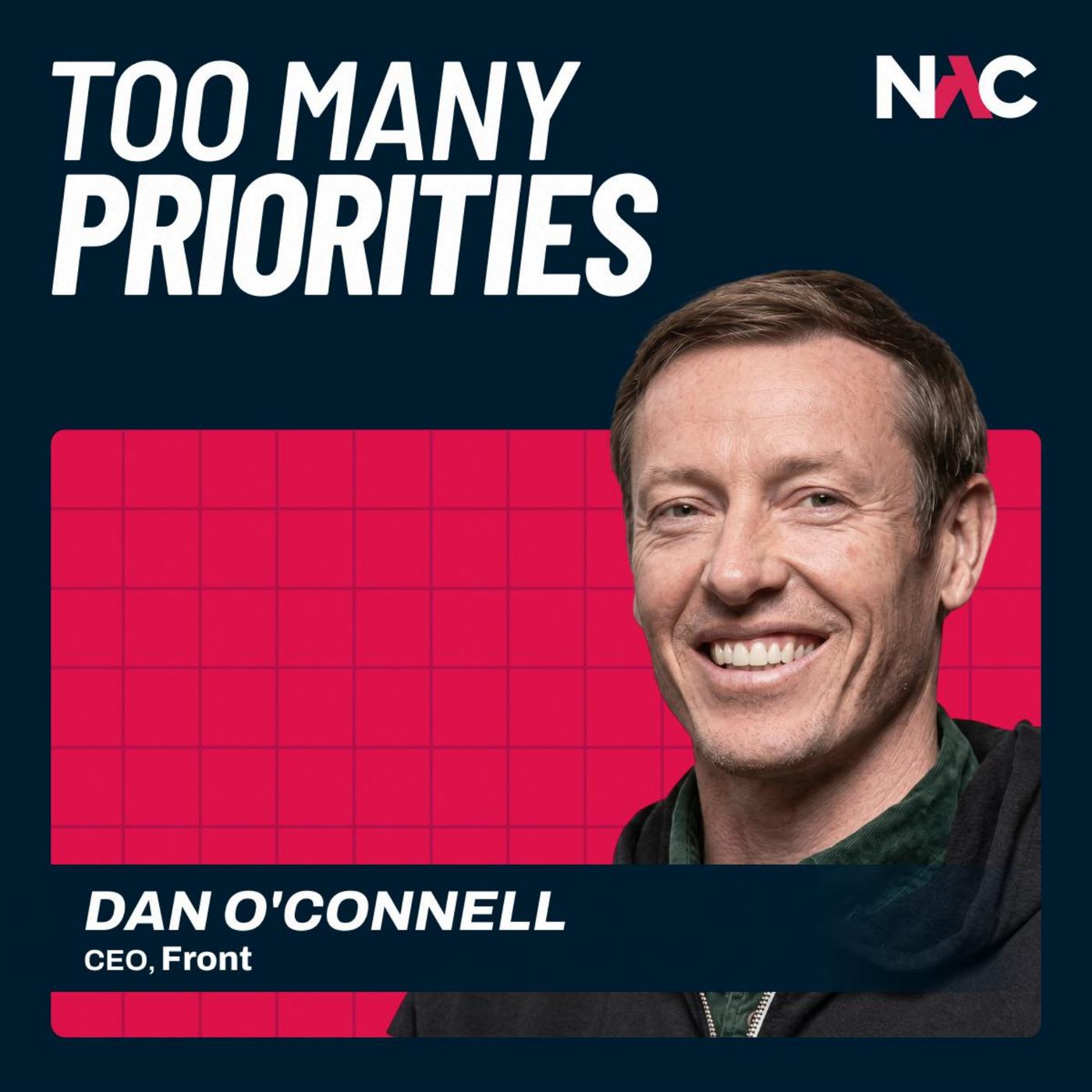
Dan O'Connell has learned that taking over one can be even harder.
Dan's career has taken him from Google, where he joined when the company was 300 people, to founding TalkIQ before AI was cool, to helping scale Dialpad past $200M in revenue, and now to leading Front as CEO.
Not many people have been an executive at a big tech company, a founder, a high growth operator, and a hired CEO. Dan has done all four.
Front is a customer operations platform used by more than 9,000 companies to manage customer conversations across support, customer success, account management, and sales.
When Dan joined, the company had strong talent, a strong product, and strong customers. But growth had slowed. This episode is about what he did next and what he learned along the way.
Takeaways:
- Focus reaccelerates growth:
When Dan joined Front, his first move wasn't a product change or a new hire. It was getting brutally clear on who they serve, where they win, and explicitly what they were not going to do. That intentionality alone reaccelerated growth. - Speed is a competitive advantage:
Dan introduced speed as a formal company value at Front and it remains polarizing two and a half years later. It doesn't mean reckless. It means faster decision-making, strong opinionated leaders, and fighting friction when it shows up. Any decision is better than no decision. - Taking over is harder than starting:
You're inheriting history, culture, and legacy inertia and you can't take six months to build trust before making changes. You have to do both at the same time. As Dan puts it, you're flying the plane while rebuilding it. - Great leaders stay close to customers:
In his first week as CEO, Dan got on customer calls, visited every office, and jumped in the support queue to answer tickets. The same thing he now requires of every executive he hires. The team is always judging you and nothing builds credibility faster than showing you're willing to do the work. - Platforms will outlast pure agents:
After attending OpenAI's Frontiers Conference, Dan's contrarian take is that pure agent companies solving one workflow may get commoditized by OpenAI and Anthropic over time. His bet is on platforms and Front's position as the entry point for all customer conversations across channels, regardless of how the AI landscape evolves.
If you are a founder, operator, or CEO this episode is worth your time.
Quote of the Show:
"Taking over has been much harder than I thought. And it's usually from the behaviors and people side." — Dan O'Connell, CEO, Front
Links:
LinkedIn: https://www.linkedin.com/in/danoconnell/
Front: https://front.com
Chapters:
00:00 Trailer
01:15 Introduction
02:15 The One Thing That Had the Biggest Impact: Focus
05:00 Narrowing the ICP
07:30 The Operating Machinery That Keeps a Company Focused
13:00 Taking Over as a Non-Founder CEO
17:15 Flying the Plane While Rebuilding It
22:30 Platform vs. AI Agents
29:00 Building the Executive Team
42:00 The Biggest Challenge
47:30 Where Front Is in Three Years
49:00 Origin Story: From Southampton to Google to Founding TalkIQ
56:00 Two Career-Defining Moments & Advice to His Younger Self
English
United States
TRANSCRIPT 🔗
SEARCH PAST EPISODES
Search past episodes of Not Another CEO Podcast.
Disclaimer: The podcast and artwork embedded on this page are from Not Another CEO, which is the property of its owner and not affiliated with or endorsed by Listen Notes, Inc.
EDIT
Thank you for helping to keep the podcast database up to date.
