

David Politis: Pipeline feels like it's harder than ever to create. There is so much competition, automation, AI slop. It is hard to cut through it. The folks that are doing things really well, it does start with the segmentation. If you haven't taken off, then I would prepare yourself to batten down the hatches, burn the boats. It's kind of like a trust fall. Today's guest is Craig Rosenford. He started as a vendor, became a mentor, and is now a friend. He's currently the chief platform officer at Scale Venture Partners. He was the co-founder of Topo, a a research and advisory firm, which was acquired by Gartner. They were afraid, right? That's like we gotta go as wide as possible because we're afraid we're not gonna get pipeline. The best salespeople in the world are maniacal. You know, I only want to talk to this, this, and this. The best ones, it's almost like a poker tell where even the customer may not know that they're gonna buy yet, but you know before that, you know, you can see the tell that they are trending towards buying a product like yours. The differentiator for you. If you have all these other things we've discussed in places, what are those unmistakably human interactions you can have? Today's guest is Craig Rosenberg. I have so much to say about Craig, but I'm going to try to keep it short. Twenty years ago when I was running my first company, he was the one who taught me how to build an inside sales team and drive leads through online marketing. For anyone that has been on the other side of one of my crazy marketing ideas, it was probably inspired by those early days with Craig. He started as a vendor, became a mentor, and is now a friend. He's the one that I call when I need to talk through an ABM idea or understand a new go-to-market trend. He's currently the chief platform officer at Scale Venture Partners. He was the co-founder of Topo, a research and advisory firm, which was acquired by Gartner. He has a podcast called The Transaction. And it was actually when I first joined him as a guest on that podcast that inspired me to start Not Another CEO. Today is a true full circle moment for us. Craig Rosenberg, welcome to Not Another CEO podcast. David. ⁓ can I go on a thirty minute rant about my feelings about you? Cause that that'd be that would be appropriate. No, thanks for having me on, man. I love I can't wait to talk about pipeline because that's all we're doing these days, aren't we? Yeah, yeah. Well, so I wanna yeah, let's get right into it. You know, I you wrote this ⁓ amazing article for your ⁓ top line newsletter called the New Pipeline Playbook. And I've actually been sending it to all the CEOs and all the marketing ⁓ people that I that I work with. And you talk about and and I feel it myself, like pipeline is feels like it's harder than ever to create pipe. There is so much competition, automation, AI slop, all this stuff. Like it is hard to cut through and actually build pipe, but you talk about in that article what you're seeing work and these pockets of success that you have firsthand experience of or knowledge of. I I want to just start with like that one thing. If you could tell a CEO one thing and said, you know, to build pipe, the people being successful are doing X. What is X? I knew you were gonna ask me because you did prepare me. It's hard to choose one. I won't I if you don't mind though, I will give you two answers to the same question. So what I think This has not changed. It's just people that are doing well today. It's so hard today that when you look at the folks that are doing things really well, it does start with the segmentation. And you've told me that last time you were on my show. And I'm Matt and I were like, Yes. You know, I started talking about ABM in 2008. And I went on the road and was like, guys, there are accounts and people that are better than others. That is very easy. Pleased to understand, but everyone, even when everyone was calling ABM, they were still afraid. They were afraid, right? Let's say we got to go as wide as possible because we're afraid we're not going to get pipeline. And then ⁓ you know, we people use signals and other things. Also, you know, if you create an ICP in a target market in 2008, it was really on a piece of paper or it was fundamentally only firmographics. And I think now when I talk, especially the young growth hacker types that have to do outbound, I, you know, we sort of have to, in many ways, sort of set aside the lovables and cursors of the world. There are things we can learn from later in this conversation, but like the huge sucking sound companies that are just everything's coming to them, ⁓ the vast majority of us don't have that. And so the the ones that are figuring it out, it really comes down to. Figuring out your ICP, but then micro-segmenting the ICP. Because one of the issues on relevant messaging is it's hard, even with AI. And ⁓ but if you can start by the entire go-to-market team focusing on a subset of accounts with a homogeneous use case or the type of similarities that tie back to ⁓ use case. Then you can have messaging across the board that both is consistent but also is relevant to them. Also, the most important thing is, you know, these kids today that are running these microsegments, they're data driven. That is it's like, yes, folks, like, can we look at accounts we've won and that by the way haven't churned, which is another sort of piece to the segmentation strategy, is like, are they the right customers? ⁓ and Can we find lookalikes to them? And that's, you know, a really simple way to think about it. And if I had to take one thing, because, you know, as you know, there are a variety of tactics and a variety of offers and a variety of things that will eventually work, but it has to start at the top. Okay. So that's one thing. Here's the one I know you're gonna well, I don't know if you're gonna ask me, but I know you get all the time, which is if I'm a founder of a seed company and I'm getting going. Here's my tip. Talk to 10 people a week that are either in your assumed ICP or close to it. Because you're going to have to close these deals. And the only way you can do that, and the only way you can figure out what works, and the only way you can hear reactions is with that number. That you have the best story of all time. I don't remember how many accounts you talked to in 90 days, but that is like so see you guys are like, Well, I don't have the data. We'll get the day. You know, you you you will have to start with a guess. And but that guess can be heavily informed by you know having these conversations. Okay. Then someone would say, Well, how do I figure out the well you generally built a product for somebody? If you didn't, then you're gonna have to figure that out. Most good. companies today that aren't the you know open AIs and all these things they built they could tell you the story of why they built it for someone so you can start there and ⁓ or look if you're trying to take out an incumbent go talk to every one one of their customers. You know they'd say, well we don't want their it's okay. Like you just gotta go and then that's how you sort of sort through am I in the right place and am I going to say the right things. Boom. Two answers to one question. I I want to something ⁓ actually this is live right now that I'm thinking I read that article a couple times, but when you talk about the micro segments, ⁓ huh, it's ⁓ even if you're not a first-time founder, even if I mean even if you're not an early stage founder, I love this idea of selecting the segment and then doing a certain set of interviews in that segment, yeah. No, regardless of stage. And getting deep into that segment to understand what is the commonality today, not yesterday, not when I started the company, but today, what is the commonality across that type of buyer, that type of prospect? I I actually it's it's a small thing, but a real I I I think could have a really massive impact versus let's assume we know this segment. We know what they want, we know what they versus hey, we're gonna about put a lot of energy into this and To make it successful, we're gonna go do those interviews, understand that micro segment, and then target them with very specific messaging that we know is gonna resonate because 50 of them said the same thing to us. Yeah, yeah. No, I you know, one thing I recommend to people, you're right, regardless of stage. Actually, it this is more relevant for later stage, because a lot of time the later stage folks get to where they are because they figured out one rinse, wash, and repeat segment and play. Right. And then they say, well, we got to go to the enterprise, or we're gonna go, let's say they're heavily tech, we want to go into finance and these things. And it's like, okay, well, we're gonna create this new cohort here and get after them. What I tell people is like, okay, that's not a sales thing yet. But there's a nuance to that. I say you create a a special forces group that's going into and it it's it's gonna include it's has to have equal number of executives. Two ICs, marketing, customer ⁓ success, or you know, chief customer officer type folks and product. And we have to go have 20 calls. Now, in a perfect, and we have to come back each week with what we're learning in those calls. So I would just say the one thing about interviews that worries me is I'm not sure it's as I don't know. I'm okay, I'm great with interviews. I'm also great with just. What the hell, go pitch, but have an executive there. Don't just listen to gong calls or have the executive do it. The learnings are extraordinary because you know, the one thing I learned as an early stage consultant when I was doing, I mean, I did ⁓ market research for you. Yeah. But is that until you ask them for money or ask them for a next step, you actually don't know how they really feel. If I ask them, and I'm like, hey, it's like this: you walk into gap. Do people still walk into the gap? I don't ⁓ and they say, ⁓ hi, welcome in. May I help you? Say, no, thank you. I'm just looking. But actually they could have helped you. You know, it's like that, it's it's not your f you're, you know, if you're talking to someone, they're ⁓ you they're gonna tell you kind of how they feel. That doesn't mean that they're gonna, you know, spend money or take next steps with you. So I typically recommend if they, you know, interviews are great, especially you know, product marketers are really good at that and really good at putting together, but I don't like outsourcing that. I I think executives should get in the mixer on this. I also think just go for it, pitch them, see how they react. Be have the exec do it because when you ask for the next step, then you really figure out like, what did I miss? And that's how you react. So you get to, you know, whatever you try to do. It's like if we wanted to come back to you with some ideas on what the, you know, a a solution for you would look like, what would your reaction be? That well, let me think about it that, you know, the class. And then you say, okay. So that this is what I really want to know. What worked in what I just said to you and what didn't. And then it's like it's just a lot more impactful. Then you meet this the special forces team has to meet each week ⁓ and talk through it and learn from it together. And by the way, AI can't do that meeting for you. It's and by the way, the meetings are really fun. This is how you learn together. So one company, it was later stage where they w wanted to go in the enterprise. I recommended the special force thing. They did it. And the CEO is like, no, I'm the leader of the special forces group. I'm like, I love that. And he would take all this information in. They abandoned one segment that they were going after. And then they they latched on to one. They did two at a time, which I ask I'll I don't typically recommend, but it's fine. And ⁓ you know, based on what he heard, he was like, Yeah, that that's the the let's double down, triple down here. And as you said, If you taught you have to talk to customers, customers as a wide group, right? Prospects, your current customers, people in the market, even analysts, you know, all these folks, just dive in. Yeah, one of the things, one of the things, you know, and I feel like when you do this, when any company I work with does this, it's I tell them it's kind of like a trust fall. Because when you do it, it's uncomfortable. You said it before. You think that you want the largest TAM. You think they want the biggest group of people to go after? And now you're gonna go after a micro segment? It's like it's literally a trustfall. Like, ⁓ my God, this is it. We're gonna go out of business now. Like you're telling me to get so narrow. And so I think for most people, they actually don't even give it long enough to because they're like, no, no, we just went to the micro segment and it's the next week and we haven't closed more deals. And it's like, well, of course you didn't close more deals the next week, but did you start to get more meetings? Did you start to get a higher response rate? Did you say You know, and it and it's how do they how do they know that it's working? You know, like does that make sense? Like that that feels like one of the big challenges why people stop that exercise. I agree. They get scared. I mean, I remember when I we were doing a account based, we didn't want to call it ABM, we called it account based back at Topo, and we were doing meetups and councils and meetings ever all the time. And I got in and it was like the CMO group. The CMOs loved account based, but I'm I wasn't sure at the time it was for the right reasons. And you saw that with what happened with account based and like early tw is the vendors took over and it really was about sales being relevant. You know, like there was all these weird sort of derivations of it that people thought were real. It's like, ⁓ no, it's intent data makes account based or ⁓ no it's relevant messaging from sales. And I was like, no, it's about a certain set of accounts are better than others. So I was telling a story where, you know, You know, at the time of Topo, I was helping a company with their sales, it was sales. And I said, you know, guys, like can we just look at the data? Like they're we're not winning deals, sales is terrible. Da-da-da. I said, Well, let's just look at the data. And we look at the data, and it's so clear that a particular use case and a particular type of company were the only ones that were winning and not churning. That if you really wanted to know what was going to work or not, You know, it was right there. And the CMO raises his hand. He's like, Well, then what are the sales team, what's the sales team gonna do? He's like, This is ridiculous. And I said, Okay, listen, sales should try new things, but if you're gonna forecast and like trust that these people are gonna hit their number and you're gonna train them, then you have to be thinking this way. And then, you know, it w it was ridiculous. I still look at the guy and I just like, you're an idiot. But the ⁓ but you know. The best salespeople in the world are maniacal about that. Like they know, no, I'm only if you really dig into the very best ones, they'll say, No, I only want to talk to this, this, and this. And we always joke, well, it's pink. ⁓ you only want people with pink hair that drink, you know, macchiados. But actually, that is a really useful insight is that they understand that there's an account that I can win every time. And that is useful information. And with the advent of signals, We could probably find a lot of things, including the hair and the coffee that they drink. But yeah. Anyway, sorry, man. I keep jumping off this sometimes. That's a really no, that last one, one of the analyses I did with a company just now, we did exactly this. We took their top rep and we looked at their top rep. We they didn't have an ICP. We defined an ICP, but then to back test the ICP, we went to the top rep and looked at how many deals did that rep work that fit into the ICP. And it was something like eighty-seven percent. And then we looked at the worst rep and it was 32%. And it's to you it's not even he was he was not doing it on per I mean he was maybe doing it subconsciously, I'm not even sure, but he had figured out the pink hair macchiato, that's the person, and he had just kind of got to that place. It's it's super it was actually a great back test for an ICP to see what is the top rep doing. ⁓ actually it fits the ICP that we just we just figured out. That's actually the best data story I've ever heard. Yeah. Exactly. Yeah. So wow, eighty seven percent of that. It was great. It was great. It was a great ⁓ I love that. Okay, let me so so look, you you've been doing this. I mean, really, you you literally taught me, I mean, that was I think more than twenty years ago that we worked together on vocalosity and you've been at the forefront and you've seen this and Topo, you literally were doing this all day, every day. what is what is the thing That has changed the most? Like if you just look, you know, at if you were a CMO that entire time, pretend and you're, you know, you're you're now 20 years later, twenty what is the one thing that has changed the most in this world that we're living in? Is it the technology? Is it the tactics? Is it the team structures? Like what what are you seeing? What do you think has changed the most? Well, I do, you know, look, you you see if you've If you ⁓ this is how everyone says if you get your information for Reddit or Facebook in regular life, like you're not getting the right information. ⁓ you know, in Link the LinkedIn feed has a variety of different opinions, right? By the way, I love the LinkedIn feed, do not get me wrong, but you know, you're starting to see things like I fired all the SDRs, ⁓ you know, we're you know, we're doing this, that or the other. And that's actually just a reaction to the fact that things got much harder. In my in in my opinion, the the one thing that is different is it's like this we're in this ⁓ sort of storm that is a combination of I'm just I'm not in any order, everyone. Not in any order. I I you know I deal with tech companies. AI and the ability to create software has created hundreds of thousands of of options and confusing options. And it's really hard to understand. By the way, layered on top of that is everyone's just trying to figure out AI and what that means. That adds a layer of complexity. Okay. The second part is the buying environment. So that ⁓ does affect the buying environment in a big way, right? ⁓ it's it's not obvious to them what they should be looking at. And and by the way, ten years ago, the tail did wag the dog. Like if they heard that someone was really hot, they would check it out and then figure out if it was a fit. Right now that's really hard. And I mean there's the high fly I mean, they're going take a call from ⁓ you know, ⁓ you know open AI and whatnot, because they're gonna want to figure it out. But for the rest of us, like, ⁓ that that that makes it hard. And it's because it's really confusing. But we forget a couple other things. ⁓ You know, there's a lot of disruption on the buyer side. ⁓ there's a like a fear of getting fired, which you know, Brett Adamson and Matt Dixon, the Challenger guys, a lot of their stuff right now is about that. It's like they you do not want to get fired. You do not want to spend the money on a tech product that doesn't work. Okay. Come and that is combined with the fact that look, guys, ⁓ you don't not political. Not but things aren't going that well in corporate America. Like they it's like, dude. The CFO is getting notifications of like nobody knows the global economic situation is making things like really confusing. So there we're not in steady state right now at all. If you combine that with the AI thing. And then third, you combine that with a f deluge of messaging or lack thereof. it it it's just a it's a very hard environment to get attention. Attention Is like our hardest first step, and that's why pipeline is so hard. So if you look back five years ago, we hadn't destroyed the email inbox yet. It was like glorious, man. I mean, you know this. Like you just go in and be like, look, man, it I you should call, but if you don't, it's fine. Just made 120 emails out a day, and you'll get there. And man, it was crazy. Like from 2000, man, I can't even think about this. Like 2000. Let's call it 17 to 21. ⁓ the numbers coming out of SDR groups were astounding. Outpound numbers, they were out of this world. And I just need everyone to be a goldfish here and throw that away and don't remember that because the numbers are down. It's still a valuable process, but like way down. Cause I mean, there were kids doing so many emails a day that they were getting like 50 meetings a month. And like it was just out of this world and you just you can't right now. Everyone likes to blame, you know, the email spam cannon. That's part of it. But it's a con look, people do have to buy technology and they do want to do AI. So like that's there. That's not it's just a matter of like this combination of things. And the spam cannon doesn't work anymore. It just doesn't, unless you're A really mature company that has a lock and enough sort of customer customers out there that you can just send them an email and say, Hey, we have a new feature and they're gonna take that call. Or you're you know, I'm sure if Lovable goes to outbound, everyone's gonna want to talk to them or anthropic or whatever that might look like. But for the rest of us, you know, we just have to change our ways. But I do think a recognition about like ⁓ these combination of factors that are affecting the buying environment. ⁓ And then by the way, if you add to that, and you know, when I taught to that, everyone sort of jumps in and goes, and by the way, we're all confused internally. So the actual teams trying to generate demand, we don't know what to do. We're firing people, bringing people in, confused about what we want. We want a 22 year old growth hacker, we want a 45 year old, you know, ⁓ mature SDR leader. ⁓ we're all just kind of confused about like so everything is just kind of up in the air. And ⁓ so that's the thing that's changed in my You know, I think when when one of the things I have a lot of thoughts on that, but the one when you keep talking about like the lovables, anthropics, and everything, I've had too many conversations at this point where someone says, and it usually is prompted by a VC, well, that company went zero to a hundred in six months. So what do I have what did they do that I can do? And I'm like, it's not yeah, it's like hitting the lottery. Basically it's like hitting the lottery. And there isn't something that you I told them someone asked me this about like the legal AI space. How are they growing so fast? I said all the demand for the last for the next 20 years is getting pulled into two years. Just like what happened with Zoom in 21, 20 and 21. Like that that you can't manufacture that demand. You can't manufacture that. And to try to replicate that, people literally like, no, I I heard the growth. person at lovable say this. My 12 year old son could be the growth person at Lovable right now. Like, you know, like it's not, it's not, that's not the thing. Like that's an amazing product at the right time in the right market with great. Like that's that's why. That's why it is what it is. You know, yeah. And so I I I think when you've said that now a couple of times, I want to key on that because I feel like so many CEOs like I can do that. I'm just waiting for the moment where that occurs. And it's like that is not going to occur just like that. Right, right, right. Yeah, no. It's ⁓ that that that happens that happens in every gold rush in the valley where people I mean, that's how we started Topo. We started Topo because we were just Scott and I had just sold Tipet, right? And we're going around the valley and everyone's like, Hey, I'll pay you if you could tell me how Salesforce does this inside sales thing. Right. And then it was, you know, how does Marketo Or HubSpot drive all this demand the way they're doing it. And by the way, they did those two had two different methodologies for it, but that's a different story for another day. And it's like, and now we're in this PL, this, this PLG gold rush side. By the way, the the issue for the folks that said, well, why can't we be like lovable? It's like, because you're not right now, which tells me you won't be. I mean, like, you know, those guys put that stuff out there and they did like they did do some amazing things. Like, if you look at lovable, like their use of influencers, they went deep into social, into the communities where these ⁓ folks were, you know, got products into their hands, built this elegant product they could start using right away. You know, that is a learning situation. But, you know, ⁓ you know, it they took off right away, you know, they just took off. And if, you know, if you haven't taken off, then I would prepare yourself to bat down the hatches, burn the boats, and get ready to go do things in a more classic enterprise software way with the new rules of engagement that, you know, we talk about here. You know, like the micro segmentation thing is not new. It's just you could do it better now. There are tools that allow you to do this. And that, you know, that should be exciting to people, you know, and ⁓ you know, the the tactics actually haven't changed that much, David. It's just, you know, How you like it's hilarious. Like the guy the folks where they can figure out if they answer the phone, they're using the phone. I had an I cold called 30 years ago. You keep using this 20 years ago. You know, and we used to get ⁓ magazine subscriptions. You don't even know this. You were still too young. So what you would do, marketing would go and rent a list from a magazine. You would be able to call down on the list, but you had to give it back. And you were only allowed to do one call. Now people cheated, but you know, they had honey pots in there to catch you. That was the old day. I mean, like that you had to make you had to literal dial for dollars. And it's so funny. It's like when I ask folks, you know, the phone with if the phone is there, you know, like in Europe with the, you know, it's crazy. Like they they have to go phone and they you know, they do a really good job there. But there are some there are new things, I think. ⁓ but like if you look, you know, a lot of this stuff. ⁓ just came out of the has been around for a long time. There's just, you know, there's some new new things around it that I think are really important for people to figure out. So you've you've we've talked about this and you've actually introduced me to a couple people doing some very, very interesting things with AI. ⁓ and really taking a completely different view of of the world to your point around using what the tools that now exist that did not exist even three years ago. ⁓ can you talk about some of the stuff you've seen and some of the use of AI that you've seen that's been really innovative, effective, ⁓ something you would recomm that you would push someone else to go look at doing. ⁓ there there's a lot. ⁓ are are we gonna go to our favorite David Boskowitz right now? There's nothing better talking to David Boskowitz. Just for everyone in the crowd, he's the ⁓ co-founder or founder of ⁓ Flatfile and ⁓ sorry, fl founder David, I got you. and He took a he's what we define as a go-to-market founder because what he did was, by the way, he's not a go-to-market person, but he took his passion for product and pushed it into go-to-market. And what he did was he took everything that happened on the way to a sale and he looked at it and said, What can we do differently here? He's like, Why did what you know the traditional rules ⁓ we can start there, but like how do you like, you know, what's better for us and our customer and how can we do this more scalably? By the way, I think with like five or six people, I don't remember ⁓ last time you talked to him. But so he's a good example. So he uses so they only go after micro segments. He has a rule. If we have more than 500 accounts in the micro segment, then try again. And they look, they use data to figure out, you know, the micro segment. They, you know, they He sort of is the one who gave me this phrasing of the homogeneous use case. He's looking for that. Some of the things that he does. So one is he uses AI to create these market reports. ⁓ and then he takes them and then he sends it to a couple executives in the market. And if they write back and say, This is amazing who wrote this, then he's like, I got something here. So the AI creates the offer. That allows them to earn credibility with that segment. Say send it to him. By the way, I believe most of the ⁓ there's some tactical side notes here. Most of the outbound is from him. That, by the way, if you're a startup, you know, ⁓ leveraging the founder in an exact to exact communication, and you can even do it for them is probably the most powerful thing you can do. Cause if you think about it, if nobody knows you and a 23 year old kid sends you an email and says, you know, ⁓ are you ghosting me or I'll give you a hundred fifty dollar coffee card, like it's that's harder until you get sort of later in your life cycle. So, you know, so let's so they're gonna send these amazing ⁓ reports that they create, I think using anthropic, ⁓ I'd have to dig in. Or Gemini are ⁓ what I think he uses all I think he he uses all three to basically that guy's crazy. Yeah, yeah. He's totally I mean I I could see him doing that. So so he takes a a segment, AI helps them define this. They ⁓ you know they build ⁓ this report is one of the offers. You know him, he'll try new offers along the way. they actually, as a second touch now they've been doing is they've had AI Because they know enough about them, because they've segmented them enough. Believe this or not, they send these folks customized demos built at scale for them, right? Because he knows enough about the use case to be pretty good. Now, a lot of people would not do that. ⁓ but for them, it because they have done that micro segmentation, they can create these ⁓ custom demos for these folks that they can send to them that. Are another touch that works, and folks don't just come in, they come in way more ⁓ educated, right? They they have used ⁓ AI for these massive research operations into the target accounts as well. So, like you take the segment, you've got that type of relevance, and then he's got a dashboard that they've created and they built themselves that does a complete rundown of what's happening in that account. So you don't You're not just like going, hey, here's this report to you, but you're saying, hey, this report is great for you, especially as you deal with this, that, and the other. Bam! Like that is doable with AI today and awesome. Even for me, I would love to get someone send me that. ⁓ the the demos, they know enough about the pain in general, but because of their massive research operation, their AI agents are going and grabbing these things, they know even more to be able to make these things sort of even more relevant. So th those are ⁓ I think two really good examples. The other thing I've been ⁓ into, I talked about the phone earlier. ⁓ you know the one of the things on the phone, you know, you've the dial dialers have been around forever. You can attest that you were in the voice space. But like ⁓ you know they they're the the tech is you know b basically built for SDRs and AEs on their outbound prospecting. But the thing I like, it's not even I'm not even sure it's AI, but maybe it isn't is tight next like these the phone intense stuff where it tells you whether people are going to answer the phone. ⁓ yeah. I know you wanted AI. Yeah. But like I I've seen that because a lot of folks are ⁓ moving their SDRs away or whatever. And so what what if you had an AE that could call an hour a day and get, I don't know, five to ten connects? By the way, getting five to ten connects could take a month or a month and a half. And but it's because the that that's a tech that allows you to say, no, the of your a thousand accounts, these thirty five executives here are the ones thirty five percent are the ones who are most likely to answer the phone and when. ⁓ that just changes your efficiency there. So I don't know. I I always throw that out because I do enjoy that ⁓ part of the AI journey thoroughly. ⁓ one of the things you said before about the founder, you know, and sending on behalf of the founder, I think that ⁓ It goes to what you said about the attention, right? It's it is so hard to get anyone's attention. Any buyer, anyone, even even you wanna hire someone, it's hard to get their at like p it's just the inundation of just the the ⁓ social media and the stream of emails and this and the chats and the slacks and it's like really hard to get people's attention. And I think when you talk about that about the founder, I have found that too many founders are They're they almost have too much imposter syndrome, maybe, or something, where they're like, Well, who would want to hear from me? Why am I important? Why am I? And I tell people, just by having the title founder and CEO, just by having the title, you may not think you're important. You may not be important. But to the other side, to the buyer, if you're like living for them, if your company is about them, if you're the expert in this thing, saying that this is the founder CEO reaching out. is gonna have a higher response. You could be founder and CEO of a three person company. It still is going to give you a higher response rate than the STR. And and it's it is a way to cut through that attention, you know, filter. Yeah, for sure. ⁓ but yeah, there's ⁓ there's a lot of AI happening out there. I the what the one I think is most interesting to me are the signals. ⁓ I went right into Titan. That's a signal. Actually I would say a different one. But I the ability to to not just look at ⁓ I don't know what you'd call it, like static data as in you sort of, which is what how you create your ICP, but to look at like live ⁓ currently, you know, recent data that tells you when. So there's the who, but then there's the when. If you can unlock what that looks like for your business, and those are the types of signals, ⁓ I was talking to someone, I I can't tell the company name because I I wasn't sure I got the ⁓ okay, but like basically they have this trigger in their business where if your compliance goes expires, you know, that company could be in trouble. I'm like, that's the ultimate signal. It's like, yeah, but like our sales reps used to have to go try to figure it out or call them and ask them. And now they've figured out how to track that off the website. ⁓ I guess there's a way to track it off the website. And so it's like, and they could do that at scale. And it's like, that is an unlock. That is a signal unlock that's unique to your business that ⁓ you can use to say, not just like these types of accounts are more likely to buy from us, ⁓ this is most likely the best time for me to reach out to them. AI has added some serious like ⁓ power there that I th I'm really excited about. I think right now you're gonna hear like some folks that are gonna be. Ho hum on their signals, it's because they're using generic horizontal commoditized signals, which it hey, it helps too. Anything helps. The key is to figure out what are your signals and can we get them and how are we going to get them. And when when you can do that, by the way, I that you know, that's like probably the mu one of the more effective AI things. It certainly goes hand in hand with our conversation before on micro-segmentation. So it the the signals is kind of like it's almost ⁓ I think the best. the best ones, it's almost like a poker tell where even the customer may not know that they're gonna buy yet, but you know before that. Yes. You can you can see the tell that they are trending towards buying your pro a product like yours. A hundred percent. Yes. Those are the ultimate what do you believe where where do you think real life, you know, IRL type of things play into all of this? You know, do do you know do you think that events are Be conferences, dinners, like where where does that play into all of this? ⁓ perfect lead-in. We did all this tech stuff and now we're like, but wait, the winner here, so Christina McMillan, who works with me, has a phrase which I now use, which is unmistakably human. So the the end win here is can I, because now AI is about to flood the market, the differentiator for you, if you have all these other things we've discussed in place is what are those unmistakably human interactions you can have? Events are probably the number one. I f I'd have to look at the data I got from benchmarker, but like the spend on events is going up because it's the best thing going right now. So you ⁓ you know, you you basically even at early, early stage companies, is you know, a curated event, ⁓ definitely go small initially. ⁓ if you have customers, fifth 40 to 50 percent customers in the room, the rest prospects, if you do it right and you don't make it a sales call, those are like an amazing conversion program. And if you go back to like SDRs are suffering, well, what if An SDR wouldn't ask for a meeting. Is the problem asking for a meeting? Is the solution offering something that's a much better experience for them? If I went to you and said, Hey, do you want to take a meeting? You know, I'm gonna be like, I'll be in town, we'll go get a cup of coffee and talk about what's keeping you awake at night. Not sure I'm taking that. You come to me, even as an SDI, everyone should just like an SDR should say, Hey, here's what I know about your business. We're doing a dinner on this topic. The f these five people who are your peers will be there. I can lock you down for that. That's a way better offer. And the experience is unmistakably human, right? ⁓ even like, you know, we you and I have talked about all these. You have a bunch of them, but like the ⁓ I feel like the direct mail, the really relevant ⁓ direct mail, the walk up delivery of the but that these are things become unmistakably human, right? Because ⁓ a human is making the decision or the humans even delivering it to you, ⁓ you know, though that that at the end of the day will will likely be your differentiator. Now everyone's gonna say, wait, you said all this. No, man. You like, I'll give you one AI SDRs. Everyone's like, it's like, no, dude, guys, get everything else out of the way so you can be unmistakably human, right? And like you're looking at this wrong. Well, when we think about AI here, like what are the things we shouldn't do in order to deliver an unmistakably human experience. And by the way, even that report that we talked about before, even though AI generated it, it was carefully vetted, ⁓ it that it was may not be unmistakably human, but it was human enough because it was right on the nose. ⁓ but like really the ⁓ as you think about what's happening here, it's like the we the digital We have to go digital to unmistakably human or digital reflects our unmistakably human approach to to folks. So you know, as we start to talk about things like events and these things, like they work because it's human-to-human interaction, which at the end of the day, I think people will crave more and more. You you think we might be at peak events? Well, no, I d I don't think so. I no, I think we have I think I I I believe I love that term. I I think that People can tell not only that when you're doing the event, there's the human element, but I think they can tell when that event real care, real care has gone into putting that event on. Like there's a there's a difference by saying, Let's go have dinner and let's, you know, we'll get six people at a dinner versus saying, Hey, let's we're gonna go have dinner, but I don't really we don't want anyone to drive, we wanna make it really easy. Here's Uber codes for everyone to come and go. At the end of the dinner. By the way, when they arrive, there's a name tag at every single seat. There's a bag of swag. There's a this. There's you know, there's a menu that has the thing. People can tell that quality, that taste, that that is not AI, that is not, you know, a third party events team that put that together. That's not I have one company who's doing I'm a big, big right now, this particular moment in time. I am a big believer right now, once in a lifetime event, the World Cup, once every 40 years in the US. Like you take someone to a World Cup game, you get them the jersey of the team that they like or the team that you're going to see and it's personalized to them. And like people that is unmistakably human. Like there's no the only way that that's gonna happen is through someone thinking about it, caring about it, giving shit about it. And then that person's gonna remember that forever. Yeah. I had this guy. I just yeah, I know we're coming up on the end, but his name is Saul Weinrich. I don't know if you know him. He's a Brooklyn kid. I think he's in lives in Tel Aviv now. But ⁓ he ⁓ he would put on these events. The company he was working for at the time was was good, but not a billion-dollar company. So the brand was still the brand was solid, but not, you know, sort of jumping through the roof. He used to put on his he did tons of digital stuff, but like the key was ICP field events. He would throw the book. I mean, he he killed it on the one that they gave him more budget for. ⁓ what's that ⁓ restaurant up in Westchester? ⁓ the famous one? ⁓ yeah Yeah, I forget. I forget. I know. The farm, the farm one, the one that's Yeah, yeah. So that's not something that's easy for the Manhattan folks to get to, or even the Jersey. Like, so he they hand chose it was gonna be a dinner for 40, which by the way is a big number. But look, here it is. One, an experience that you're not necessarily gonna be able to pull off yourself, right? Two, he sent the invite was a box. It had Your Uber ride on there. It had like, you know, a cookbook from them. It had all this stuff. It's like you are invited. The ⁓ the invite was like made out of hard paper, not digital, right? And ⁓ and they would get, yeah, the conversion rate to people signing up and to people going was exceptional. All right. So he tells me about it. I'm like, dude, I gotta go to one of these. Like, no way. I mean, I put 40. Of our ICP in that room. And so then he calls me. He's doing one in San Francisco. He's got like, I forget the restaurant at the time. It's one of the best in town. He's going to get 30 this time. And he said, as long as you sit in the back, you're cool. Right. I said, cool. I'll go. I went, I was like, so he didn't send me the invite, but he r ran the same event strategy. It's like, I'm going to get you there. I'm going to get you out of there. You're going to enjoy it. And like, I'm just meeting people, just going, ⁓ my God. You got like the best companies ever to come sit together. And when you asked them though, you know, it was interesting because they did such a good job at curating the list. The conversations at the table were like there was no quiet uncomfortableness. There was is partly because there's no consultants except for me at the time. Everyone was, you know, a a peer that did, you know, said job that they were doing. And it was like I knew it wasn't just the experience, but when they got them in there, the experience was enhanced by the fact that the dinner table conversations were people that they may or may not have met before that did the same job as them that was going to do the same stuff. They didn't even have to do any conversation starters. It was amazing. And that that that I still to this day I'm like, man, that is amazing. You know that this is the thing. You can talk about that, you can say all that, people will listen to this. They Very few will do it. Why again back to the point? Why? It takes a lot of work. But then when you do it, that's why people recognize that it's special. That's why it creates that environment right? Yeah. Can I go back to the top? That's why you micro segment. Right. If micro segments means through hell or high water, we're gonna talk to these accounts. They may not all buy, but we are going to touch and have some conversation or engagement with those accounts. When you do that, that helps, right? It's like, you know, look, we can throw the book at this thing. ⁓ it definitely helps, I know, when you convert and it goes really well, you'll get more ⁓ budget for it. But yeah. But basically last question for you. And I know you've do doing this yourself. I mean, how do you how does a person I'm a CMO, ⁓ director of sales, go to market engineer, whatever, like any of these functions that play a role in this, like How do I learn about this? How do I get better? How do I like what what what is your advice? You know, someone comes to you, meets you for the first time. Craig, I love all this stuff, but like how do I stay up to date? What what is your recommendation to to people? Well, there's this podcast called The Transaction. And I'm doing my first live event. ⁓ well actually Actually that live event looks really cool. That that it looks cool. Yeah, you gotta help promote it, promote it for me. ⁓ So we'll do one together in New York. Let's do it. Okay. Yeah. ⁓ so it's next Thursday. So this probably won't be out by then, but that's okay. Yeah, yeah. But look, look, ⁓ here's the thing. The game's moving fast. Okay. So ⁓ you actually you know how we've always told people to read and watch and get caught up. You actually have to do it every day because things are changing so fast. Like the the horizontal platforms are eating the hot company of three months ago for breakfast. ⁓ new tactics, new things are emerging. ⁓ so I've always told people this this is the first time of my life where I like, I'm like, yeah, this is like, you gotta enforce this. You have to choose the right communities and get involved with them. They will be your backstop. I peeked my head in this SDR community this woman runs here is like 16 people and it was like amazing. They were just helping each other and they would someone would go to an event, bring everything in, and they'd discuss it. You gotta go outside your ⁓ you just gotta go outside the box. You gotta cup but but communities events, find the people you want to read. ⁓ you can have, you know, your AI synopsize Cliff notes it for you. I don't, you know, but like you, you know, all the I I don't think I have anything surprising there except that you just have to do it. Here's the other thing though, is there are a ton of really bad information sources out there. And that's fine, man. Don't be so pissed off that you spent 30 minutes at something that sucked. It's fine. You learn, throw it away and learn from it, but you gotta try. Because you you you just gotta get out there. I mean I would say my event webinar everyone's like webinars are dead. My webinars are like I have like a list of 60. I get 20 to 30 I think, you know, once you build a community and once you earn credibility as someone that can deliver relevant ⁓ bet you know best practices or information, then ⁓ it it can work and you just gotta do it because man, it's just things are happening so fast and you really gotta listen to the streets, see what's happening on the streets. All right. Greg, thank you so much for doing this with me. I I ⁓ always love these conversations. It's fun to be able to do it, you know, in public. So ⁓ and and I'll be I'll be back on your on your podcast soon. Yes, I know if I don't cancel.
ABOUT THIS EPISODE
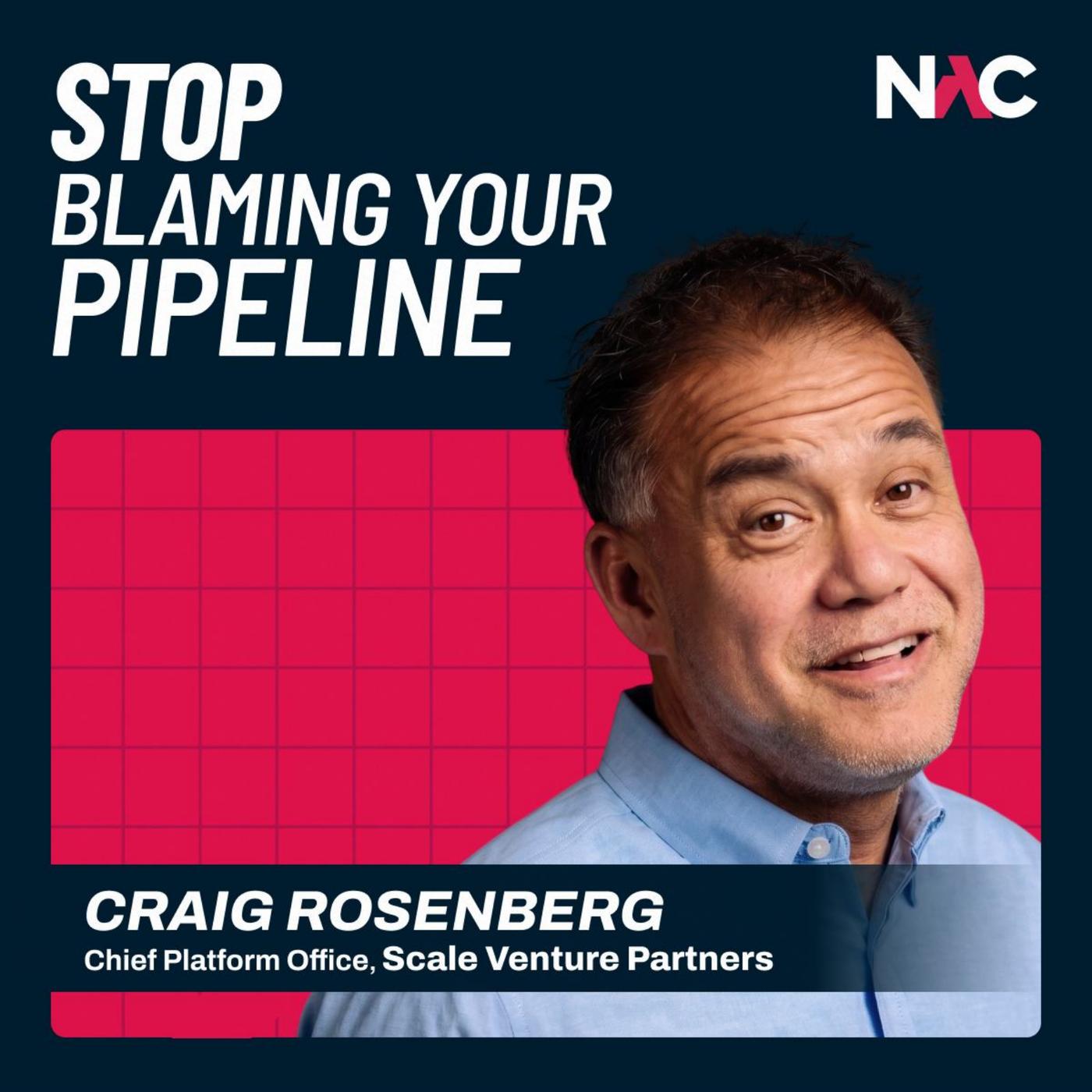
Why does your pipeline feel broken… when the real problem is your strategy?
In this episode, I sat down with my longtime mentor & friend Craig Rosenberg, Chief Platform Officer at Scale Venture Partners. Craig taught me how to build inside sales teams 20 years ago, and he’s still one of the sharpest minds in go-to-market strategy.
We break down why most companies are struggling to create pipeline, the power of ruthless micro-segmentation, why the old outbound “spam cannon” is dead, and what actually works right now including smart AI plays and unmistakably human experiences.
If you’re a founder or leader frustrated with pipeline, this is the conversation you need.
Takeaways:
- Your Pipeline Isn’t Broken Your Strategy Is: Most companies are going too broad instead of micro-segmenting their ICP on the other hand the winners are ruthlessly micro-segmenting their ICP around homogeneous use cases.
- Micro-Segmentation Is the New Superpower: Stop fearing you’ll miss pipeline by going narrow. Focus the entire GTM team on a tight subset of accounts with similar needs this unlocks consistent messaging, better win rates, and faster learning cycles.
- Talk to 10 People a Week in Your ICP: Whether you’re at seed or scaling, executives must get in the weeds. Have real conversations, pitch them, and ask for next steps. Gong calls and outsourced interviews aren’t enough. This is how you validate and refine your story fast.
- Use AI as a Multiplier, Not a Crutch: Leverage AI for custom market reports, personalised demos at scale, deep account research, and proprietary signals. But the real advantage comes from pairing AI with unmistakably human interactions in a market flooded with AI noise.
- High-Touch Human Experiences Are Back: Curated dinners, thoughtful direct mail, and once-in-a-lifetime events (like World Cup experiences) outperform digital spam. Buyers can feel when real care and intention went into the interaction.
Quote of the Show: ”Because now AI is about to flood the market, is what are those unmistakably human interactions you can have.” - Craig Rosenberg, Chief Platform Office, Scale Venture Partners
Links:
LinkedIn: https://www.linkedin.com/in/craigrosenberg/ Scale Venture Partners: https://www.scalevp.com/team/craig-rosenberg
Chapters:
00:00: Intro
02:45: Why Pipeline Feels Harder Than Ever
06:10: The Power of Ruthless ICP Micro-Segmentation
10:25: Special Forces Teams for New Market Expansion
14:40: What’s Changed in B2B Buying (2026 Reality)
19:15: Why the Old Outbound Playbook Is Dead
24:50: AI Tactics That Are Actually Working
29:40: The Unmistakably Human Differentiator
35:20: High-Impact Events & Experiences
42:15: Final Advice + How to Stay Ahead
English
United States
TRANSCRIPT 🔗
SEARCH PAST EPISODES
Search past episodes of Not Another CEO Podcast.
Disclaimer: The podcast and artwork embedded on this page are from Not Another CEO, which is the property of its owner and not affiliated with or endorsed by Listen Notes, Inc.
EDIT
Thank you for helping to keep the podcast database up to date.
